

How to Create a Money Transfer App: Complete Development Guide
Thinking about building a money transfer app in today’s fast-growing digital economy?
According to Juniper Research, you’re entering a market projected to reach $16.62 trillion by 2028, with mobile payment apps leading the charge.
Platforms like Venmo, Cash App, and Zelle have already transformed how people send money, making transfers instant, simple, and accessible from any smartphone. But building a successful money transfer app takes more than a clean UI. You need strategic planning, regulatory readiness, strong security, and features users genuinely trust.
This guide walks you through every critical step of the mobile app development process, from compliance and tech stack selection to scalability and user-focused features—so you can build a secure, scalable, and profitable money transfer app.
What is a Money Transfer App and How Does It Work?
A money transfer app is a digital platform that allows users to send, receive, and manage money electronically through their smartphones. Unlike traditional banking methods that involve visiting branches or filling out wire transfer forms, these apps enable instant peer-to-peer (P2P) payments with just a few taps.
How money transfer apps work:
- User registration: Users create an account by providing basic information and linking a funding source (bank account, debit card, or credit card)
- KYC verification: The app verifies user identity through Know Your Customer (KYC) checks to comply with anti-money laundering regulations
- Initiate transfer: Users select a recipient (via phone number, email, or username), enter the amount, and confirm the transaction
- Processing: The app securely processes the payment through payment gateways and banking APIs
- Settlement: Funds are debited from the sender’s account and credited to the recipient’s account in real-time or within minutes
- Notification: Both parties receive instant notifications confirming the transaction
The entire process happens within seconds, making money transfer apps significantly faster than traditional bank transfers that can take 1-3 business days.
Now that you understand the technology behind money transfer apps, let’s explore the compelling business case—key benefits that make them highly profitable.
Why Build a Money Transfer App?
Creating a money transfer app offers significant business advantages beyond just facilitating payments. Here’s why entrepreneurs and businesses are investing in online payment transfer app development:
1. Growing demand for digital payment solutions
Consumer behavior has permanently shifted toward digital payments. Research shows that 82% of consumers now prefer digital payment methods over cash, and this preference is even stronger among younger demographics. Building a money transfer app positions you to capture this growing market before it becomes oversaturated.
2. Multiple revenue streams
Money transfer apps aren’t just transaction facilitators – they’re monetization machines. Successful apps generate revenue through:
- Transaction fees (percentage-based or flat fees per transfer)
- Instant transfer premiums (charging for immediate vs. standard processing)
- Cross-border transfer markups
- Interest on funds held in user accounts
- Premium subscriptions for advanced features
- Interchange fees from linked debit cards
- In-app advertising and partnership commissions
Venmo alone generated an estimated $935 million in revenue in 2023, primarily through transaction fees and Pay with Venmo merchant services.
3. Competitive advantages over traditional banking
Money transfer apps outpace traditional banks in several critical areas:
- Speed: Instant transfers vs. 1-3 day bank processing
- Accessibility: 24/7 availability vs. limited banking hours
- User experience: Intuitive interfaces vs. clunky banking apps
- Lower barriers: Minimal requirements vs. extensive documentation
- Social integration: Built-in social features vs. isolated transactions
These advantages have enabled fintech startups to capture market share from established financial institutions, proving that superior user experience trumps legacy brand recognition.
4. Scalability and global reach
Once your infrastructure is built, scaling a money transfer app is relatively straightforward. You can expand to new markets, add international transfer capabilities, or introduce additional financial services (lending, investing, budgeting) without rebuilding your core platform. This scalability makes money transfer apps attractive long-term business investments.
5. Data-driven insights
Every transaction generates valuable data about user behavior, spending patterns, and financial needs. This data allows you to personalize user experiences, identify new revenue opportunities, and make informed business decisions. Financial institutions and merchants will pay premium prices for access to these insights (with proper user consent and privacy protections).
These benefits apply across various app types—here are the main categories you can develop to target different market segments.
What are the Types of Money Transfer Apps You Can Build?
When you create a money transfer app, understanding different app types helps you identify which model best fits your target market and business goals. Here are the primary categories:
1. P2P (Peer-to-Peer) payment apps
P2P apps like Venmo, Cash App, and Zelle allow individuals to send money directly to each other without intermediaries. These apps are ideal for splitting bills, paying friends back, or sending money to family members. P2P apps typically focus on:
- Social payment features (payment feeds, emojis, comments)
- Quick transfers using phone numbers or usernames
- Integration with social media platforms
- Low or zero fees for standard transfers
P2P apps dominate the casual, everyday payment market and work best when targeting younger demographics who value speed and social features.
2. B2B money transfer systems
Business-to-business payment apps facilitate transactions between companies, handling larger transaction volumes and more complex payment workflows. These systems include:
- Invoice processing and management
- Bulk payment capabilities
- Multi-level approval workflows
- Accounting software integrations
- Detailed transaction reporting
B2B apps typically charge higher fees due to increased transaction values and additional compliance requirements. If you’re targeting enterprise clients, custom software development with B2B-specific features becomes essential.
3. International/cross-border remittance apps
Cross-border apps like Wise, Remitly, and Western Union’s digital platform specialize in international money transfers. These apps must handle:
- Multiple currency conversions
- Varying regulatory requirements across countries
- Correspondent banking relationships
- Competitive exchange rates
- Longer processing times (1-5 days typically)
International transfer apps serve immigrant communities, expatriates, and global businesses. They often compete on exchange rate transparency and lower transfer fees compared to traditional remittance services.
4. Domestic payment apps
Domestic apps focus exclusively on transfers within a single country, avoiding the complexity of international regulations and currency conversion. Examples include India’s BHIM and Brazil’s Pix. Benefits include:
- Faster regulatory approval
- Lower operational complexity
- Deeper local market penetration
- Government partnership opportunities
Domestic apps work well in large markets with high smartphone adoption but limited existing payment infrastructure.
Hybrid models
Many successful apps combine multiple types. For example, Cash App started as P2P but added Bitcoin trading, stock investing, and business accounts. When you build a money transfer app, consider starting with one core feature set and expanding based on user demand.
Understanding which type of money transfer app aligns with your business model will shape your feature requirements, compliance obligations, and app development cost.
Build a Secure Money Transfer App Users Trust
Partner with Space-O Technologies to design and develop a money transfer application that prioritizes transaction security and regulatory compliance from day one.
Regardless of type, certain features are non-negotiable—discover the essential functionalities that ensure user trust and regulatory compliance.
What are the Must-Have Features for Your Money Transfer App?
Feature selection makes or breaks money transfer apps. Users expect certain baseline functionality while appreciating innovative extras that improve their experience. Here’s what you need to include when you create money transfer app solutions:
1. Essential features (MVP)
- User registration and KYC verification
Secure onboarding is non-negotiable. Your app must collect user information, verify identities through government-issued IDs, and maintain compliance with KYC regulations. Integration with identity verification services like Jumio or Onfido streamlines this process.
- Secure login with multi-factor authentication
Implement biometric authentication (fingerprint, Face ID) alongside traditional passwords. Two-factor authentication (2FA) via SMS or authenticator apps adds critical security layers. 76% of users abandon apps after a single security breach, making robust authentication essential.
- Multi-currency support
Even domestic apps benefit from supporting multiple currencies for international visitors and cross-border transactions. Display amounts in users’ preferred currency and show accurate exchange rates.
- Linked bank accounts and cards
Allow users to link multiple funding sources and set default payment methods. Integrate with banking APIs using services like Plaid, which connects to over 12,000 financial institutions.
2. Advanced Features to Stand Out
- QR code and NFC payments
Enable contactless payments through QR codes or near-field communication (NFC). These features are particularly valuable for in-person transactions at retail locations, restaurants, and events. Businesses can generate merchant QR codes for customer payments.
- Cryptocurrency integration
Adding Bitcoin, Ethereum, or stablecoin support differentiates your app in competitive markets. Cash App’s Bitcoin feature contributed significantly to its user growth, with crypto transactions accounting for substantial revenue. Partner with exchanges like Coinbase or use blockchain APIs to enable crypto transfers.
- AI-Powered fraud detection
Machine learning algorithms analyze transaction patterns to identify suspicious activity in real-time. AI fraud detection reduces chargebacks, prevents account takeovers, and protects both users and your business from financial losses. This technology has become standard among leading fintech apps.
- Scheduled and recurring payments
Allow users to automate regular payments like rent, subscriptions, or allowances. Scheduled transfers reduce user friction and create predictable transaction patterns that improve your revenue forecasting.
When planning your P2P payment app development, prioritize features based on your target market’s specific needs rather than trying to include everything at launch.
With features defined, successful execution requires structure—follow this proven step-by-step development process for money transfer apps.
How to Create a Money Transfer App: Step-by-Step Development Process
Building a money transfer app requires methodical planning and execution. This eight-step process guides you through how to make a money transfer app from concept to launch:
Step 1: Market research and strategy planning
Before writing a single line of code, invest time in comprehensive market research. This foundation determines whether your app succeeds or fails.
Define your target audience
Who will use your app? Be specific. Are you targeting:
- College students splitting expenses
- Immigrants sending remittances home
- Small businesses managing vendor payments
- Gig economy workers receiving payments
- Cryptocurrency enthusiasts
Each audience has different needs, payment behaviors, and feature expectations. Cash App targets younger users with social features and Bitcoin, while Wise focuses on international transfers with transparent exchange rates.
Analyze competitors
Study existing money transfer apps to identify gaps and opportunities. Download competitor apps and document:
- User onboarding flows
- Transaction processes and speed
- Fee structures
- Unique features
- User reviews and complaints
- Marketing strategies
Look for pain points users mention repeatedly – these represent opportunities for differentiation.
Identify your unique value proposition
Why should users choose your app over established competitors? Your UVP might be:
- Lower fees than competitors
- Faster transaction processing
- Better exchange rates for international transfers
- Superior user experience
- Focus on underserved markets or demographics
- Specialized features (crypto, bill splitting, invoicing)
Zelle succeeded by offering instant, free transfers between major banks, while Venmo built its moat around social payment features. Find your differentiator.
Choose your business model
Determine how your app will generate revenue:
- Transaction fees (percentage or flat rate)
- Premium subscriptions
- Interchange fees
- Interest on held funds
- Cross-selling financial products
- Advertising partnerships
Most apps combine multiple revenue streams. Your business model should align with user expectations – charging high fees for P2P transfers frustrates users, while B2B clients accept higher fees for additional features.
Step 2: Compliance and legal requirements
Financial apps face stringent regulations. Non-compliance results in fines, license revocation, or criminal charges. Here’s what you need:
Money transmitter licenses (MTL)
In the United States, you must obtain a Money Transmitter License from each state where you operate. Requirements vary by state, but typically include:
- Application fees ($500-$5,000 per state)
- Surety bonds ($25,000-$500,000 per state)
- Background checks on company principals
- Financial statements and business plans
- Compliance program documentation
The licensing process takes 6-18 months and costs $50,000-$200,000 for nationwide coverage. Alternatively, partner with licensed payment processors who handle compliance on your behalf.
AML (Anti-Money Laundering) compliance
The Bank Secrecy Act requires financial institutions to prevent money laundering. Your app must:
- Implement transaction monitoring systems
- File Suspicious Activity Reports (SARs) for questionable transactions
- Maintain transaction records for five years
- Screen users against OFAC sanctions lists
- Train staff on AML procedures
AML compliance software costs $10,000-$100,000 annually, depending on transaction volume.
KYC (Know Your Customer) regulations
Verify user identities before allowing transactions. KYC requirements include:
- Collecting full legal names, addresses, and dates of birth
- Verifying government-issued IDs (driver’s license, passport)
- Confirming residential addresses
- Screening against terrorist watch lists
- Risk-rating users based on activity patterns
Services like Jumio, Onfido, and Persona provide automated KYC verification through API integration.
PCI-DSS certification
If you process, store, or transmit credit card data, you must comply with Payment Card Industry Data Security Standards. Requirements include:
- Encrypted data transmission
- Secure network architecture
- Regular security testing
- Access control measures
- Vulnerability management
Achieving PCI-DSS Level 1 compliance (for apps processing over 6 million transactions annually) costs $50,000-$500,000. Many developers avoid this by using payment processors like Stripe that handle PCI compliance.
GDPR and CCPA (Data Privacy Laws)
If you serve European or California users, comply with data privacy regulations by:
- Obtaining explicit user consent for data collection
- Providing data access and deletion rights
- Implementing data breach notification procedures
- Appointing data protection officers (GDPR)
- Allowing users to opt out of data sales (CCPA)
Regional regulatory variations
Regulations differ dramatically by country. Research requirements for your target markets:
- Canada: FINTRAC registration and compliance
- UK: FCA authorization
- EU: Payment Services Directive (PSD2) compliance
- India: RBI approval and UPI integration
- Nigeria: CBN licensing
Consult with fintech lawyers in your target jurisdictions before development begins. Regulatory non-compliance can destroy your business before it launches.
Step 3: Choose Your Technology Stack
Your tech stack determines app performance, scalability, security, and fintech app development costs. Here’s what works for money transfer apps:
Frontend technologies
Choose between native and cross-platform development:
Native development:
- iOS: Swift or Objective-C
- Android: Kotlin or Java
- Pros: Best performance, full platform feature access
- Cons: Higher cost (building twice), longer timeline
Cross-platform:
- React Native: JavaScript framework, 80% code reuse
- Flutter: Google’s framework using Dart
- Pros: Faster development, lower cost, single codebase
- Cons: Slightly reduced performance, platform-specific limitations
For most money transfer apps, React Native or Flutter offers the best balance of performance and cost-efficiency. Both frameworks support fintech apps with millions of users.
Backend technologies
Your backend handles business logic, data processing, and API integrations:
- Node.js: Fast, scalable, handles concurrent connections efficiently (ideal for real-time transactions)
- Python (Django/Flask): Excellent for AI/ML integration, fraud detection algorithms
- Ruby on Rails: Rapid development, strong community support
- Java (Spring Boot): Enterprise-grade reliability, preferred by banks
Node.js dominates fintech development because it handles high-frequency transactions efficiently. Companies like PayPal and Netflix rely on Node.js for performance-critical systems.
Database options
Financial data requires reliability and consistency:
SQL databases (Relational):
- PostgreSQL: ACID compliant, handles complex transactions
- MySQL: Proven reliability, large community support
NoSQL databases:
- MongoDB: Flexible schema, scales horizontally
- Cassandra: Distributed architecture, handles massive transaction volumes
Most money transfer apps use PostgreSQL for transactional data (payments, user accounts) and MongoDB for analytics and logging. Never rely on a single database – implement proper backup and redundancy systems.
Cloud infrastructure
Deploy your app on reliable cloud platforms:
- AWS (Amazon Web Services): Most comprehensive, strong security features
- Google Cloud Platform: Excellent for AI/ML integration
- Microsoft Azure: Preferred by enterprise clients
AWS dominates fintech hosting with services like AWS Lambda (serverless computing), RDS (managed databases), and comprehensive compliance certifications (SOC 2, PCI-DSS).
Payment gateway selection
Rather than building payment processing from scratch, integrate proven gateways:
- Stripe: Developer-friendly APIs, supports 135+ currencies
- Braintree: PayPal-owned, strong fraud detection
- Dwolla: ACH transfers, designed for money transfer apps
- Plaid: Bank account linking and verification
Using established payment gateways reduces development time, ensures compliance, and provides built-in fraud protection. You can read more about payment processing software on our blog.
Step 4: Design user-friendly UI/UX
Great design differentiates successful apps from abandoned downloads. Fintech users expect simplicity, clarity, and trust signals throughout their experience.
User flow mapping
Document every user journey before designing screens:
- Registration and KYC verification
- Linking bank accounts
- Sending money (various methods)
- Receiving money
- Viewing transaction history
- Adjusting settings
Identify friction points where users might abandon the process. For money transfer apps, the biggest drop-off occurs during onboarding – if registration takes longer than 3 minutes, 60% of users quit.
Wireframing and prototyping
Create low-fidelity wireframes to test layouts and information architecture. Tools like Figma, Sketch, or Adobe XD allow rapid prototyping without coding. Test wireframes with potential users to validate assumptions before investing in high-fidelity designs.
Design principles for fintech apps
Simplicity: Remove unnecessary steps. Venmo’s three-tap payment process (select contact → enter amount → send) sets the standard for intuitive transfers.
Trust signals: Users entrust you with their money. Build confidence through:
- Professional visual design
- Security badges and certifications
- Clear privacy policies
- Transparent fee disclosure
- SSL certificates and encryption indicators
Accessibility: Design for users with disabilities:
- Sufficient color contrast (WCAG AA standards minimum)
- Screen reader compatibility
- Adjustable text sizes
- Alternative text for images
- Keyboard navigation support
Visual feedback: Confirm every action through animations, progress indicators, and success messages. When users tap “Send,” show immediate visual feedback even if processing takes seconds. Uncertainty breeds anxiety in financial apps.
Error prevention: Design interfaces that prevent mistakes:
- Confirmation screens before irreversible actions
- Clear amount displays with currency indicators
- Recipient verification before transfers
- Undo options where possible
Mobile-first design: 85% of digital payment users primarily access apps on smartphones. Optimize for smaller screens, thumb-friendly tap targets (minimum 44×44 pixels), and one-handed operation.
For inspiration on mobile app UI/UX design trends, review how leading fintech apps handle complex workflows with minimal friction.
Step 5: Develop core functionality
With planning and design complete, development begins. This phase transforms designs into functional code.
User management system
Build comprehensive user profiles that store:
- Personal information (name, email, phone, address)
- Linked accounts (banks, cards, crypto wallets)
- Transaction history
- Preferences and settings
- Security credentials
- KYC verification status
Implement role-based access control if supporting multiple user types (individual, business, administrator).
Transaction processing engine
Your app’s core functionality handles money movement. The transaction engine must:
- Validate sufficient funds before processing
- Calculate fees and exchange rates
- Interface with payment gateways
- Update sender and recipient balances atomically
- Handle transaction failures gracefully
- Maintain ACID compliance (Atomicity, Consistency, Isolation, Durability)
Transaction processing requires particular attention to edge cases – network failures, insufficient funds, cancelled transactions, and concurrent requests. Implement proper error handling and retry logic.
Payment gateway integration
Integrate APIs from chosen payment processors. Stripe provides excellent documentation for implementing:
- Bank account verification (microdeposits)
- ACH transfers
- Card payments
- Instant payouts
Typical integration involves:
- Creating customer objects in gateway system
- Tokenizing payment methods securely
- Initiating charges or transfers via API calls
- Handling webhooks for asynchronous events
- Managing errors and declined transactions
Never store raw credit card numbers or bank account details. Use tokenization to protect sensitive data.
Admin panel development
Build a comprehensive dashboard for managing your platform:
- User management (search, verify, suspend accounts)
- Transaction monitoring and reporting
- Fraud detection alerts
- Customer support tools
- Financial reconciliation
- System health monitoring
Admin panels often represent 20-30% of total development effort but are essential for operations.
API development
Create well-documented APIs for:
- Mobile app communication
- Third-party integrations
- Partner services
- Internal microservices
Follow RESTful design principles and implement proper versioning to support future updates without breaking existing clients.
Consider outsourcing your mobile app development to experienced teams who have built similar fintech applications. This approach accelerates time-to-market while ensuring quality.
Step 6: Implement security measures
Security isn’t optional for financial apps – it’s the foundation everything else builds upon. Implement multiple defensive layers:
End-to-end encryption (E2EE)
Encrypt all data in transit using TLS 1.3 and at rest using AES-256 encryption. Sensitive information like bank account numbers should never exist in plaintext anywhere in your system.
Tokenization
Replace sensitive data with non-sensitive tokens. When users add payment methods, store tokens from your payment processor rather than actual account numbers. This dramatically reduces PCI-DSS compliance scope.
SSL/TLS certificates
Obtain SSL certificates from trusted providers (Let’s Encrypt, DigiCert, Sectigo). Users should see HTTPS and padlock icons in their browsers, confirming secure connections.
Biometric authentication
Leverage device capabilities for fingerprint and facial recognition. iOS Face ID and Android BiometricPrompt provide standardized APIs for secure biometric authentication.
Fraud detection algorithms
Implement machine learning models that analyze:
- Transaction velocity (frequency and amount)
- Geographic anomalies (logins from unusual locations)
- Device fingerprinting (new devices)
- Behavioral patterns (unusual transfer amounts or times)
- Network connections (VPN usage, Tor browsers)
Services like Sift, Forter, and Riskified provide pre-trained fraud models through APIs if you lack in-house data science expertise.
Secure data storage
Beyond encryption, implement:
- Database access controls (least privilege principle)
- Regular automated backups to geographically distributed locations
- Data retention policies complying with regulations
- Audit logs tracking all data access
- Secrets management (never hardcode API keys)
Security testing
Conduct regular penetration testing and vulnerability assessments. Hire external security firms to attempt breaching your systems before malicious actors do. Common fintech vulnerabilities include:
- SQL injection
- Cross-site scripting (XSS)
- Insecure API endpoints
- Session hijacking
- Man-in-the-middle attacks
Budget $15,000-$50,000 annually for professional security audits.
Step 7: Third-party API integration
Money transfer apps rely on external services for specialized functionality. Key integrations include:
Banking APIs
Services like Plaid, Yodlee, and MX connect to over 12,000 financial institutions, enabling:
- Bank account verification
- Balance checking
- Transaction history retrieval
- Identity verification
Plaid charges $0.25-$1.00 per user authentication, making it cost-effective compared to building direct bank integrations.
Payment processors
Integrate multiple processors for redundancy and feature coverage:
- Stripe: Card payments, ACH transfers, 135+ currencies
- Dwolla: ACH-specific, designed for money transfer apps
- PayPal/Braintree: Established trust, global reach
KYC/AML verification services
Automate identity verification through:
- Jumio: AI-powered ID document verification
- Onfido: Identity verification and background checks
- Persona: Flexible KYC workflows
These services return verification results in seconds, enabling instant onboarding while maintaining compliance.
SMS/Email notification services
Send transaction confirmations and security alerts via:
- Twilio: SMS, voice, and WhatsApp messaging
- SendGrid: Transactional email delivery
- Firebase Cloud Messaging: Push notifications
Currency exchange APIs
For international transfers, integrate real-time exchange rates from:
- XE Currency Data API
- Open Exchange Rates
- Currencylayer
Update exchange rates at least hourly to protect against forex volatility.
Cryptocurrency integration
If supporting crypto, integrate:
- Coinbase Commerce: Accept Bitcoin, Ethereum, Litecoin
- Circle: USDC stablecoin infrastructure
- Blockchain.com APIs: Direct blockchain integration
Cryptocurrency adds regulatory complexity but appeals to tech-savvy demographics.
Analytics and monitoring
Track app performance and user behavior through:
- Google Analytics or Mixpanel: User behavior tracking
- Datadog or New Relic: Application performance monitoring
- Sentry: Error tracking and debugging
These integrations provide insights for optimizing user experience and identifying technical issues.
Step 8: Testing, launch, and maintenance
Thorough testing prevents costly post-launch failures. Financial apps require extra diligence because bugs can result in financial losses.
QA testing types
- Unit testing: Test individual components and functions in isolation. Aim for 80%+ code coverage.
- Integration testing: Verify that different modules work together correctly, particularly payment processing workflows.
- Security testing: Conduct penetration testing, vulnerability scans, and code audits. Test authentication mechanisms, encryption implementations, and API security.
- Performance testing: Simulate high transaction volumes to identify bottlenecks. Your app should handle 10x your expected peak load.
- User acceptance testing (UAT): Recruit beta testers matching your target demographics. Observe how real users navigate your app, noting confusion points and unexpected behaviors.
- Regression testing: After each update, retest existing functionality to ensure new code doesn’t break working features.
Beta testing with real users
Launch a closed beta to 100-1,000 users before public release. Beta testing reveals:
- Real-world usage patterns
- Edge cases your team didn’t anticipate
- Device-specific bugs
- Network reliability issues
- User experience pain points
Incentivize beta participation with early access features or fee discounts.
App store deployment
iOS (Apple App Store):
- Create App Store Connect account ($99/year)
- Prepare app metadata (description, screenshots, categories)
- Submit for review (typically 24-48 hours)
- Address Apple’s feedback if rejected
- Publish upon approval
Android (Google Play):
- Create Google Play Console account ($25 one-time fee)
- Prepare store listing with assets
- Upload APK or App Bundle
- Complete content rating questionnaire
- Publish (typically live within hours)
Both platforms have specific requirements for financial apps, including compliance documentation and security measures.
Post-launch monitoring
Launch day isn’t the finish line – it’s the starting point for continuous improvement. Monitor:
Technical metrics:
- App crashes and errors
- API response times
- Transaction success rates
- Server uptime and load
User metrics:
- Daily/monthly active users
- Transaction volume and value
- User retention (Day 1, Day 7, Day 30)
- Customer acquisition cost vs. lifetime value
Financial metrics:
- Revenue per user
- Transaction fee collection
- Operational costs
- Profit margins
Customer support setup
Establish multi-channel support:
- In-app chat (consider Intercom or Zendesk)
- Email support with 24-hour response SLA
- Phone support for urgent issues
- Comprehensive FAQ section
- Community forums for peer support
Financial apps generate high support volumes – budget for adequate staffing. Users experiencing payment issues expect immediate responses.
Continuous updates and improvements
Plan monthly or quarterly updates addressing:
- Bug fixes identified through monitoring
- Security patches and vulnerability fixes
- Feature enhancements based on user feedback
- Performance optimizations
- Regulatory compliance updates
- Operating system compatibility
Successful apps never stop evolving. Venmo releases updates every 2-3 weeks, continuously refining the user experience.
For insights into effective mobile app maintenance strategies, review best practices from established fintech companies.
Accelerate Money Transfer App Development With Fintech Experts
Rely on Space-O’s end-to-end fintech development capabilities to design, build, and launch a money transfer app optimized for speed, trust, and long-term scalability.
Understanding the roadmap naturally leads to budgeting—here’s a realistic cost breakdown for building your money transfer solution.
How Much Does it Cost to Develop a Money Transfer App?
Money transfer app development costs vary dramatically based on features, complexity, and development approach. Here’s a realistic breakdown:
1. Cost breakdown by development phase
Planning and research (5-10% of total cost)
- Market research: $5,000-$15,000
- Competitor analysis: $3,000-$8,000
- Business model development: $2,000-$5,000
- Regulatory consultation: $10,000-$25,000
Design (10-15% of total cost)
- UX research and user flows: $8,000-$15,000
- Wireframing and prototyping: $5,000-$12,000
- UI design (all screens): $15,000-$35,000
- Design system and guidelines: $3,000-$8,000
Development (50-60% of total cost)
- Frontend development: $40,000-$100,000
- Backend development: $50,000-$120,000
- API integrations: $15,000-$40,000
- Admin panel: $20,000-$50,000
- Payment gateway integration: $10,000-$25,000
Testing and QA (10-15% of total cost)
- Manual testing: $10,000-$25,000
- Automated testing setup: $8,000-$20,000
- Security testing: $15,000-$40,000
- Performance testing: $5,000-$15,000
Compliance and legal (10-15% of total cost)
- Licensing fees: $50,000-$200,000
- Legal documentation: $10,000-$30,000
- Compliance implementation: $20,000-$50,000
Deployment and launch (5% of total cost)
- App store preparation: $2,000-$5,000
- Infrastructure setup: $5,000-$15,000
- Initial marketing: $10,000-$30,000
2. Factors that affect development cost
Feature complexity
Basic P2P app with standard features: $80,000-$150,000 Mid-complexity app with advanced features: $150,000-$300,000 Enterprise-grade app with full feature set: $300,000-$500,000+
Adding cryptocurrency support increases costs by 20-30%. International transfers add another 30-40% due to compliance complexity.
Development team location
Geographic location dramatically impacts hourly rates:
North America:
- United States: $100-$200/hour
- Canada: $80-$150/hour
Western Europe:
- UK: $80-$150/hour
- Germany: $70-$130/hour
Eastern Europe:
- Ukraine: $40-$80/hour
- Poland: $50-$90/hour
Asia:
- India: $25-$50/hour
- Philippines: $20-$40/hour
If you’re seeking local expertise, partnering with established app development companies in Toronto provides the advantage of timezone alignment, cultural familiarity, and strong fintech ecosystem connections.
Development approach
In-house team:
- Highest cost
- Better control and communication
- Easier knowledge retention
- Typical timeline: 10-16 months
Outsourced development:
- Lower cost (30-60% savings)
- Access to specialized expertise
- Faster time to market
- Typical timeline: 6-12 months
Hybrid approach:
- Balanced cost and control
- In-house product management with outsourced development
- Recommended for most startups
Platform choice
Native Development (iOS + Android):
- Cost: $200,000-$400,000
- Timeline: 12-18 months
- Best performance and user experience
Cross-platform (React Native/Flutter):
- Cost: $120,000-$250,000
- Timeline: 8-14 months
- 70-80% code reuse between platforms
For MVP launches, cross-platform development offers the best cost-to-value ratio. You can read more about React Native pros and cons on our blog.
Ongoing maintenance costs
Budget 15-20% of initial development cost annually for:
- Server hosting: $500-$5,000/month
- Payment gateway fees: 2-3% of transaction volume
- Third-party API costs: $1,000-$10,000/month
- Compliance and licensing renewals: $20,000-$100,000/year
- Customer support: $3,000-$15,000/month
- Security updates and monitoring: $2,000-$10,000/month
- Feature updates and improvements: $10,000-$50,000/quarter
A successful money transfer app processing $10 million monthly volume typically spends $30,000-$80,000 monthly on operations.
Beyond project costs, understanding the cost to hire app developers for your internal team helps you plan whether to build in-house capabilities or continue outsourcing post-launch maintenance and feature development.
Cost Comparison: Basic vs. Advanced App
| Component | Basic App | Advanced App |
| Features | P2P transfers, basic security | P2P, crypto, international, AI fraud detection |
| Timeline | 6-9 months | 12-18 months |
| Development | $100,000-$180,000 | $300,000-$500,000+ |
| Compliance | Domestic only | Multi-jurisdiction |
| Maintenance | $15,000-$30,000/year | $60,000-$120,000/year |
| Total Year 1 | $115,000-$210,000 | $360,000-$620,000 |
For detailed cost analysis specific to your requirements, check our comprehensive guide on fintech app development cost.
Cost planning must account for industry-specific hurdles—learn the biggest challenges and proven solutions for money transfer apps.
What are the Common Challenges in Money Transfer App Development (And How to Solve Them)
Even with careful planning, money transfer app development presents significant challenges. Here’s how to navigate them:
1. Regulatory compliance complexity
Challenge: Financial regulations vary by country, state, and even city. Keeping pace with regulatory changes while maintaining development velocity feels impossible.
Solution:
Hire dedicated compliance professionals from day one. Don’t treat compliance as an afterthought – integrate it into your development process. Partner with compliance-as-a-service providers like ComplyAdvantage or Chainalysis that monitor regulatory changes and update their systems automatically. Start with a single jurisdiction before expanding. Master compliance in one market, then replicate the framework as you scale to new regions. This focused approach prevents spreading resources too thin.
2. Security and fraud prevention
Challenge: Financial apps are prime targets for hackers, fraudsters, and identity thieves. A single security breach destroys user trust and potentially bankrupts your company through fines and lawsuits.
Solution:
Implement security as a foundational requirement, not an add-on feature. Allocate 15-20% of your development budget to security measures including:
- Penetration testing by ethical hackers
- Bug bounty programs rewarding vulnerability discoveries
- Real-time fraud detection using machine learning
- Multi-factor authentication requirements
- Encryption for all sensitive data
- Regular security audits and code reviews
Use proven security libraries and frameworks rather than building custom solutions. Implement rate limiting, IP blocking, and device fingerprinting to detect suspicious activity patterns.
3. Real-time transaction processing
Challenge: Users expect instant transfers, but banking systems often process in batches. Balancing speed expectations with backend realities creates technical and operational challenges.
Solution:
Implement a two-tier processing system:
User-Facing Layer: Update user balances immediately, providing instant gratification and transaction confirmation.
Settlement Layer: Process actual bank transfers in the background using batch processing, ACH networks, or real-time payment rails.
This approach requires maintaining accurate ledger systems that reconcile user-visible balances with actual banking transactions. Implement robust error handling for failed transactions, insufficient funds, and banking network outages.
4. User trust and adoption
Challenge: Convincing users to trust a new financial app with their money is extremely difficult. Established players like Venmo and Zelle dominate market share, and switching costs are high.
Solution:
Build trust systematically through multiple channels:
Social proof: Display user counts, transaction volumes, and testimonials prominently. Highlight media coverage and industry awards. Partner with recognized brands for co-marketing opportunities.
Security transparency: Publish security practices, certifications, and audit results. Offer security guarantees – promise to cover losses from unauthorized transactions.
Gradual adoption path: Don’t require full commitment immediately. Allow users to try your app with small test transactions before linking bank accounts. Offer limited functionality without KYC for initial exploration.
5. Integration challenges
Challenge: Third-party APIs (banks, payment processors, verification services) have inconsistent interfaces, rate limits, and reliability. Managing dozens of integrations creates maintenance nightmares.
Solution:
Build abstraction layers that standardize interactions with external services. If you integrate five payment processors, create a unified internal payment API that translates to each processor’s specific requirements. This approach allows swapping providers without touching core application code. Implement comprehensive error handling and retry logic for all external API calls. Third-party services fail regularly – your app must gracefully degrade functionality rather than crashing completely.
For complex enterprise software development projects, experienced development partners help navigate integration challenges efficiently.
Launch a High-Performance Money Transfer App With Confidence
Work with experienced fintech developers to build a fast, secure, and scalable payment solution ready for real-world transaction volumes.
Navigating these complexities requires specialized expertise—discover why fintech organizations trust Space-O for secure money transfer solutions.
Why Choose Space-O Technologies for Developing a Money Transfer App?
- Fintech-specific experience: We understand payment systems, banking APIs, and financial regulations – not just generic mobile development.
- End-to-end services: From initial concept through launch and ongoing maintenance, we handle every aspect of online payment transfer app development.
- Transparent communication: Regular progress updates, clear documentation, and direct access to your development team ensure you’re always informed.
- Flexible engagement models: Whether you need a complete turnkey solution, augmented development resources, or technical consultation, we adapt to your needs.
- Post-launch support: We don’t disappear after launch. Ongoing maintenance, feature updates, security patches, and technical support ensure long-term success.
- Cost-effective development: Our offshore development team delivers North American quality at significantly lower costs, typically 40-60% savings compared to US-based agencies.
Ready to build your money transfer app? Get a free consultation with our fintech experts. We’ll review your requirements, provide technical recommendations, discuss compliance considerations, and deliver a detailed project proposal with timeline and cost estimates. Contact us today to start your money transfer app development journey.
Frequently Asked Questions About Creating a Money Transfer App
How long does it take to develop a money transfer app?
Developing a money transfer app usually takes 6–18 months based on feature scope and compliance needs. A basic MVP with core P2P transfers can launch in 6–9 months. Apps with international transfers, crypto, and advanced security need 12–18 months. Planning, design, testing, and regulatory approvals run in parallel. Experienced partners and proven stacks can reduce timelines by 20–30%.
What programming language is best for money transfer apps?
No single language fits all money transfer apps. Node.js handles high-volume transactions efficiently, while Python supports fraud detection and analytics. React Native or Flutter accelerates cross-platform mobile development. Most apps use JavaScript or TypeScript for frontend-backend consistency, combined with PostgreSQL for transaction reliability. The ideal stack depends on scalability goals, security needs, and team expertise.
How do I ensure my money transfer app is secure?
Secure money transfer apps use layered protection, including AES-256 encryption, SSL/TLS, multi-factor authentication, biometric login, and tokenization. Apps must avoid storing raw card or bank data and maintain PCI-DSS compliance. Regular penetration testing and security audits are essential. Most companies budget $15,000–$50,000 annually for professional security assessments and compliance monitoring.
Can I integrate cryptocurrency into my money transfer app?
Yes, you can integrate cryptocurrency using APIs or direct blockchain connections. However, crypto significantly increases regulatory, AML/KYC, and licensing complexity. It also raises development costs by 20–30%. While crypto attracts tech-savvy users and adds differentiation, many startups launch with fiat transfers first and introduce crypto after validating product-market fit.
What are the ongoing costs after launching a money transfer app?
Ongoing costs average 15–20% of initial development annually. Expenses include hosting, payment gateway fees, compliance renewals, third-party APIs, customer support, and feature updates. Apps processing $10 million monthly volume often spend $30,000–$80,000 per month. Costs scale with users, transaction volume, and regulatory footprint, so financial planning is critical.
Our Software Development Blogs
-
Web Portal Development Cost in 2026: A Complete Breakdown
Every portal development quote seems to tell a different story – from $5,000 offshore promises to $500,000 enterprise proposals. If you’re trying to budget for a web portal, this wide range makes planning nearly impossible. Here’s the truth: web portal development costs vary dramatically because no two portals serve the same purpose. Your industry, compliance…
-

The Complete Guide to Software Development Project Planning
Software development projects face significant challenges, with industry research showing that a majority struggle to meet their original scope, timeline, or budget objectives. As per McKinsey, research indicates that large IT projects run 45% over budget and 7% over time, while delivering 56% less value than predicted. If you’re managing a development project, you’re aware…
-
The Cost of Implementing AI in Healthcare: A Complete Budget Guide
Artificial intelligence in healthcare is no longer experimental—it’s essential. From diagnostic imaging to predictive analytics in healthcare, AI is transforming care delivery. But here’s the critical question every healthcare leader asks: What is the real cost of artificial intelligence in healthcare? The cost of implementing AI in healthcare varies significantly. Basic patient engagement chatbots start…
-
Top 10 Website Development Companies in Canada in 2025
Top 10 Best Website Development Companies in Canada Looking for a top website development company in Canada? Choosing the right website development partner can make or break your online presence. Finding reliable website development companies in Canada requires careful evaluation of technical expertise, portfolio quality, and proven client success. Canadian businesses need development partners who…
-
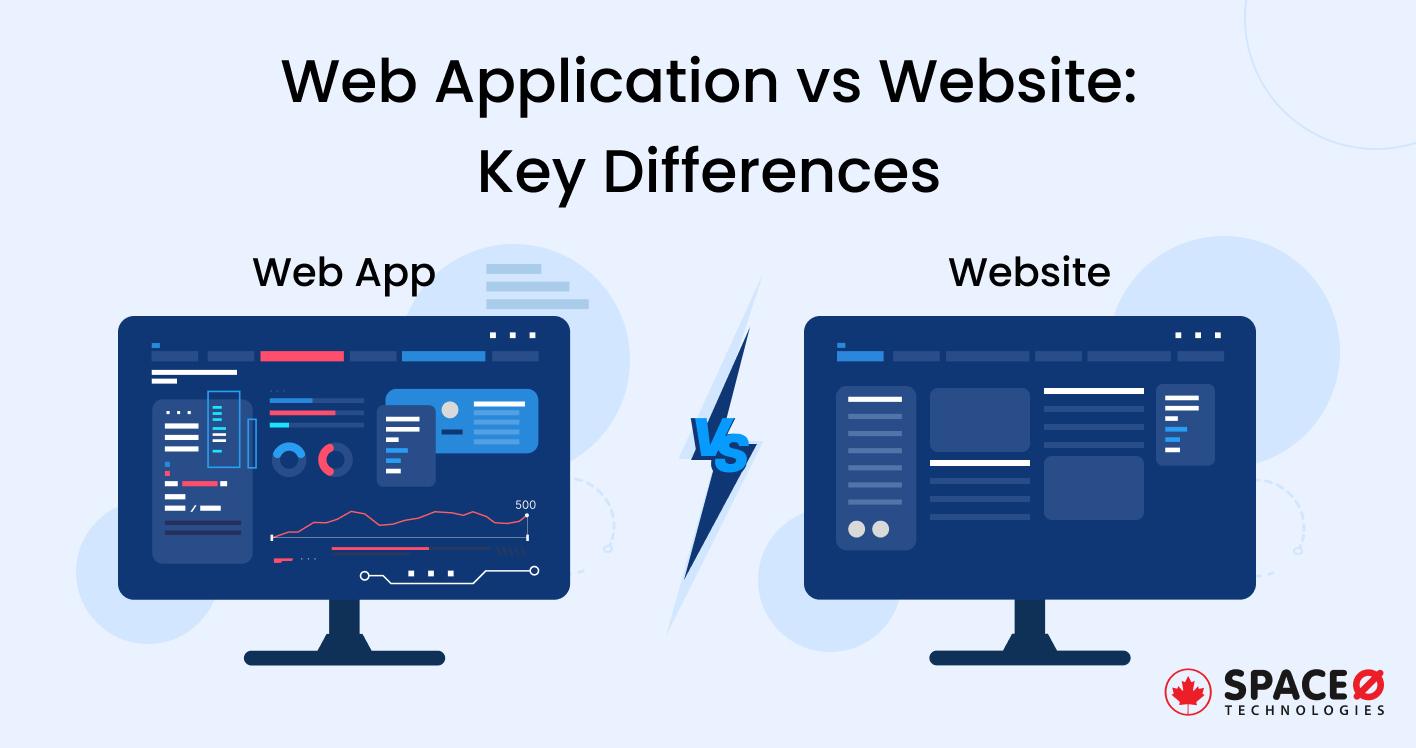
Website vs Web Application: Understanding the Core Differences
Key Takeaways: A website is usually created to show information purposes. While a web application is created to perform a specific task. For example, CNN is a website that provides news information, whereas Amazon is a web application that allows users to shop online. Choosing between a website and a web application depends on your…

 All our projects are secured by NDA
100% Secure. Zero Spam
*All your data will remain strictly confidential.
Trusted by


Bashar Anabtawi 
Canada
“I was mostly happy with the high level of experience and professionalism of the various teams that worked on my project. Not only they clearly understood my exact technical requirements but even suggested better ways in doing them. The Communication tools that were used were excellent and easy. And finally and most importantly, the interaction, follow up and support from the top management was great. Space-O not delivered a high quality product but exceeded my expectations! I would definitely hire them again for future jobs!”

Canada Office
2 County Court Blvd., Suite 400,
Brampton, Ontario L6W 3W8
Phone: +1 (602) 737-0187
Email: sales@spaceo.ca