
- What is Enterprise SMS? (And Why Picking the Right Solution Matters)
- What to Look for in an Enterprise Two-Way SMS Solution?
- How We Evaluated These Enterprise Messaging Solutions?
- Quick Comparison: 7 Top Enterprise SMS Solutions at a Glance
- Top 7 Enterprise Messaging Service Providers: Detailed Comparison
- 1. TextBolt — Best Enterprise SMS Solution for Email-to-SMS Operational Alerts
- 2. Twilio — Best Enterprise SMS Solution for Omnichannel CPaaS and Developer Ecosystem
- 3. Bandwidth — Best Enterprise SMS API Solution for US Carrier-Grade Voice and SMS
- 4. Telnyx — Best for Owned Private Global IP Network and Wholesale Economics
- 5. Sinch — For Native-Network Scale and the SMS-to-RCS Transition
- 6. Gupshup — For Conversational AI, WhatsApp Business, and Pre-Built Industry Agents
- 7. SlickText—Best Enterprise SMS Solution for Shopify Automation and Revenue Recovery
- Best Email-to-Text for System & On-Call Alerts
- How to Choose the Right Enterprise SMS Solution
- Restore Your Operational SMS Channel in 30 Minutes With TextBolt
- Frequently Asked Questions
Cut the CPaaS Engineering Cost With TextBolt
7 Best Enterprise SMS Solutions for IT and Operations Teams


The best enterprise email-to-text solutions now require a dedicated, A2P 10DLC-compliant business gateway, because the free carrier email-to-SMS gateways (AT&T’s txt.att.net, T-Mobile’s tmomail.net, and Verizon’s vtext.com) have shut down or are sunsetting. For teams that page on-call staff or alert patrons straight from the systems they already run, TextBolt is the best overall for native inbox workflows, starting at $29/month; developer-first APIs like Twilio sit at the other end, priced pay-as-you-go from $0.0083 per segment.
These deadlines are specific. AT&T’s txt.att.net closed on June 17, 2025; T-Mobile’s tmomail.net ended service in late 2024; Verizon’s vtext.com retires by March 31, 2027. Enterprise alerts, ILS notices, and on-call pages still aimed at those addresses are already failing or soon will, pushing IT teams toward registered business gateways rather than free carrier domains.
This guide compares the 7 best enterprise SMS solutions for 2026: TextBolt, Twilio, Bandwidth, Telnyx, Sinch, Gupshup, and SlickText. You will find feature comparisons, pricing, strengths, limitations, ideal use cases, and a verdict on each platform. For organizations that primarily need operational enterprise text messaging (server alerts, on-call notifications, IT incident management, EHR reminders, helpdesk alerts), we evaluate an email-to-SMS gateway that complements existing systems without the complexity or cost of a full CPaaS platform.
What is Enterprise SMS? (And Why Picking the Right Solution Matters)
Enterprise SMS is an A2P (Application-to-Person) messaging system that lets businesses send transactional, operational, and marketing text messages to customers, employees, or connected systems at scale. A true enterprise SMS platform supports A2P 10DLC registration, enterprise-grade security, compliance frameworks such as SOC 2 Type II and HIPAA, and the infrastructure needed to reliably deliver anything from hundreds to millions of messages.
The enterprise messaging landscape changed significantly between 2024 and 2026. Free carrier email-to-text gateways were retired, A2P 10DLC enforcement became mandatory for US business messaging, and compliance requirements such as SOC 2, HIPAA, ISO 27001, GDPR, and PCI DSS became standard procurement requirements. As a result, enterprises can no longer choose a messaging platform based on price alone.
The right enterprise SMS solution helps organizations:
- Maximize message deliverability with registered A2P 10DLC traffic and direct carrier connectivity.
- Meet security and compliance requirements including SOC 2, HIPAA, GDPR, and PCI DSS.
- Scale from thousands to millions of messages without sacrificing reliability or performance.
- Integrate with existing business systems such as CRMs, help desks, ERPs, EHRs, monitoring tools, and eCommerce platforms.
- Reduce operational costs through transparent pricing and automation instead of manual communication.
- Improve customer engagement with high-open-rate SMS for alerts, reminders, authentication, and promotions.
In this environment, choosing the right enterprise SMS platform directly impacts deliverability, compliance, and customer experience. The next step is understanding how to evaluate vendors against these requirements.
What to Look for in an Enterprise Two-Way SMS Solution?
With these requirements in mind, selecting an enterprise SMS solution requires a structured evaluation approach that goes beyond surface-level feature comparisons. The right platform should align with your organization’s security posture, regulatory obligations, integration needs, and long-term scalability.
Before shortlisting a vendor, focus on the capabilities that directly impact performance and total cost of ownership:
- Carrier-grade message delivery with direct connectivity to major carriers and seamless A2P 10DLC registration and compliance.
- Enterprise security and compliance including SOC 2 Type II, ISO/IEC 27001, GDPR, and other certifications relevant to your industry.
- Transparent and predictable pricing with clear subscription plans, volume discounts, and messaging rates that simplify budgeting.
- Scalable two-way messaging that enables conversations with customers and employees without requiring custom interfaces or extensive development.
- Multi-channel capabilities including SMS, MMS, RCS, WhatsApp, and Voice as your strategy evolves.
- Robust integrations and APIs that connect with CRMs, ERPs, help desks, healthcare systems, monitoring platforms, and marketing automation tools.
- High availability and reliability backed by redundant infrastructure, SLA commitments, and enterprise-grade uptime.
- Flexible deployment options that match your use case, whether you need an API-first CPaaS, an email-to-SMS gateway, or a complete omnichannel messaging platform.
The deployment model matters as much as any feature. CPaaS platforms provide maximum flexibility but require engineering investment. Email-to-SMS gateways are faster to deploy for operational messaging and alerting. Our guide on how SMS gateways work explains the model in detail. Many enterprises run both.
How We Evaluated These Enterprise Messaging Solutions?
To ensure a fair and practical comparison, we evaluated each platform using a consistent, enterprise-focused framework aligned with real-world procurement priorities.
Step 1: Vendor Selection
We shortlisted leading enterprise SMS providers based on industry recognition, customer adoption, G2 enterprise CPaaS and business messaging categories, Gartner market research, and their presence in enterprise messaging and communications.
Step 2: Evaluation Criteria
Each platform was assessed across six core areas:
- Security and compliance (SOC 2 Type II, HIPAA BAA, ISO 27001, GDPR support)
- Carrier connectivity, deliverability, and A2P 10DLC readiness
- API capabilities, SDKs, integrations, and developer experience
- Pricing transparency and total cost of ownership
- Scalability, reliability, and enterprise messaging capacity
- Features, support, and ease of deployment
Step 3: Pricing Verification
All pricing and feature information was verified against the vendors’ official websites and documentation at the time of writing. Where a provider does not publicly disclose US pricing, we note that rather than estimating.
Quick Comparison: 7 Top Enterprise SMS Solutions at a Glance
To help you quickly evaluate the differences between leading enterprise text messaging solutions, the table below highlights pricing, compliance support, and ideal use cases for each solution.
| Platform | Starting Rate (US) | Best Fit |
| TextBolt | $29/mo flat (500 SMS) | Operational alerts from email systems |
| Twilio | $0.0083/segment | Omnichannel breadth + developer ecosystem |
| Bandwidth | Sales-quote only | Direct tier-1 carrier network + native E911 |
| Telnyx | $0.004/segment | Owned private global IP network + wholesale economics |
| Sinch | $0.0078/message | Massive North American native-network scale + RCS transition |
| Gupshup | Sales-quote | Conversational automation + AI chatbots + WhatsApp |
| SlickText | $29/mo (Basic) up to $939/mo (Enterprise) | E-commerce SMS marketing + abandoned-cart automation |
Before evaluating individual platforms in detail, it’s important to account for carrier-level costs that apply across most providers.
US carrier surcharges (AT&T, T-Mobile, Verizon) typically add $0.0025–$0.005 per segment on top of pay-as-you-go messaging rates. Additionally, number rentals are billed separately by most vendors, with TextBolt being a notable exception.
Top 7 Enterprise Messaging Service Providers: Detailed Comparison
1. TextBolt — Best Enterprise SMS Solution for Email-to-SMS Operational Alerts
TextBolt is an enterprise SMS gateway built to bypass the most complex parts of a CPaaS deployment by sending messages through email. As a category of SMS gateway enterprise software, it replaces custom admin dashboards and developer-heavy integrations with an email-native workflow that monitoring tools, EHRs, alarm panels, and other email-capable systems already support.

You send a text by composing an email from Gmail, Outlook, Microsoft 365, a help desk, a server monitor, an EHR, or any SMTP-enabled platform to a phone-number-based address such as +1XXXXXXXXXX@sendemailtotext.com. The message is delivered as an SMS, and replies return to the original email thread. There is no SDK, no on-call dashboard to learn, and no prepaid wallet to manage.
For enterprise IT and engineering teams focused on on-call paging, alarm escalation, EHR reminders, emergency alerts, or SCADA notifications, TextBolt’s Same-Address Switch approach restores the channel in as little as 30 minutes without requiring a development project.
Key Capabilities of TextBolt
TextBolt supports A2P 10DLC-compliant messaging across major US carriers, including AT&T, Verizon, and T-Mobile. It also provides Canadian carrier coverage across Rogers, Bell, Telus, Fido, and other major networks.
Its core capabilities include:
- Email-native SMS sending from Gmail, Outlook, Thunderbird, Apple Mail, and other SMTP-compatible email clients.
- Email-to-SMS gateway support for automated alerts from Nagios, Datadog, Grafana, PRTG, Zabbix, EHRs, ATS platforms, and other business software.
- E-commerce order alerts from Shopify, WooCommerce, and Magento without custom development.
- SMS delivery tracking and message status visibility.
- Centralized conversation records retained within existing email systems.
- Shared inbox access with role-based user management.
- Dedicated toll-free numbers for business messaging.
- Non-expiring SMS top-up credits that activate only after monthly plan allowances are exhausted.
- Enterprise volume plans with custom routing and higher messaging capacity.
- Support for operational workflows such as appointment reminders, dispatch updates, recruiting communications, customer notifications, and system alerts.
Pros and Cons of TextBolt
| Pros | Cons |
| Send SMS from existing email systems without adopting a new platform | US and Canada only; no global carrier coverage |
| No 3-month subscription minimum or long-term contract requirements | |
| Up to 10 included users on Standard and Professional plans | |
| Non-expiring top-up credits reduce wasted spend | |
| Works with automated emails from EHRs, ATS platforms, monitoring tools, CRMs, and help desks |
TextBolt Pricing
TextBolt pricing uses a flat monthly model with bundled SMS credits and non-expiring top-ups. Unlike subscription, PAYG, or contract-heavy pricing models, costs stay predictable as teams grow because user seats, carrier registration support, and compliance assistance are included.
| Plan | Monthly Price | SMS Included | Seats |
| Basic | $29 | 500 | 1 |
| Standard | $49 | 1,000 | Up to 10 |
| Professional | $99 | 2,500 | Up to 10 |
| Enterprise | Custom | 5,000+ | Custom |
Key Pricing Advantages
- Save 20% with annual billing across all plans.
- Up to 10 team members included on Standard and Professional plans.
- Non-expiring SMS top-ups purchased only when needed.
- 10DLC compliance and carrier registration support included.
- No carrier surcharge pass-through fees added to published pricing.
- No long-term contracts or subscription lock-ins.
For teams comparing costs directly, TextBolt’s Standard plan starts at $49/month versus SMSGlobal’s Grow plan at $69/month, while including team access and avoiding the three-month minimum commitment attached to SMSGlobal subscriptions.
Is TextBolt the Right Enterprise SMS Solution for You?
TextBolt is best suited for organizations that use SMS as part of day-to-day business operations rather than global marketing campaigns. Common use cases include:
- Appointment reminders
- Customer notifications
- Service and maintenance updates
- Recruiting and candidate communication
- Dispatch coordination
- IT and monitoring alerts
- Internal team messaging
It is particularly well suited for businesses that already generate notifications from email-based systems and want to add SMS delivery without building API integrations or training staff on a separate messaging platform.
Simplify Operational Messaging at Scale
Give your team a faster way to send business-critical texts, reduce setup overhead, and avoid the complexity of a full CPaaS deployment.
2. Twilio — Best Enterprise SMS Solution for Omnichannel CPaaS and Developer Ecosystem
TextBolt is built around an email-native gateway that any system speaking SMTP can use without code. Twilio takes the opposite approach. Instead of providing a ready-made send path, it exposes SMS, MMS, RCS, WhatsApp, voice, email, and authentication infrastructure through APIs that developers integrate directly into applications, customer products, and internal systems.
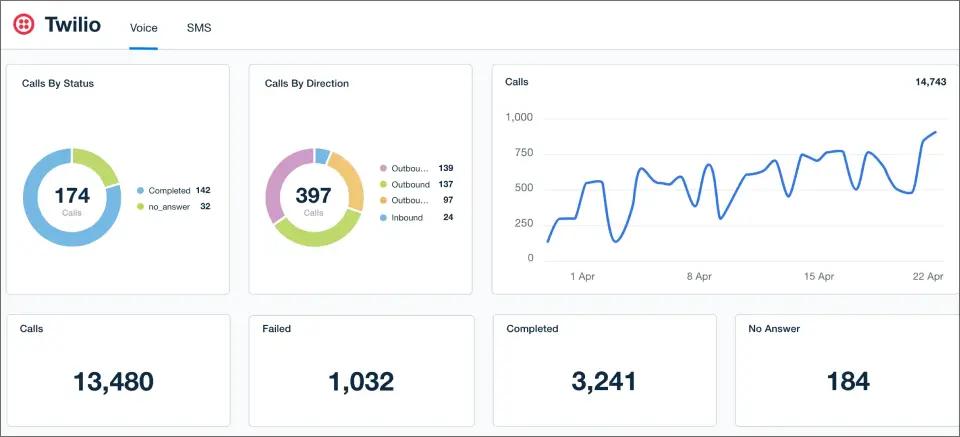
Buyers include SaaS companies, marketplaces, fintech platforms, retailers and banks running OTP at scale, healthcare systems on the Enterprise edition with a HIPAA BAA, and any business that needs programmable messaging woven into a product without picking a single channel up front. For a deeper line-by-line look at how Twilio’s API approach compares to TextBolt’s email-native path.
Key Capabilities of Twilio
- Programmable Messaging API for SMS, MMS, WhatsApp, RCS, and business notifications under one credential
- Conversations API for multi-party messaging across SMS, MMS, WhatsApp, Facebook Messenger, and in-app chat
- Messaging Services for sender pools, sender management, and configuration
- Trust Hub for 10DLC brand and campaign registration plus toll-free verification
- Engagement Suite with link shortening, click tracking, scheduling, and geo-matched senders
- SOC 2 Type II, ISO/IEC 27001, PCI DSS Level 1 (Voice), and HIPAA BAA available on the Security and Enterprise editions
Pros and Cons of Twilio
| Pros | Cons |
| Largest developer community and SDK breadth in CPaaS | Invoice complexity at scale with stacked carrier surcharges |
| Mature compliance: SOC 2 Type II, ISO 27001, PCI DSS, HIPAA on Enterprise | 10DLC rejections with slow ticket support reported in 2026 reviews |
| Omnichannel under one API | Per-segment pricing spikes with Unicode and long-form sends |
| Engagement Suite and Verify extend beyond raw messaging | Higher per-message floor than Plivo on identical US workloads |
| 180+ country reach with tier-1 carrier aggregation | First production deployment needs 2-4 engineering weeks |
| Established uptime history with published SLA on Enterprise | HIPAA limited to Security/Enterprise edition, not default |
Twilio SMS Pricing
| Service | Starting Price | Notes |
| Outbound SMS (10DLC long code) | $0.0083 per segment | Carrier fees apply separately |
| Outbound SMS (toll-free) | $0.0083 per segment | Toll-free verification recommended for production traffic |
| Inbound SMS | $0.0083 per segment | Charged separately from outbound traffic |
| Outbound MMS | $0.022 per message | Additional carrier fees may apply |
| Inbound MMS | From $0.0165 per message | Varies by number type |
| Long-code number | $1.15/month | Standard 10-digit US number |
| Toll-free number | $2.15/month | Verification required before production sending |
| Short code | From $1,000/quarter | One-time setup fees apply |
| Failed message fee | $0.001 per failed message | Charged only on failed deliveries |
| Engagement Suite | $0.015/message | First 1,000 messages per month included |
Source: twilio.com/en-us/sms/pricing/us. A2P 10DLC brand and campaign registration fees apply separately.
What Affects Your Actual Twilio Costs?
- Base SMS pricing starts at $0.0083 per segment, but US carrier pass-through fees add roughly $0.003 to $0.004 per message across AT&T, T-Mobile (raised January 2026), and Verizon.
- Every sending number is billed separately, starting at $1.15/month for local numbers and $2.15/month for toll-free.
- US business messaging requires A2P 10DLC registration (brand + campaign), with associated TCR fees on top of Twilio’s platform fees.
- SMS, MMS, WhatsApp, Voice, Verify, Engagement Suite, and Compliance Toolkit are each billed independently against the same account.
- Enterprise customers can negotiate committed-volume discounts beyond the published rate card during contract negotiation.
Is Twilio the Right Enterprise SMS Solution for You?
Twilio is a strong fit for engineering teams embedding messaging into a customer product, global enterprises sending across multiple countries, organizations running OTP and 2FA at carrier scale, retailers and banks layering SMS with WhatsApp and RCS, and SaaS companies that want SMS, voice, video, and chat under one vendor with one set of credentials. If none of those describe your team, our Twilio email-to-text alternatives covers the no-code options that skip the engineering overhead.
3. Bandwidth — Best Enterprise SMS API Solution for US Carrier-Grade Voice and SMS
Bandwidth is a carrier-owned communications platform with direct network infrastructure and an SMS API built for high-volume business messaging. For enterprises that send large numbers of transactional messages, the platform offers a carrier-direct approach that can reduce dependence on third-party aggregators and simplify messaging operations.
Bandwidth supports SMS, MMS, programmable voice, and emergency services, and it is positioned for teams that need reliable delivery, real-time visibility, and API-driven messaging at scale. Its network-led model makes it a strong fit for organizations that want one vendor for carrier access, messaging APIs, and compliance support.
Key Capabilities of Bandwidth
- Tier 1 network and network-operator infrastructure.
- High-throughput support for 10DLC, toll-free, and short code messaging.
- Bring-your-own-number capabilities.
- Real-time delivery receipts.
- 100+ MPS capabilities.
- SDKs for NodeJS, Java, Ruby, Python, PHP, and C#.
- BAA available for eligible messaging and voice use cases.
- Carrier-grade SMS, MMS, programmable voice, and E911 support.
Pros and Cons of Bandwidth
Bandwidth Pricing
| Number Type | SMS Outbound | MMS Outbound |
| U.S. 10DLC | $0.004 per message | $0.015 per message |
| U.S. Short Code | $0.008 per message | $0.020 per message |
| U.S. Toll-free | $0.007 per message | $0.020 per message |
Bandwidth’s pricing is volume-based, and carrier fees are separate from the base message rates. Monthly 10DLC campaign fees are also not included in the published per-message Bandwidth pricing.
Is Bandwidth Enterprise SMS API Right for You?
Bandwidth is a strong fit for US-focused enterprises that want carrier-direct messaging, high-volume transactional traffic, and support for regulated workflows through a BAA. It is a solid choice for organizations that value network ownership, messaging reliability, and API flexibility.
4. Telnyx — Best for Owned Private Global IP Network and Wholesale Economics
Twilio prices transparency at a premium and Bandwidth gates pricing behind sales. Telnyx took a third approach. It publishes $0.004 per segment for US 10DLC outbound (the lowest published wholesale-equivalent rate on this list) and exposes self-serve 10DLC registration without a sales call. The Messaging API is ranked #1 for results and ease of use, with reported 30% typical savings for customers who switch.
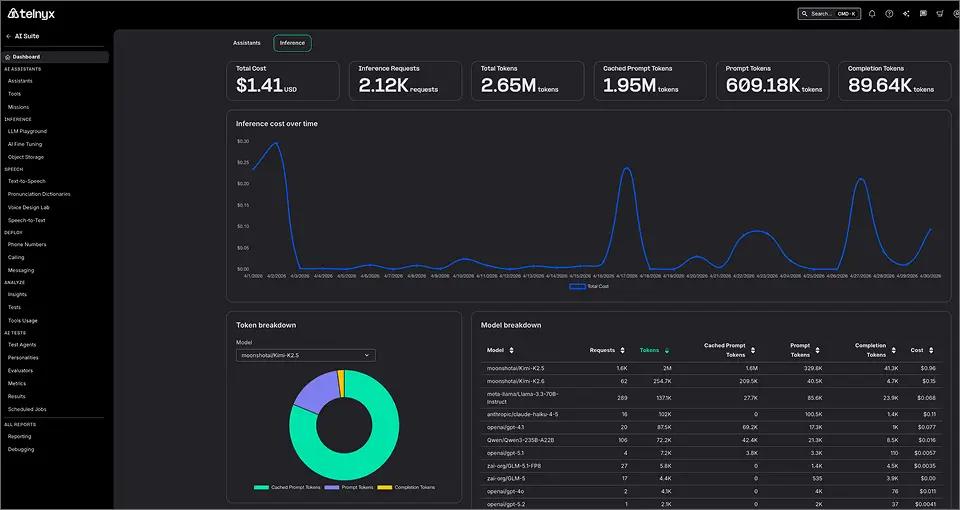
The 2026 Gartner Magic Quadrant for CPaaS placed Telnyx as a Niche Player and singled out its transparent usage-based pricing, the only CPaaS vendor Gartner called out on that dimension. Customers include Iterable, Fetch, Pangea, Talentify, OneText, goHappy, Point Blank Political, and Freedom Park.
Key Capabilities of Telnyx
- $0.004/segment published US 10DLC outbound rate, the lowest on this list
- Billion-scale Messaging API architecture proven on production workloads
- Hosted SMS on an existing number without changing providers
- Self-serve 10DLC brand and campaign registration via Mission Control Portal and API, with TCR fees pass-through at no markup
- Automated message queuing that auto-tunes throughput to account limits and current industry standards
- Automatic STOP-word opt-out handling and automatic message concatenation for long sends
- Intelligent message encoding that picks the most compact character set to minimize per-send cost
- Detailed delivery reports and per-message debugging tool inside the same Mission Control console
- Programmable Messaging for SMS, MMS, and RCS with automatic SMS/MMS fallback
- SOC 2 Type I, II, and III, ISO 27001:2013, HIPAA (BAA available), GDPR with data-locality controls, CCPA, and PCI DSS
Pros and Cons of Telnyx
| Pros | Cons |
| Lowest published US 10DLC rate on this list at $0.004 per segment, with reported ~30% typical savings versus other CPaaS providers | No native WhatsApp or Viber channel parity with Twilio, Sinch, or Gupshup |
| Owns its private global IP backbone end-to-end across AWS, GCP, and Azure with 17 PoPs and owned fiber | 2026 Gartner Niche Player, not Leader, for cross-functional procurement reviews |
| Self-serve 10DLC brand and campaign registration in Mission Control removes weeks of vendor back-and-forth | Onboarding and compliance approval reported as slower than rivals in 2026 Capterra reviews |
| Automated message queuing, STOP-word opt-out, message concatenation, and intelligent encoding all built into the API | Voice stack lacks E911, WebRTC, and number anonymization (per the 2026 Gartner review) |
| Four number types supported including Alphanumeric Sender ID, plus Hosted SMS on existing numbers without porting | Limited first-party local support and billing infrastructure outside North America and Europe |
| Recognized as #1 ranked SMS API for results and ease of use, with detailed delivery reports and a debugging tool on the same console | International SMS reach narrower than Twilio (180+) or Sinch (190+) |
Telnyx Pricing
Telnyx publishes a fully self-serve US rate card without a sales gate. The company reports customers typically save 30–70% on SMS and MMS when switching from another provider. All rates are per message part (segment), with carrier surcharges, number rentals, and 10DLC TCR fees billed separately.
| Service | Starting Price |
| Outbound SMS (10DLC) | $0.004 per segment |
| Outbound SMS (toll-free) | $0.0055 per segment |
| Outbound SMS (short code) | $0.007 per segment |
| Outbound MMS (10DLC) | $0.015 per message |
| Inbound SMS (10DLC) | $0.004 per segment |
| RCS rich text | $0.0065 per segment |
| RCS rich media | $0.016 per message |
| Phone number | From $1.00/month |
| Volume discount | Down to $0.0005 per segment |
Source: telnyx.com/pricing/messaging.
Additional Costs to Factor In
- US carrier surcharges (pass-through, no Telnyx markup): AT&T ~$0.0035 SMS / $0.009 MMS; T-Mobile USA ~$0.0045 SMS / $0.01 MMS; Verizon Wireless ~$0.0045 SMS / $0.007 MMS
- 10DLC TCR fees: $4.50 one-time brand registration, $30 upfront standard campaign, plus $10/month ongoing
- Volume-based commitment contracts available for further discounts, plus 24/7 support and a dedicated customer success manager
- Voice, Wireless/IoT, Number Lookup, and Voice AI Agents bill separately against the same Mission Control account
Is Telnyx the Right Enterprise SMS Solution for You?
Telnyx is a strong fit for cost-sensitive high-volume US transactional SMS, developer-led integrations that want self-serve 10DLC registration, procurement teams that require a published US rate card to model spend without a sales call, hyperscale buyers above 100M messages per month, and engineering teams that value an owned private global IP backbone end-to-end.
5. Sinch — For Native-Network Scale and the SMS-to-RCS Transition
Twilio aggregates tier-1 carriers and Telnyx peers with them. Sinch became one too. The 2021 acquisition of Inteliquent (the largest US tier-1 voice and messaging carrier) folded an owned carrier under the same brand as the Conversation API.
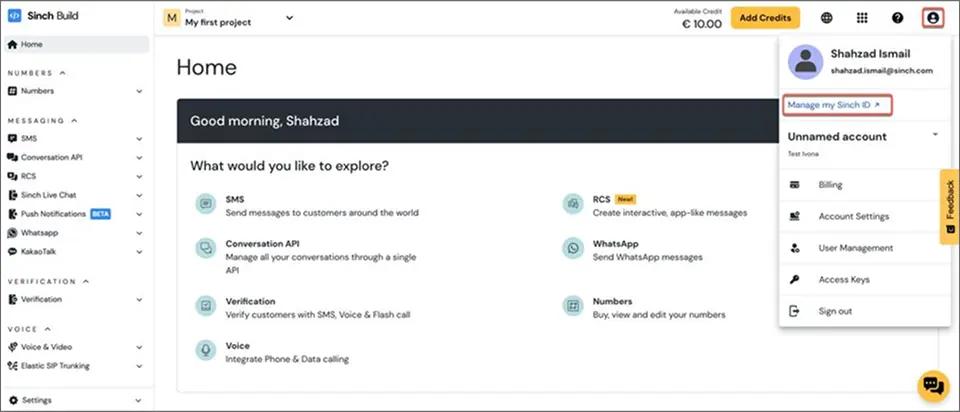
Sinch is the most aligned vendor for large North American enterprises scaling text operations past 1M messages per month while planning the transition to RCS for interactive customer engagement over the next 18 months.
Key Capabilities of Sinch
- Conversation API across 14 channels (SMS, MMS, RCS, WhatsApp, Messenger, Viber, KakaoTalk, WeChat, Instagram, Telegram, Line) — broadest regional coverage on this list
- Inteliquent-owned US tier-1 carrier infrastructure for native-network delivery without an aggregator middleman
- 600+ direct carrier connections across 190+ countries
- REST and SMPP support for high-volume transactional integrations
- Sinch Engage for campaign orchestration and SMS-to-RCS migration
- A2P 10DLC brand and campaign registration handled in onboarding
- Verify API for OTP and 2FA with cross-channel adaptive delivery
- Number Lookup API for phone number validation
Pros and Cons of Sinch
| Pros | Cons |
| Owns a US tier-1 carrier, so delivery happens on a native network rather than through aggregator layers. | The product surface can feel fragmented because different parts of the platform still maintain separate documentation and consoles. |
| Broad regional channel coverage, including KakaoTalk, WeChat, Viber, and Line. | Account management and number-porting visibility have been flagged as inconsistent in user reviews. |
| Strong option for the SMS-to-RCS transition, with migration orchestration built into Sinch Engage. | Non-US delivery economics still require sales engagement. |
| Published US rate card with predictable per-message economics. | Smaller developer community than Twilio, with a thinner third-party SDK ecosystem. |
| ISO 27701 privacy certification layered on top of ISO 27001 and SOC 2 Type II. | Multi-acquisition complexity can make enterprise onboarding slower. |
| SMPP support alongside REST for high-volume transactional workflows above 1M messages per month. | HITRUST attestation is not publicly listed despite a broad compliance footprint. |
Sinch Pricing
Sinch publishes its US 10DLC and toll-free SMS rates publicly at $0.0078 per message, and the short code rate at $0.009 per message. Number rentals, setup fees, and US carrier surcharges are billed on top of those base rates.
| Service | Starting Price |
| Outbound SMS (10DLC) | $0.0078 per message |
| Outbound SMS (toll-free) | $0.0078 per message |
| Outbound SMS (short code) | $0.009 per message |
| 10DLC number | $25/month |
| Toll-free number | $2.00/month + $2.00 setup |
| US carrier surcharges | ~$0.0025 to $0.005/SMS |
| MMS and RCS | Quote-based |
| 10DLC TCR fees | Pass-through at cost |
Source: sinch.com/pricing/sms. Non-US delivery economics require sales engagement.
What Affects Your Actual Sinch Costs?
- Base SMS pricing starts at $0.0078 per message, but US carrier surcharges of $0.0025 to $0.005 stack on top across AT&T, T-Mobile, and Verizon.
- 10DLC number rental at $25/month is one of the higher per-number costs on this list compared with Twilio’s $1.15 or Telnyx’s $1.00.
- 10DLC brand and campaign registration through TCR applies separately at pass-through rates.
- Adding RCS, WhatsApp, Viber, or regional channels (KakaoTalk, WeChat, Line) introduces channel-specific pricing on top of base SMS.
- Non-US delivery rates require sales engagement, so multinationals should expect a multi-region quote rather than a single per-segment number.
For large North American enterprises sending 1M+ messages per month and adding RCS as the next channel, Sinch’s native-network scale and Conversation API breadth justify the premium over a pure-aggregator like Twilio. For US-only operational alerting or small-volume buyers, the $25/month per-number rental and product fragmentation outweigh the carrier-ownership benefit.
Is Sinch the Right Enterprise SMS Solution for You?
Sinch is a strong fit for large North American enterprises scaling beyond 1M messages per month, multinationals needing regional channels such as KakaoTalk, WeChat, Viber, and Line under one contract, retailers and banks planning an SMS-to-RCS transition, healthcare buyers needing HIPAA plus ISO 27701 privacy attestation, and engineering teams that want SMPP plus REST for high-volume transactional traffic.
6. Gupshup — For Conversational AI, WhatsApp Business, and Pre-Built Industry Agents
Twilio, Bandwidth, and Telnyx treat SMS as the primary product and chat as an add-on. Gupshup treats SMS as one channel in a 30+ channel Conversation Cloud, with AI chatbots, WhatsApp Business automation, RCS, and pre-built industry-trained AI agents sitting on top.

Gupshup fits where pure CPaaS vendors do not for enterprises whose engagement model depends on chat-first workflows (banking onboarding, e-commerce shopping assistants, healthcare triage, multilingual customer support) rather than one-way alerts.
Key Capabilities of Gupshup
- 30+ channels under one Conversation Cloud API (SMS, WhatsApp, RCS, Voice, Instagram, Messenger, Web, Mobile App, email, and 20+ more)
- AI Agent Library with 15 pre-built, industry-trained multimodal AI agents launched February 2025, no custom NLP development required
- BotStudio zero-code chatbot builder for non-developer teams
- WhatsApp Business Solution Provider with verified template management
- 225+ country reach with direct carrier connections in 200+ countries
- High OTP delivery rates within seconds, with cross-channel failover
- A2P 10DLC brand and campaign registration handled in onboarding
- Native integrations with Salesforce, Zoho, HubSpot, and major CRM platforms
Pros and Cons of Gupshup
| Pros | Cons |
| Native AI chatbot library across 30+ channels removes months of custom NLP development | No public US 10DLC or toll-free rate card; pricing requires sales engagement |
| WhatsApp Business automation built-in as an official Business Solution Provider | SOC 2 Type II and HIPAA BAA are not publicly attested on the trust portal |
| 225+ country reach with intelligent cross-channel failover (RCS to WhatsApp to SMS) | Pricing reported approximately 30% above CPaaS competitors in some G2 and TrustRadius quotes |
| ISO 27001 plus GDPR plus TLS 1.2 / 256-bit AES encryption baseline | Analytics dashboard and ticket response times flagged as weak in 2026 reviews |
| Pre-built AI Agent Library cuts conversational-commerce time-to-market for retailers and banks | Not named in the 2026 Gartner Magic Quadrant for CPaaS Leaders quadrant |
| Strong fit for chat-first multilingual customer engagement across emerging markets | 16+ tracked WhatsApp API incidents since June 2025 per practitioner reports |
Gupshup Pricing
Gupshup does not publish a US SMS rate card. Pricing is usage-based and typically depends on conversation volume, channel mix, region, and access to AI Agent Library features. In practice, commercial rates are quote-based, and larger deployments often negotiate pricing by vertical and committed monthly volume.
| Service | Starting Price | Notes |
| Outbound SMS (10DLC) | Sales-quote only | Pricing may vary by volume and region |
| WhatsApp Business messaging | Sales-quote, per conversation | Pricing varies by conversation type and geography |
| RCS messaging | Sales-quote only | Per-message and per-conversation pricing may apply |
| AI Agent Library access | Sales-quote | Priced by platform tier or agent usage |
| BotStudio | Included on Conversation Cloud tiers | Zero-code chatbot builder |
| Voice and Instagram channels | Sales-quote only | Billed by channel under Conversation Cloud |
| 10DLC TCR fees | Pass-through | Brand and campaign registration billed separately |
What Affects Your Actual Gupshup Costs?
- Pricing is sales-quote-only, so committed conversation volume and channel mix drive the per-message rate that lands on the contract.
- WhatsApp Business pricing follows Meta’s per-conversation tier (Marketing, Utility, Authentication, Service), so the mix of conversation categories shifts the bill.
- AI Agent Library access bills separately from base messaging and varies by number of agents deployed and platform tier.
- US carrier surcharges and 10DLC TCR fees pass through on top of Gupshup’s per-message rate.
- Multi-region multinational deployments often include separate quotes per geography rather than one global per-segment rate.
Is Gupshup the Right Enterprise SMS Solution for You?
Gupshup is a strong fit for enterprises building chat-first customer engagement strategies, WhatsApp Business-heavy international operations across emerging markets, retailers and banks adopting pre-built AI agents instead of custom NLP builds, multilingual customer-support workloads across SMS, WhatsApp, RCS, and 30+ channels, and brands whose growth thesis depends on conversational commerce.
7. SlickText—Best Enterprise SMS Solution for Shopify Automation and Revenue Recovery
SlickText is built for e-commerce teams that want SMS marketing tied directly to revenue-recovery workflows. Its native Shopify app, abandoned-cart automation, and two-way messaging tools make it especially useful for brands that want to turn text messaging into a conversion channel rather than just a broadcast tool.
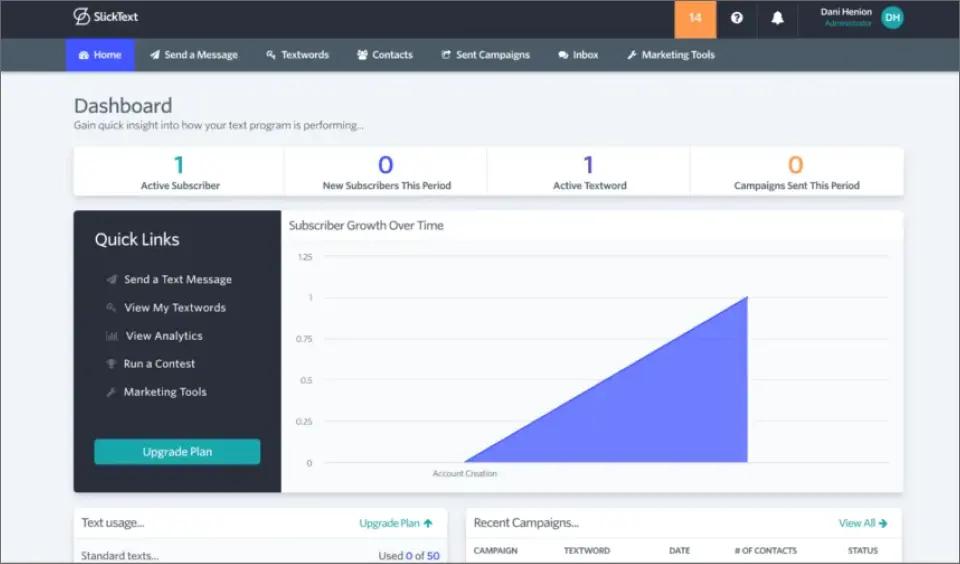
It is strongest for retailers that need segmentation by cart value, order history, and click behavior, plus built-in opt-in tooling and lifecycle campaigns. For teams already running Shopify, HubSpot, or email marketing workflows, SlickText offers a straightforward way to add SMS without building a custom stack.
Key Capabilities of SlickText
- Native Shopify app with abandoned-cart automation segmented by cart value, order history, and click behavior.
- Built-in revenue-recovery workflows for abandoned cart, post-purchase follow-up, and win-back campaigns.
- Unlimited contacts across every tier.
- Rollover credits, so unused monthly credits carry forward instead of expiring.
- One premium sending number included with every paid plan.
- Free incoming messages on every tier, with only outbound messages consuming credits.
- 10DLC local number support starting at $10/month.
- Toll-free SMS with carrier fees passed through at about $0.0042 per SMS.
- Short code support, including random and vanity options on higher-tier plans.
- MMS messaging at 3 credits per segment, with up to 1,600 characters per message.
- Built-in TCPA opt-in and opt-out tooling.
- Dedicated Customer Success Manager from the Premium tier and above.
Pros and Cons of SlickText
| Pros | Cons |
| Deep abandoned-cart and Shopify automation with segmentation by cart value, order history, and click behavior. | US and Canada only, with no broader international coverage. |
| Nine-tier pricing ladder from $29 Starter to $939 Elite supports precise scaling. | SOC 2 Type II is not publicly attested on the trust portal. |
| Unlimited contacts, rollover credits, and free incoming messages reduce wasted spend. | MMS uses 3 credits per segment, which can raise campaign costs. |
| 1-on-1 onboarding from Growth and a Dedicated CSM from Premium improve support. | No native WhatsApp, Viber, or voice channels. |
| RCS support adds a newer engagement channel with richer branding. | Costs can rise quickly above 10,000 messages per month versus CPaaS alternatives. |
| Conversational inbox supports marketing and customer support in one place. | Heavier reliance on Zapier can limit deeper native integrations. |
SlickText Pricing
SlickText uses a tier-based subscription model where every plan includes a fixed monthly SMS credit bucket. Unlimited contacts, one premium sending number, free incoming messages, and rollover credits are included on every paid tier. Annual billing includes two months free across all tiers.
| Plan | Monthly Price | SMS Credits / Month |
| Free Trial | Free | 14 days, no credit card required |
| Starter | $29 | 500 |
| Professional | $49 | 1,000 |
| Business | $79 | 2,000 |
| Growth | $129 | 3,500 |
| Scale | $169 | 5,000 |
| Enterprise | $319 | 10,000 |
| Premium | $579 | 25,000 |
| Elite | $939 | 50,000 |
| Custom | Custom | Custom |
Additional costs to factor in:
- 10DLC local number: $10/month per number.
- Toll-free SMS: carrier fee of about $0.0042 per SMS, passed through on top of credit consumption.
- Short code random: $500/month plus carrier setup, requiring Enterprise tier or higher.
- Short code vanity: $1,000/month plus carrier setup, requiring Enterprise tier or higher.
- RCS add-on: $500 one-time setup plus $200/year.
- MMS: 3 credits per segment instead of 1, up to 1,600 characters per message.
What Affects Your Actual Costs?
SlickText pricing is straightforward at the plan level, but real usage costs depend on message type, number type, and campaign structure. MMS and RCS can increase spend faster than plain SMS, especially for retail teams running rich media or high-frequency promotions.
The best value appears in workflows where Shopify automation, opt-in collection, and lifecycle messaging are central to revenue generation. For teams focused on broad omnichannel delivery or international reach, a CPaaS platform may be a better fit.
Is SlickText the Right Enterprise SMS Solution for You?
SlickText is a strong fit for e-commerce brands, Shopify merchants, and retail teams that want SMS tied directly to abandoned-cart recovery, win-back campaigns, and customer engagement. It is also useful for teams that want a built-in inbox, contact growth tools, and simple tier-based pricing.
Best Email-to-Text for System & On-Call Alerts
This is the slot most enterprise SMS roundups miss. When the thing sending the message is a monitoring stack, an alarm panel, or a library’s ILS, not a marketing team, the question is not “which CPaaS” but “how do I replace the carrier gateway my system already points at.” An email-to-SMS gateway answers it without an integration project.
Monitoring and On-Call Paging
If your alerting already fires an email, it can page a phone. Point the alert email from PagerDuty, Opsgenie, Datadog, Nagios, UptimeRobot, Grafana, or AWS CloudWatch at a TextBolt address and the page arrives as SMS. No SDK. No code. No webhook receiver to host. Because replies thread back to the sender’s inbox, each on-call engineer sees their own pages rather than a shared catch-all, and you change the destination address for a rotation instead of redeploying anything. This replaces what would otherwise be a five-figure SMS API build for traffic that is not customer-facing.
Migrating Retired Carrier Gateways
The carrier gateways your systems targeted are retiring on fixed dates, and the enterprise fix is a straight address swap: anywhere a system sent to [PhoneNumber]@txt.att.net or [PhoneNumber]@vtext.com, repoint it to +1[PhoneNumber]@sendemailtotext.com. A single domain retires the per-carrier lookup table entirely. TextBolt moved 200+ enterprises, FedEx and GE Aerospace among them, off those gateways in roughly 5 minutes each.
Library ILS Notices
Libraries whose ILS sent patron text notices through carrier gateways face the same break. For Koha, set SMSSendDriver to Email, enable EnhancedMessagingPreferences, and set the SMS cellular provider domain to sendemailtotext.com; the ILS keeps sending the same email, only the destination changes, and your own mail server does the work. Pilot one notice type before a full patron rollout, and watch the dashboard for delivery status; the gateway does not auto-retry a failed message, so visible status beats assumed delivery.
For the full carrier-by-carrier picture, see our email to text service overview.
How to Choose the Right Enterprise SMS Solution
Most enterprise SMS procurement falls into one of several workload patterns. Use the table below to narrow your shortlist based on the communication job, expected volume, and deployment model.
| If your workload is… | Best shortlist entry | Starting cost |
| Operational alerts from email systems, including monitoring, EHR, alarm, and on-call paging workflows | TextBolt — email-to-SMS gateway for operational messaging | $29/mo + $45/yr toll-free |
| Product-embedded SMS or omnichannel messaging, including SMS, MMS, RCS, WhatsApp, and Voice | Twilio — broad CPaaS ecosystem | $0.0083/segment + number fees |
| US healthcare, contact center, or conferencing workloads needing carrier-owned infrastructure | Bandwidth — carrier-direct messaging platform | Sales-quote |
| Cost-sensitive US transactional SMS with self-serve 10DLC | Telnyx — self-serve CPaaS with published low-rate messaging | $0.004/segment + number fees |
| Large North American enterprises scaling high-volume messaging and channel expansion | Sinch — enterprise messaging platform with broad channel support | $0.0078/msg + number fees |
| Conversational AI, WhatsApp Business, and multilingual chatbot workflows | Gupshup — conversational messaging and automation platform | Sales-quote |
| E-commerce and retail SMS marketing with list-building and abandoned-cart automation | SlickText — SMS marketing platform | $29/mo to $939/mo |
The contrarian point still applies: most enterprise SMS RFPs default to single-vendor consolidation, but the teams that get this right often run two platforms. A CPaaS handles product-embedded customer messaging, while a lighter gateway handles operational alerts. Once engineering time and compliance review are included, that two-platform model usually beats forcing both workloads through one CPaaS.
Restore Your Operational SMS Channel in 30 Minutes With TextBolt
The enterprise SMS market in 2026 splits cleanly into two workloads. Customer-facing product messaging belongs with a CPaaS like Twilio, a carrier-direct platform like Bandwidth, Telnyx, or Sinch, a conversational AI platform like Gupshup, or a retail marketing tool like SlickText, depending on the channel mix and the team that owns it.
The operational half like server alerts, on-call paging, EHR reminders, alarm escalations, broadcast emergencies, and SCADA notifications belongs with an email-to-SMS gateway like TextBolt, because the source systems already speak email and there is no reason to fund a developer project just to translate one format into another.
If the free carrier email-to-text gateways your teams relied on for years have stopped working, including AT&T’s @txt.att.net ended in 2025, T-Mobile’s @tmomail.net retired in 2024, and Verizon’s @vtext.com is headed for full shutdown in 2027 and the migration path below gets alerts flowing again the same afternoon.
Migration in 3 Steps
- Sign up and choose your plan at textbolt.com/pricing. Configuring your inbound gateway address takes about 30 minutes.
- Complete business verification. TextBolt files A2P 10DLC brand and campaign registration with the carriers on your behalf. Most accounts approve in 1–2 business days, and the AI Compliance Pre-Check flags likely rejection issues before TCR submission.
- Swap the recipient address. In every system that was sending to @txt.att.net, @vtext.com, or @tmomail.net, change the destination to @sendemailtotext.com. No code changes. No software upgrades.
Most teams run both paths in parallel for a week to validate delivery before fully cutting over. After that, monitoring tools, EHRs, alarm panels, helpdesks, and IoT sensors keep sending the same emails they always did but they just land as SMS on the on-call phone instead of bouncing at the carrier.
If you also need product-embedded customer SMS, omnichannel orchestration, or AI chatbot workflows, pair TextBolt with one of the other platforms in this guide on the customer-facing side. That two-platform stack is where many enterprises end up after both procurement cycles, and the economics usually work better than forcing both workloads through one CPaaS.
Move Your Operational SMS Off the Deprecated Gateways
Replace outdated carrier email-to-text routes with TextBolt’s reliable SMS alerts, including 10DLC registration and simple monthly pricing.
Frequently Asked Questions
What is enterprise texting?
Enterprise texting is the use of a specialized platform that lets a business send and receive SMS and MMS messages at scale. These platforms go beyond consumer texting apps by supporting automation, analytics, secure data handling, message archiving, role-based access, and team-level workflows. The category covers CPaaS APIs for product-embedded messaging, SMS marketing platforms for campaign automation, tier-1 carrier networks for high-volume transactional sends, and email-to-SMS gateways for operational alerting from existing systems.
Can I use TextBolt for product-embedded SMS in a customer app?
No, TextBolt is an email-to-SMS gateway built for operational messaging from systems that already send email, not for product-embedded customer SMS. For messaging embedded inside a customer application, a CPaaS with programmable APIs (such as Twilio, Bandwidth, Telnyx, or Sinch) is the right fit. Enterprises that need both can pair a gateway for operational alerts with a CPaaS on the customer-facing side.
Does switching enterprise SMS providers require new A2P 10DLC registration?
Switching enterprise SMS providers usually requires new A2P 10DLC registration because brand and campaign records sit inside the sending provider’s TCR submission. The new provider files a fresh brand and campaign on your behalf, and carriers approve independently of your prior provider’s history. TextBolt files both during onboarding and typically completes in 1-2 business days.
When should an enterprise switch from a CPaaS to an email-to-SMS gateway?
Switch, or add a gateway alongside a CPaaS, when the traffic is operational rather than customer-facing: server alerts, on-call paging, EHR reminders, alarm escalations, or SCADA notifications fired by systems that already send email. Routing this traffic through a CPaaS means funding a developer project just to translate email into SMS, whereas a gateway deploys with an address swap and no code. Once engineering time and compliance review are counted, a two-platform model (CPaaS for product messaging, gateway for alerts) often beats forcing both workloads through one CPaaS.
Where does an email-to-SMS gateway fit alongside a CPaaS in an enterprise stack?
An email-to-SMS gateway fits the operational alerting layer of an enterprise stack, while a CPaaS fits the customer-facing application layer. Monitoring tools, EHR systems, alarm panels, on-call schedulers, and SCADA systems all natively produce email, so the gateway sits next to those systems with no SDK or webhook integration. The CPaaS sits inside the product backend, behind authentication and customer-event triggers. Both can run in the same enterprise without overlap because the workloads do not share source systems.
How can I convert emails into text messages automatically?
You can convert emails into text messages automatically by sending an email from any SMTP-capable system to a phone-number-based gateway address. TextBolt accepts email at +1XXXXXXXXXX@sendemailtotext.com and delivers the subject and body as an SMS with up to 98% delivery rate. Compatible source systems include Gmail, Outlook, Microsoft 365, monitoring tools, EHRs, alarm panels, on-call schedulers, helpdesk platforms, and any IoT sensor that can fire an SMTP message. Setup takes about 30 minutes and 10DLC registration completes in 1-2 business days.