
- Why Old Methods for Texting from Your Computer Stopped Working (and What Replaced Them)
- 7 Ways to Text From Your Computer
- 1. Send Texts From Your Computer via Email With TextBolt
- 2. Send Texts From a Windows PC With Microsoft Phone Link
- 3. Send Texts From a Mac With iMessage
- 4. Send Texts From a Computer With Google Messages (Android)
- 5. Send Texts From Your Computer With WhatsApp Web
- 6. Send Texts With Carrier Email Gateways (Why They Stopped Working)
- 7. Send Texts From a Computer With Google Voice
- Free SMS Websites —Methods to Avoid to Text From Computer
- How to Send a Text Message From a Computer Without a Phone
- How to Receive Texts on Your Computer
- How TextBolt Compares to Other Business Texting Tools
- How to Choose the Best Way to Text From a Computer
- Why Smart Businesses Choose TextBolt
- Frequently Asked Questions
Start Sending Texts from Your Computer
How to Send & Receive Texts From Your Computer: 7 Methods for PC, Mac & Android


Wondering how to text from a computer in 2026? Whether you’re sending personal replies or running business SMS at scale, this guide covers every reliable method that actually works right now.
We compare 7 ways to send SMS from a computer side by side, on PC, Mac, or Chromebook, from free built-in tools like iMessage and Google Messages to business-grade texting platforms like TextBolt that let you send texts directly from your email with no phone connection required.
Some methods that worked a few years ago are completely dead now. Others have new limitations. And a few options didn’t exist before 2026. If you’ve ever wondered whether you can send text from a PC reliably for work, the short answer is yes, but the right method depends on your situation. This guide cuts through the noise so you can pick the method that fits, whether you’re texting clients, coordinating with your team, or just replying to friends from a bigger screen.
Here’s what we’ll cover:
- 7 methods to send texts from a computer (free and paid)
- How to text from a computer without a phone
- A comparison table for business texting tools
- Which option fits personal vs. business use
Why Old Methods for Texting from Your Computer Stopped Working (and What Replaced Them)
T-Mobile’s @tmomail.net silently stopped working in late 2024, AT&T formally shut down @txt.att.net on June 17, 2025, and Verizon’s @vtext.com is winding down toward a full shutdown on March 31, 2027 services millions of businesses had quietly depended on for over a decade. All three major US carriers effectively killed the simplest way businesses had to text from a computer.
These gateways let anyone send an SMS by emailing a special address like 5551234567@txt.att.net. They weren’t perfect, delivery rates had dropped to 30–40% in their final years, but they were simple. For many businesses, they were the entire texting workflow.
Once they shut down, teams scrambled:
- Staff went back to texting customers from personal phones
- Appointment reminders stopped going out, leading to no-shows
- IT alerts that triggered via email suddenly had nowhere to go
- TCPA compliance risks spiked with personal device texting
The good news: there are now reliable ways to text from a computer, and most of them work better than the old gateways ever did. Some are free and built into your operating system. Others are purpose-built for business messaging with compliance, team access, and delivery tracking. Let’s walk through each one.
7 Ways to Text From Your Computer
| Method | Pros | Cons | Works Without Phone? | Cost | Reliability |
| TextBolt | Inbox-native, business-grade SMS, compliance-ready | Subscription (but start with $29) | Yes | From $29/mo | Up to 98% |
| Windows Phone Link | Free, mirrors phone | Phone must stay online, no compliance | No | Free | Medium |
| Mac iMessage | Works well on Apple devices | Personal number only, not scalable | No | Free (Apple only) | Medium |
| Google Messages Web | Browser-based Android texting | Phone mirroring, no logs | No | Free | Low |
| WhatsApp Web | Free, encrypted, no phone needed after setup | Not SMS, both sides need app | Need pairing | Free | Medium |
| Legacy Email Gateways | Historically used | Mostly dead, 30–40% delivery | Not Working | Free | Low |
| Google Voice | Free U.S. number, works on web and mobile | Limited availability | Yes | Free (personal) / Paid (business) | Medium |
1. Send Texts From Your Computer via Email With TextBolt
Most Reliable | No Phone Required | Built as a Replacement for AT&T/Verizon Gateways | Send & Receive SMS from Gmail or Outlook
TextBolt is the most reliable email-to-text service for businesses and professionals who need to send text to phone from computer to customers reliably. It emerged as the direct replacement for AT&T’s discontinued service, but with major improvements. Unlike carrier gateways that failed 70% of the time, TextBolt consistently achieves up to 98% delivery rates through 10DLC carrier registration and dedicated toll-free numbers.
It’s ideal for appointment heavy businesses, healthcare groups, real estate, restaurants, schools, banks, salons and insurance agencies all needed a reliable way to:
- Send SMS from Gmail/Outlook
- Maintain centralized communication
- Ensure delivery (and avoid spam filtering)
- Remain compliant
- Enable teams to collaborate
How TextBolt Works:
Setting up TextBolt is refreshingly simple, if you can send an email, you’re already 90% trained. Unlike complex SMS platforms that require weeks of training and IT support, TextBolt integrates seamlessly with the email system your team already uses every day. The entire setup process takes just 30 minutes, and you can start sending texts immediately while your business registration processes in the background.
Initial setup with TextBolt (30 minutes, one time):
- Sign up at TextBolt.com and complete business verification
- TextBolt handles your 10DLC registration automatically (1-2 days in background)
- Receive your dedicated toll-free number (like 855-TEXTBOLT)
- Save @sendemailtotext.com to your email contacts
- Start your 7-day free trial immediately while registration processes
Sending texts with TextBolt (30 seconds):

- Open Gmail, Outlook, or any email client you already use
- Address email to: 5551234567@sendemailtotext.com (just the phone number)
- Type your message in the email body. Standard SMS supports 155 characters per segment (70 with emojis or special characters). Longer messages automatically split into multiple segments, each using one credit.
- Hit send – TextBolt delivers as professional SMS from your business number
- Replies come directly back to your email inbox as text to email, so the entire conversation lives in Gmail or Outlook
Unlike consumer phone-mirroring tools, TextBolt:
- Does not depend on a phone
- Does not disconnect
- Does not require staff to use personal numbers
- Does not limit you to one user
- Does not break when a device is offline
It’s built for operations teams, clinics, service businesses, and anyone who needs reliable, scalable customer communication.
Want to see how easy it is? Watch Demo Video
What TextBolt Solves:
- Staff texting from personal phones: Compliance issues, privacy risks, fragmented communication, TextBolt centralizes everything into a shared inbox.
- Missed appointments and revenue loss: For clinics, auto shops, insurance agencies, tutoring centers, salons, dental practices, and many other service-based businesses, even a single missed appointment can cost more than a month of a TextBolt subscription, which is why consistent reminders matter. If you need alerts beyond reminders, our guide covers how to set up text alerts for business end to end.
- Operational overload with SMS dashboards: Many SMS tools require teams to learn new, complicated software. TextBolt eliminates this burden by letting teams send and receive messages directly from the email inbox they already use every day.
- Inconsistent delivery: Legacy gateways often failed, resulting in missed reminders, delayed notifications, frustrated customers, and lower show rates. TextBolt’s carrier-approved routing ensures reliable delivery every time, giving teams confidence that messages reach their recipients.
- Compliance risk: TCPA requirements demand automatic opt-out handling, encrypted infrastructure, and comprehensive message logging. Consumer texting tools can’t meet these standards. TextBolt supports automated TCPA opt-out handling, encrypted delivery, and comprehensive audit logging. For specific compliance requirements, we recommend consulting your compliance team to ensure TextBolt fits your needs.
Enterprise-Grade Security and Compliance
TextBolt supports 10DLC-registered business messaging with encrypted delivery and automated TCPA opt-out handling. Read our detailed 10DLC compliance guide to understand what registration covers and why it matters for delivery rates.
TextBolt Key Features:
Here are the professional features for TextBolt:
- Carrier-Approved Infrastructure: Registered numbers + validated routes = predictable deliverability
- Two-Way SMS via Email: Replies go straight to your inbox, enabling seamless two-way messaging conversations with customers
- Team Collaboration: Multiple staff can send/receive messages from the same number (Standard and Professional plans include up to 10 team members)
- Message Templates: Reminders, confirmations, follow-ups
- Automatic Opt-Out Handling: TCPA compliance
- Detailed Audit Logs: Full message history for compliance reviews and internal reporting
- International Sending: US + Canada supported
- Email client integrations: Works out of the box with Gmail to text, Outlook to text, Thunderbird to text, Apple Mail to text, and any other SMTP-compatible email client with no plugins required.
- Monitoring and DevOps integrations: Convert alert emails into instant SMS from tools like Grafana, Datadog, GitHub Actions, and GitLab CI just add one gateway address to your existing notification rules
- Bulk Messaging: Fully compliant BCC from inbox
TextBolt Pricing:
TextBolt pricing plans fit any business size:
| Plan | Monthly Price | Message Credits | Best For |
| Basic | $29/month | 500 credits | Solo practitioners, consultants |
| Standard | $49/month | 1,000 credits | Growing businesses, medical practices |
| Professional | $99/month | 2,500 credits | Busy practices, multi-locations |
| Enterprise | Custom | 5,000+ credits | Large organizations, healthcare networks |
Text From Your Computer — Finally Reliable, Business Grade SMS
Send and receive texts right from your email inbox. No phone needed. Up to 98% delivery, compliance ready. Start your free trial in minutes.
2. Send Texts From a Windows PC With Microsoft Phone Link
Microsoft Phone Link comes pre-installed on Windows 10 and 11 and lets you send SMS from PC by mirroring your phone’s messages. It works with both Android and iPhone, though the setup and features differ slightly. Phone Link also handles notification sync, so calls and app alerts surface on your desktop alongside your texts.

How to Set It Up With an Android Phone
- Open the Phone Link app on your Windows PC (search ‘Phone Link’ in the Start menu).
- Download the Link to Windows app on your Android phone from the Google Play Store.
- Follow the on-screen prompts to scan the QR code and pair your devices.
- Grant the required permissions (messages, notifications, contacts).
- Once paired, click the Messages tab in Phone Link on your PC.
- Click New Message, enter a contact name or number, type your message, and send.
How to Set It Up With an iPhone
The setup is similar, but pairing happens via Bluetooth instead of QR code. iPhone support has some limitations: no group texts, no image sending, and you must keep your phone physically close to your PC.
Limitations:
- Your phone must stay nearby and connected (Bluetooth for iPhone, Wi-Fi for Android)
- iPhone users cannot send group messages or MMS through Phone Link
- Only shows messages from the last 30 days
- No business number—uses your personal phone number
- No compliance features, bulk messaging, or team access
Best for: Windows PC users who want to reply to personal texts without picking up their phone. For business texting that doesn’t depend on a physical phone, TextBolt works directly from your email no phone connection needed.
3. Send Texts From a Mac With iMessage
If you have a Mac and an iPhone, Apple’s Messages app lets you send and receive texts directly from your computer. iMessages (blue bubbles) sync automatically. With a quick settings change, you can also send standard SMS texts (green bubbles) to non-Apple contacts.
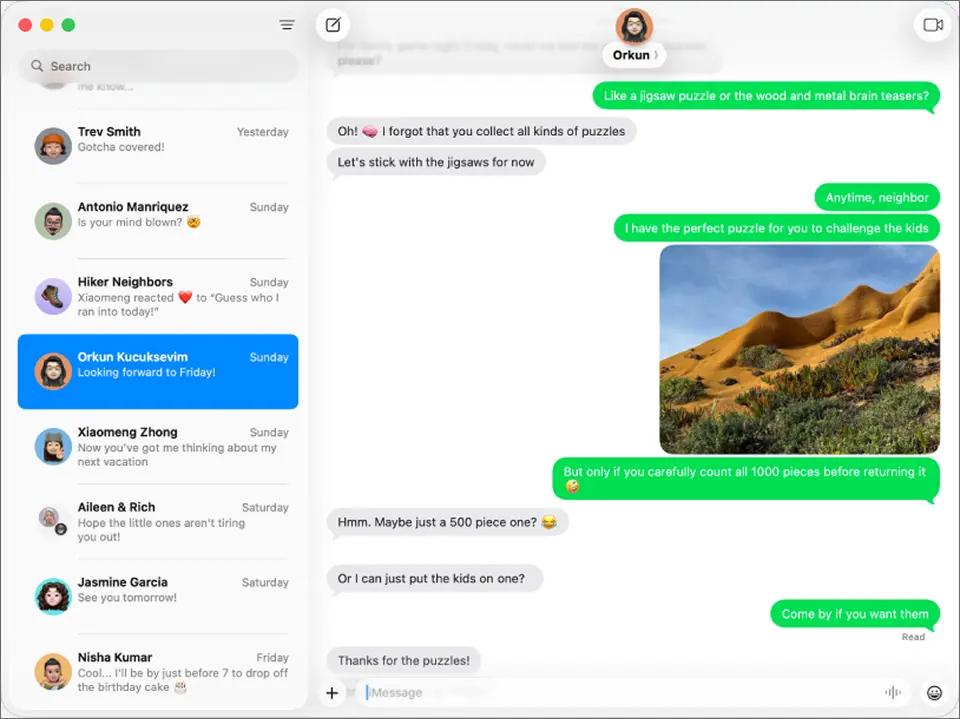
How to Set It Up:
- Make sure your iPhone and Mac are signed into the same Apple ID.
- On your iPhone, go to Settings > Messages > Text Message Forwarding.
- Toggle on your Mac from the list of devices.
- Open the Messages app on your Mac.
- Click the New Message button (pencil icon), enter a phone number or contact name, and type your message.
- Hit Enter to send. SMS and iMessages both work.
Message forwarding is what lets green-bubble SMS reach your desktop at all, and it’s the reason Apple’s cross-device messaging feels seamless. Messages sync across every Apple device you own, including iPhone, iPad, Mac, and Apple Watch. If someone replies, you’ll see it everywhere.
Windows users who want iMessage can look at AirMessage or BlueBubbles, two open-source projects that relay iMessage through a Mac you leave running at home. Both require that always-on Mac, so they solve the screen problem rather than the phone-dependency problem.
Limitations:
- Your iPhone must stay powered on and connected to the internet
- Only works within the Apple ecosystem; no Windows or Chromebook support
- Uses your personal phone number (not a business number)
- No bulk messaging, scheduling, or team collaboration features
- Not suitable for TCPA-regulated business communication
Best for: Apple users who want to text friends, family, or individual clients from a bigger screen. For professional team-based messaging, a business platform like TextBolt is a better fit.
4. Send Texts From a Computer With Google Messages (Android)
Android users can send SMS from a computer using Google Messages for Web, also known as Android Messages. It mirrors your phone’s messages in a browser window, so you can type with a full keyboard while your phone stays in your pocket. It runs on Windows, macOS, and ChromeOS, which makes it the one free option that covers every desktop platform.

How to Set It Up:
- Open the Messages app on your Android phone.
- Tap your profile picture > Device pairing.
- On your computer, go to messages.google.com in any browser (Chrome, Firefox, Safari, or Edge).
- Tap QR code scanner on your phone and scan the code on your computer screen.
- Your conversations will load in the browser. Click any thread to reply, or start a new message.
Once paired, you can send and receive SMS and MMS messages from your computer. Google Messages also supports RCS (Rich Communication Services) for enhanced messaging between Android users.
Limitations:
- Your Android phone must stay powered on and connected to the internet
- The web session expires every 1–2 weeks—you’ll need to re-pair
- If your phone battery dies or loses signal, the web connection drops
- No multi-user access, scheduling, or message analytics
- Uses your personal number only
Best for: Android users who want a quick, free way to text on computer from a larger screen.
5. Send Texts From Your Computer With WhatsApp Web
WhatsApp is the most popular messaging app globally, and its web version lets you text from any computer without installing software. After initial QR pairing, WhatsApp Web works independently, so your phone doesn’t need to stay connected.
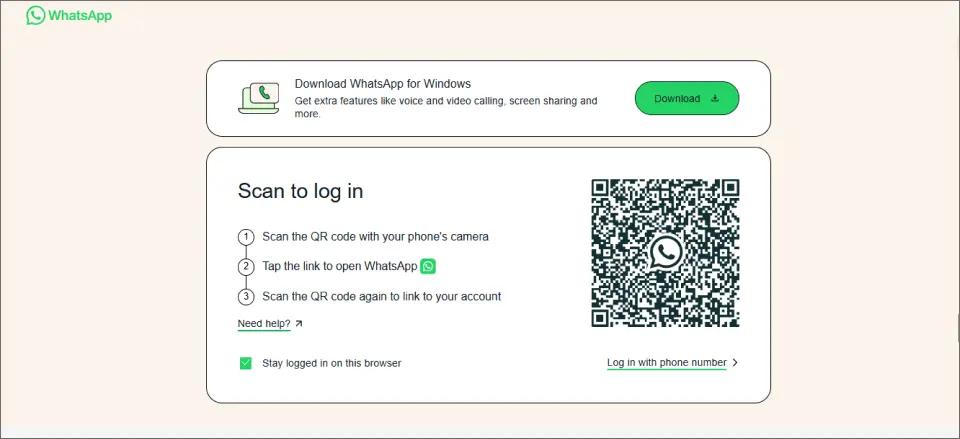
How to Set It Up:
- Go to web.whatsapp.com in any browser on your computer.
- Open WhatsApp on your phone and tap Settings > Linked Devices > Link a Device.
- Scan the QR code shown on your computer screen.
- Your chats will sync to the browser. You can send and receive messages from your computer immediately.
WhatsApp uses end-to-end encryption for all messages, making it one of the more secure options on this list. Its cross-device messaging keeps conversation history consistent across desktop, phone, and tablet.
Limitations:
- Both you AND the recipient need WhatsApp installed—it’s not standard SMS
- Uses your personal phone number
- No business number, scheduling, or bulk messaging features
- Not suitable for sending texts to people who don’t use WhatsApp
- No compliance features for regulated industries
Best for: Personal messaging and international communication. WhatsApp is free and works worldwide, making it ideal for texting contacts who already use the app. For sending standard SMS to any phone number especially for business TextBolt is the more reliable choice.
6. Send Texts With Carrier Email Gateways (Why They Stopped Working)
The original method is extinct. AT&T has shut down, T-Mobile’s gateway no longer works reliably, and Verizon is phasing out vtext.com entirely by March 2027. Businesses affected by these shutdowns have been forced to evaluate T-Mobile and vText alternatives that offer modern delivery and compliance. If you’re migrating off AT&T specifically, our AT&T email to text alternative guide covers the switch, and the Verizon SMS gateway address page explains what still resolves today.
Why You Shouldn’t Use Email Gateways
Even if you find a carrier that still accepts email to text, here’s why you shouldn’t bother:
- No delivery confirmation (messages vanish)
- Recipients see email address (looks like spam)
- No replies possible
- Must know exact carrier (impossible with porting)
- 155 character limit
- Being discontinued by all carriers
If your business relied on carrier gateways, TextBolt was built as a direct replacement same email-based workflow, but with 10DLC compliance and up to 98% delivery rate.
Why Carrier Gateways End:
Carriers shut down these gateways because of massive spam abuse, zero sender authentication, and no delivery accountability. Without 10DLC registration, there was no way to verify that messages came from legitimate businesses.
7. Send Texts From a Computer With Google Voice
Google Voice gives you a free US phone number that works entirely in the browser, so your handset never enters the picture. This makes it the one free method that genuinely sends without a phone, and it’s why people who want a second number for freelancing or online listings tend to land here.
How to Set It Up
- Go to voice.google.com and sign in with a Google account.
- Choose a free phone number in your area code.
- Verify an existing phone number once, to prove you’re a real person.
- Click Messages, then the Send message icon.
- Enter any US mobile number, type your text, and send.
Replies arrive in the Google Voice web inbox and can forward to your email. Because Google Voice owns the number, texts keep working whether or not your phone is on.
Limitations
- US numbers only, with limited international texting
- No TCPA compliance tooling, opt-out handling, or audit logs
- No team access, since the number belongs to one Google account
- Google reserves the right to reclaim numbers after long inactivity
- Bulk or automated messaging violates the terms of service
Best for: Freelancers and individuals who want a free second number separate from their personal one.
Free SMS Websites —Methods to Avoid to Text From Computer
If you want to send a text message from a computer without a phone for free, a handful of free SMS websites still exist. They ask for a recipient number and a message, then send it from a shared pool of numbers. They’re the worst option on this list, and they’re worth understanding only so you can rule them out.
Why to Avoid Them
- No reply path. The recipient answers into a shared number you’ll never see.
- No delivery confirmation. You have no way to know whether the message landed.
- Unrecognizable sender ID. Recipients see a random shortcode and treat it as spam.
- Privacy risk. Many sites log message content and both phone numbers, and some monetize that data.
- Hard caps. Most limit you to a few messages per day per IP address.
Best for: One-off, low-stakes messages where you don’t care whether it arrives. For anything else, Google Voice is free and strictly better.
How to Send a Text Message From a Computer Without a Phone
Your phone breaks. The battery dies mid-shift. You’re porting a number and the SIM is dark for a day. Or you simply never wanted a staff member’s personal device inside a customer conversation.
One rule covers all four cases: only a service that owns the phone number can send text from computer without phone involvement. Everything else on this list is mirroring a handset, and a mirror of a dead phone shows nothing. So how to text from computer when the handset is out of the picture, or how to send SMS from PC without phone hardware at all, comes down to two names. Google Voice if the texting is personal, TextBolt if it’s a business sending appointment reminders, IT alerts, or school notifications.
If you need a texting app for computer without phone dependency every day, TextBolt is built for exactly that. You send an email, TextBolt converts it to SMS, the recipient sees a real business number, and their reply comes back to your inbox. No pairing, no QR codes, no battery to worry about.
How to Receive Texts on Your Computer
Not every method receives text messages in the same way. Some sync messages from your phone, while others deliver them directly to your computer.
How Each Method Receives Messages
- Google Messages – Messages are synced from your Android phone to your browser. Your phone must remain paired.
- iMessage – Messages sync across your Apple devices using your Apple Account. SMS messages require Text Message Forwarding through your iPhone.
- Microsoft Phone Link – Displays messages from your connected phone in the Phone Link app on Windows.
- Google Voice – Messages are delivered directly to your Google Voice inbox and can also be forwarded to email.
- TextBolt – Replies are delivered directly to Gmail or Outlook as threaded email conversations.
- Carrier email-to-SMS gateways – Most offer limited or no support for receiving replies.
- Free SMS websites – If replies are supported, they usually arrive through a temporary or shared inbox.
Google Messages, iMessage, and Microsoft Phone Link rely on your phone to receive messages. If your phone is disconnected, unavailable, or no longer paired, messages may stop syncing to your computer.
Google Voice and TextBolt receive messages directly through the phone number assigned to the service. Because they don’t depend on a paired phone, you can access conversations from any supported computer.
For businesses, this makes a significant difference. With TextBolt, replies arrive in Gmail or Outlook, where multiple team members can view the same conversation and respond using the shared conversation history instead of a single employee’s phone.
How TextBolt Compares to Other Business Texting Tools
When evaluating SMS solutions for your business, it’s not enough to look at features in isolation. Teams need tools that fit naturally into existing workflows, scale across multiple users, and maintain compliance without adding operational overhead.
The table below highlights how TextBolt stacks up against popular alternatives, showing where consumer-grade or developer-focused tools fall short:
| Feature | TextBolt | Salesmsg | Google Voice | Twilio | SimpleTexting |
| Inbox-native workflow | ✅ | ❌ | ❌ | ❌ | ❌ |
| Compliance (TCPA) | ✅ | ✅ | ❌ | ❌ | ✅ |
| Multi-user access | ✅ | Limited | Limited | Developer required | ❌ |
| Templates | ✅ | ✅ | ❌ | ❌ | ✅ |
| Ease of setup | 30 min | Training required | Setup per user | Dev required | Dashboard training |
Looking Ahead: What’s Next in Business Texting
- RCS Messaging: The next protocols (RCS) promise read receipts and richer media, but aren’t yet supported reliably across US carriers for B2C.
- AI & Automation: Modern tools increasingly enable automated message flows, smart reminders, and analytics businesses adopting these see better engagement rates. For example, setting up automated text messages from email can significantly reduce manual workload and no-shows.
- Compliance & Regulation: TCPA, and global rules will keep evolving. It’s vital to pick a provider whose roadmap addresses privacy and cross-border identity verification.
How to Choose the Best Way to Text From a Computer
The death of carrier gateways isn’t a loss, it’s an upgrade opportunity. Every alternative works better than the old carrier gateways ever did. Three questions settle the decision.
- Does your phone need to stay on? If yes, Google Messages, iMessage, and Phone Link are fine. If no, you need Google Voice or TextBolt.
- Is the number personal or business? Every free tool on this list uses your personal number. Only Google Voice and TextBolt give you a separate one, and only TextBolt registers it under 10DLC.
- Does anyone else need access? Free tools are single-user by design. If a front desk, a call center, or an on-call rotation shares the conversation, you need a shared inbox.
Texting From a Laptop, Desktop, or Browser
The hardware rarely matters as much as people expect. PC texting, laptop texting, and desktop texting all run through one of two shapes: a desktop app that pairs with your handset, or browser texting through a web browser tab that does the same thing without an install.
Phone Link and Apple’s Messages are desktop apps. Google Messages, Google Voice, and WhatsApp Web are browser texting. TextBolt is neither, because it lives inside the mail client you already have open, which is why it’s the only entry here that also works as software to send text messages from a computer that has never been paired with a phone.
So if you’re looking to text from a laptop, the question isn’t which text app for the computer to install. It’s whether you want to send and receive text messages from your PC through a phone, or independently of one.
For Personal Use:
Start with your operating system’s free solution. Mac users get iMessage, Windows users have Phone Link, Android users can use Google Messages. These work adequately when your phone is nearby and you’re texting friends occasionally.
For Business Use:
Free solutions are convenient for personal use, but not reliable enough for business critical messaging. TextBolt email to text service costs less than one missed appointment while providing:
- Team access so anyone can cover (up to 10 team members on Standard or Professional plans)
- Up to 98% delivery rate (vs 30% for gateways)
- Professional business number
- Works without any phone
- Built-in TCPA compliance with automated opt-out handling
- Bulk messaging to hundreds
Empower Your Team to Send SMS From Email
No new tools to learn. Your staff can message customers directly from the inbox they already use every day.
Why Smart Businesses Choose TextBolt
While free methods keep failing when your phone dies or disconnects, TextBolt just works. Built on carrier-approved infrastructure with 10DLC compliance, it delivers what consumer methods can’t with actual reliability. For businesses that need precise timing, TextBolt also makes it easy to schedule SMS directly from Gmail instead of relying on manual texts.
When AT&T shut down, over 500 businesses switched to TextBolt and discovered something unexpected: their messaging got better. No more crossed fingers hoping messages arrive. No more panic when the texting person calls in sick. Just reliable messaging that works like email should have worked all along.
TextBolt’s up to 98% delivery rate isn’t just a number, it’s appointments that don’t get missed, customers who actually receive updates, and teams that can finally trust their messaging system. Setup takes 30 minutes and you can test everything risk free for 7 days. If you’re still on the fence about whether you can text from your computer in a way that actually scales, the trial is the fastest way to see it work end to end.
Join the businesses that stopped hoping their texts deliver and started knowing they do. Start your free 7-day trial today.
Frequently Asked Questions
What is the best way to text from a computer?
It depends on whether you need a business number. For personal texting, use the tool built into your platform: iMessage on Mac, Phone Link on Windows, Google Messages on Android or ChromeOS. For business texting with delivery tracking and TCPA compliance, use an email-to-text service like TextBolt.
Can multiple team members use one TextBolt account?
Yes. TextBolt supports multi-user access and shared inbox functionality. The Standard and Professional plans include up to 10 team members on a single business number, which is ideal for front desks, call centers, and any business with shared messaging responsibilities. Enterprise plans support larger teams.
How do I receive text messages on my computer?
Pair your phone to a desktop client, or use a cloud SMS service. Google Messages for Web, Phone Link, and iMessage sync incoming texts from your handset, so the phone must stay on. TextBolt and Google Voice own the number themselves, so incoming messages arrive whether or not a phone is powered on.
Can I send a text through Gmail or Outlook?
Yes. An email-to-text service converts your email into an SMS. Address a normal email to the recipient’s phone number at the service’s gateway domain, such as 5551234567@sendemailtotext.com, and the recipient receives a standard text. Replies return to your inbox. Our Gmail text integration page covers the Gmail setup step by step.
Can I text from a computer without my phone?
Yes, but only with a service that owns the phone number. TextBolt sends and receives SMS through your email inbox with no phone in the loop, and Google Voice works the same way in a browser. Google Messages, Phone Link, and iMessage all require your phone to stay powered on and connected.
Does TextBolt integrate with other software or CRMs?
TextBolt works out of the box with all major email platforms and offers API access for custom integrations. For specific CRM or EHR integrations, enterprise customers can request personalized solutions.
How do I migrate from carrier gateways or another SMS provider?
TextBolt’s onboarding specialists provide hands-on migration support, helping you switch from carrier gateways or other platforms without service interruption. Many businesses have successfully migrated in just one business day.
Does TextBolt work on a Mac?
Yes. TextBolt runs entirely through your email client, so it works on any Mac using Gmail, Outlook, Apple Mail, or a browser. There is nothing to install and no app to download. If you can send an email, you can send a text from your Mac.
Can I text from my iPhone or Android using TextBolt?
Yes. Because TextBolt works through email, you can send texts from the Gmail or Outlook app on your phone just like you would from a computer. The same workflow applies on any device, and messages send from your business number rather than your personal one.
Can I text from my computer for free?
Yes. Google Messages, iMessage, Microsoft Phone Link, Google Voice, and WhatsApp Web all let you text from a computer at no cost. Each one either mirrors a phone that must stay online or requires the recipient to install an app. Free tools solve the screen-size problem, not the phone-dependency problem.
Can I text from a Chromebook?
Yes. Google Messages for Web runs in any ChromeOS browser after a one-time QR pairing with an Android phone. For texting that doesn’t depend on a phone, TextBolt works on a Chromebook through Gmail or any webmail client, with nothing to install.
Does my phone need to stay on?
For most methods, yes. Google Messages, Phone Link, and iMessage all rely on sync with a live handset, and the connection drops when the phone loses power or signal. WhatsApp Web keeps working after the initial pairing. TextBolt and Google Voice never involve your phone at all.
Do carrier email gateways still work?
No, not reliably. AT&T shut down txt.att.net on June 17, 2025, T-Mobile retired to tmomail.net in December 2024, and Verizon is phasing out vtext.com with a full shutdown scheduled for March 31, 2027. Messages sent to these addresses now bounce or vanish silently.
How do businesses text from a computer?
Most use an email-to-text service or a dedicated SMS platform. An email-to-text service like TextBolt lets staff send SMS from Gmail or Outlook using a registered business number, with replies threading back to the inbox. This avoids personal phones, meets TCPA requirements, and needs no new software.