
- Why Do Businesses Consider Alternatives to SMSGlobal?
- How We Selected These SMSGlobal Alternatives
- 10 Best SMSGlobal Alternatives Compared at a Glance
- 10 SMSGlobal Alternatives and Competitors
- 1. TextBolt — Best SMSGlobal Alternative for Email-to-SMS Operational Communication
- 2. Twilio — For Global Developer-Driven Messaging
- 3. ClickSend — For PAYG SMS, MMS, and Direct Mail
- 4. Sinch — For Enterprise-Grade Carrier Routing
- 5. Bird (formerly MessageBird) — For Unified CRM and Connectivity
- 6. SimpleTexting — For SMS Marketing Campaigns
- 7. EZ Texting — For SMB Marketing With AI Composer
- 8. TextMagic — For Hybrid Bulk SMS Plus Email-to-SMS
- 9. Kudosity (formerly Burst SMS) — For Australian Domestic Routing
- 10. SlickText — For SMS Marketing, Mass Texting, and Audience Engagement
- How to Choose the Right SMSGlobal Alternative
- Why TextBolt Is the Right SMSGlobal Alternative for Operational Texting
- Choose the SMSGlobal Alternative That Fits How You Actually Send Messages
- Frequently Asked Questions
Business Messaging Made Faster With TextBolt
10 Best SMSGlobal Alternatives for Business SMS Services


SMSGlobal is a well-established Australian messaging provider known for its global SMS network, carrier connectivity, and business messaging tools. It serves organizations ranging from small businesses to large enterprises that need reliable messaging across multiple countries.
However, SMSGlobal is not the right fit for every use case. Businesses focused on local messaging, SMS marketing, appointment reminders, customer notifications, or day-to-day business texting often look for platforms with different pricing models, workflows, and feature sets.
This guide compares the best SMSGlobal alternatives for 2026, including SMS marketing platforms, email-to-SMS solutions like TextBolt, and business texting providers. We’ll review pricing, features, strengths, limitations, and ideal use cases to help you choose the right platform for your business.
Why Do Businesses Consider Alternatives to SMSGlobal?
SMSGlobal is an Australian-owned messaging provider founded in 2007 and headquartered in Melbourne. The platform supports messaging across 186 countries through 800+ carrier connections and serves enterprise customers including Microsoft, IBM, Deloitte, ANZ, and Australian National University.
For businesses that need international SMS delivery, APIs, and carrier-grade routing, SMSGlobal remains a strong option. However, reviews across G2, Capterra, and Trustpilot reveal several recurring reasons why some organizations start evaluating alternatives.
1. Pricing Can Be Difficult to Compare
SMSGlobal offers three pricing models: prepaid credits, monthly subscriptions, and contract-based pricing. The prepaid option starts at $0.06 per SMS, while subscription plans range from $39/month for 1,300 messages to $179/month for 14,000 messages.
The flexibility appeals to businesses with different sending patterns, but some volume discounts and contract rates require contacting sales. For buyers comparing multiple platforms, estimating long-term costs can be less straightforward than providers with fully SMSGlobal pricing guide.
2. Subscription Plans Favor Consistent Senders
Subscription plans require a three-month minimum commitment and offer an 8% discount for annual billing. Prepaid credits remain valid for 12 months, but volume-tier discounts can reset after six months of inactivity.
These policies work well for organizations with steady messaging volumes, but they may be less attractive for seasonal businesses, schools, event organizers, and companies with fluctuating communication needs.
3. Key US Features Start on Higher Plans
The Build plan starts at $39/month and includes 1,300 messages, but MMS support and a dedicated A2P 10DLC number are only available on the Grow plan at $69/month.
For businesses focused on the US market, that increases the effective entry cost of compliant business texting compared with providers that include these features on lower-tier plans.
4. The Platform Is Built Around Global Messaging
SMSGlobal’s MXT platform is designed for international messaging, APIs, automation, and multi-channel communication. Recent additions such as WhatsApp Business Integration, Voice, Sender ID Registration, and URL shortening further expand its enterprise capabilities.
This approach works well for organizations managing large-scale messaging operations. Businesses primarily sending appointment reminders, customer notifications, alerts, or two-way texts may prefer a platform built around simpler day-to-day communication workflows.
5. Future Carrier Fees Can Affect Budget Planning
SMSGlobal currently waives US carrier pass-through charges for customers, making the published subscription rates the actual rates businesses pay today.
However, the company reserves the right to reinstate these fees with 30 days’ notice. While this is not an immediate cost, some businesses factor the possibility of future carrier charges into their long-term budgeting decisions.
None of these limitations make SMSGlobal a poor platform. It remains a strong choice for businesses that need international messaging, enterprise integrations, and carrier-grade delivery infrastructure. However, organizations looking for simpler pricing, more flexible commitments, easier workflows, or US-focused business texting often find that other providers are a better fit.
The SMSGlobal alternatives below address many of these requirements while serving different business sizes, messaging volumes, and communication workflows.
How We Selected These SMSGlobal Alternatives
We pulled every SMSGlobal alternative listed across G2, GetApp, Software Advice, Capterra, and SourceForge into a pool of 32.
From there, we narrowed the list using the criteria most commonly cited by businesses switching from SMSGlobal: pricing transparency, messaging costs, compliance requirements, channel coverage, ease of use, and overall workflow fit.
We also reviewed public pricing information, feature documentation, and user feedback to identify where each platform performs best.
As SMSGlobal SMS and Voice platform serves several different types of customers, we prioritized alternatives that address distinct use cases rather than filling the list with similar products.
The final selection includes platforms geared toward business texting, SMS marketing, developer APIs, enterprise messaging, and Australian-focused communication needs.
Each platforms’ pricing and feature information were verified against vendor websites during June 2026. Since SMS pricing, carrier fees, and plan structures can change over time, businesses should confirm current rates directly with each provider and check the reviews of SMSGlobal before making a purchasing decision.
10 Best SMSGlobal Alternatives Compared at a Glance
The biggest differences between these platforms come down to pricing structure, messaging workflow, and the total cost of sending SMS once carrier fees, compliance requirements, and number rentals are factored in.
| Platform | Starting Price | SMS / Pricing Model | Best For |
| TextBolt | $29/mo | 500 SMS bundled; never-expire top-ups | Email-to-SMS from Gmail and Outlook |
| Twilio | PAYG $0.0083/SMS | Usage-based pricing plus number rental | Global developer-first SMS APIs |
| ClickSend | $20 minimum top-up | PAYG SMS, MMS, RCS, and direct mail | Multi-channel business messaging |
| Sinch | PAYG $0.0078/SMS | Per-message pricing with carrier fees | Enterprise CPaaS and global routing |
| Bird (MessageBird) | $0.0074 per outbound SMS and $0.0058 per inbound SMS | Usage-based pricing; volume discounts available | Omnichannel customer communication |
| SimpleTexting | $39/mo ( including local number fee) | 500 credits bundled | SMS marketing and customer engagement |
| EZ Texting | $25/mo | 500 credits bundled plus telecom fees | Small-business SMS marketing |
| TextMagic | PAYG $0.049/SMS | Pay-per-message plus number rental | Small-business texting and email-to-SMS |
| Kudosity (Burst SMS) | $0.010–$0.019/SMS | Published volume pricing across major markets | Australian and multi-region messaging |
| SlickText | $29/mo | 500 SMS credits bundled; volume-based plans | SMS marketing, loyalty programs, and subscriber engagement |
The reviews below dig into each platform’s pricing, capabilities, trade-offs, and ideal use cases. Start with TextBolt if your sends are US or Canada operational; jump to Twilio if you are embedding messaging into a global product; pick anything in between based on whether you need a marketing dashboard, an AU regional gateway, or a unified CRM.
10 SMSGlobal Alternatives and Competitors
1. TextBolt — Best SMSGlobal Alternative for Email-to-SMS Operational Communication
TextBolt takes a fundamentally different approach from SMSGlobal. Instead of managing messages through the MXT dashboard, TextBolt routes SMS through email. Teams send a text by composing an email from Gmail, Outlook, Microsoft 365, a help desk, or any other email-capable application to a phone-number-based address such as +1XXXXXXXXXX@sendemailtotext.com. The message is delivered as an SMS, and the recipient’s reply lands back in the original email thread as a threaded response.

For businesses that primarily use SMS for appointment reminders, customer notifications, recruiting messages, alerts, or internal communication, this removes much of the complexity associated with traditional SMS platforms. There is no separate dashboard to learn, no API integration required, and no need to manage messaging workflows outside the tools employees already use every day.
It also addresses several of the reasons businesses switch from SMSGlobal. Pricing is straightforward, there is no three-month subscription commitment, and teams do not need to navigate a platform designed around international carrier routing and multi-channel messaging.
The trade-off is geographic coverage. TextBolt supports US and Canadian carriers rather than global messaging routes, making it a better fit for organizations whose usage has evolved.
Key Capabilities of TextBolt
- A2P 10DLC-compliant messaging across major US carriers, including AT&T, Verizon, and T-Mobile
- Email-native SMS sending from Gmail, Outlook, Thunderbird, Apple Mail, and any SMTP-compatible email client
- Canadian carrier coverage across Rogers, Bell, Telus, Fido, and other major networks
- Dedicated toll-free numbers for business messaging
- Email-to-SMS gateway support for automated alerts from Nagios, Datadog, Grafana, PRTG, Zabbix, EHRs, ATS platforms, and other business software
- E-commerce order alerts from Shopify, WooCommerce, and Magento without custom development
- Email-to-SMS gateway support for automated alerts, monitoring systems, EHRs, ATS platforms, CRMs, help desks, and other business software
- SMS delivery tracking and message status visibility
- Centralized conversation records retained within existing email systems
- Shared inbox access for teams with role-based user management
- Non-expiring SMS top-up credits that activate only after monthly plan allowances are exhausted
- Enterprise volume plans with custom routing and higher messaging capacity
- Support for operational messaging workflows such as appointment reminders, dispatch updates, recruiting communications, customer notifications, and system alerts
Pros and Cons of TextBolt
| Pros | Cons |
| Send SMS from existing email systems without adopting a new platform | US and Canada only; no global carrier coverage |
| No 3-month subscription minimum or long-term contract requirements | Not built for international bulk SMS campaigns |
| Up to 10 included users on Standard and Professional plans | |
| Non-expiring top-up credits reduce wasted spend | |
| 10DLC compliance support included on all plans | |
| Works with automated emails from EHRs, ATS platforms, monitoring tools, CRMs, and help desks |
TextBolt Pricing
TextBolt pricing is a flat monthly model with bundled SMS credits and non-expiring top-ups. Unlike SMSGlobal’s subscription, PAYG, and contract-based pricing models, costs remain predictable as teams grow because user seats, carrier registration support, and compliance assistance are included.
| Plan | Monthly Price | SMS Included | Seats |
| Basic | $29 | 500 | 1 |
| Standard | $49 | 1,000 | Up to 10 |
| Professional | $99 | 2,500 | Up to 10 |
| Enterprise | Custom | 5,000+ | Custom |
Key Pricing Advantages
- Save 20% with annual billing across all plans
- Up to 10 team members included on Standard and Professional plans
- Non-expiring SMS top-ups purchased only when needed
- 10DLC compliance and carrier registration support included
- No carrier surcharge pass-through fees added to published pricing
- No long-term contracts or subscription lock-ins
For teams comparing costs directly, TextBolt’s Standard plan starts at $49/month versus SMSGlobal’s Grow plan at $69/month, while including team access and avoiding the three-month minimum commitment attached to SMSGlobal subscriptions.
Is TextBolt the Right SMSGlobal Alternative for You?
TextBolt is best suited for organizations that use SMS as part of day-to-day business operations rather than global marketing campaigns. Common use cases include:
- Appointment reminders
- Customer notifications
- Service and maintenance updates
- Recruiting and candidate communication
- Dispatch coordination
- IT and monitoring alerts
- Internal team messaging
It is particularly well suited for businesses that already generate notifications from email-based systems and want to add SMS delivery without building API integrations or training staff on a separate messaging platform.
Skip the MXT Dashboard and Start Texting From Email
If your SMSGlobal usage is mostly appointment reminders, alerts, notifications, or recruiting messages, TextBolt lets you send SMS through Gmail or Outlook with 10DLC approval typically completed within 24–48 hours.
Where TextBolt opts out of the dashboard entirely, the next platform on this list goes the opposite direction and exposes the raw carrier infrastructure as developer APIs.
2. Twilio — For Global Developer-Driven Messaging
SMSGlobal is built around the MXT dashboard and managed messaging workflows. Twilio takes the opposite approach. Instead of providing a ready-made messaging platform, it exposes SMS, MMS, WhatsApp, RCS, voice, email, and authentication infrastructure through APIs that developers can integrate directly into applications, websites, and internal systems.
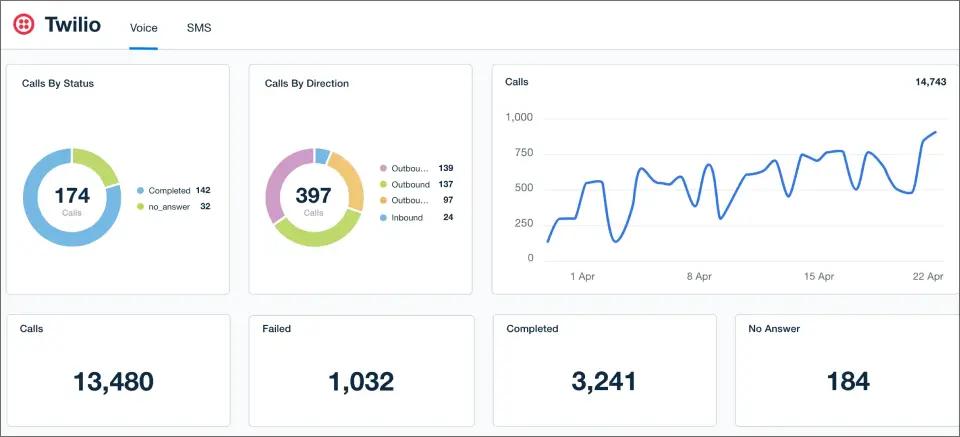
With messaging support in more than 180 countries and one of the largest communications networks in the industry, Twilio is often chosen by SaaS companies, marketplaces, fintech platforms, and enterprises that need programmable messaging at scale.
Key Capabilities of Twilio
- Programmable Messaging API for SMS, MMS, WhatsApp, and business notifications
- Conversations API for multi-party messaging across SMS, MMS, WhatsApp, Facebook Messenger, and in-app chat
- Verify API for OTP and two-factor authentication workflows
- Messaging Services for sender pools, routing, and configuration management
- Trust Hub for compliance onboarding and sender verification
- Fraud Guard protection against SMS pumping attacks
- Lookup API for phone number validation and verification
- Content Template Builder for SMS, MMS, and WhatsApp templates
- Engagement Suite with link shortening, click tracking, scheduling, and geo-matched senders
Pros and Cons of Using Twilio
| Pros | Cons |
| Lets developers build exactly the messaging workflow they need instead of adapting to a vendor’s dashboard | Requires ongoing engineering ownership, not just initial setup |
| Strong choice for SaaS products, customer platforms, and embedded messaging | Costs become harder to forecast as volume, channels, and compliance requirements grow |
| Combines SMS, voice, email, WhatsApp, RCS, and authentication under one vendor | Most business users cannot operate the platform independently without technical support |
| Mature compliance tooling through Trust Hub and sender registration workflows | Every additional channel introduces separate pricing and configuration complexity |
| Scales from startup volumes to enterprise-level traffic without platform migration | Troubleshooting delivery issues often requires understanding carrier and messaging regulations |
| Extensive third-party integrations, documentation, and community resources | Overkill for teams that only need notifications, reminders, or internal business texting |
Twilio Pricing
Twilio uses a pay-as-you-go pricing model. The platform’s SMS rate starts at $0.0083 per message segment, but total costs typically include carrier pass-through fees, phone-number rental fees, A2P registration costs, and any additional messaging products you enable.
| Service | Starting Price | Notes |
| Outbound SMS | $0.0083 per segment | Carrier fees apply separately |
| Inbound SMS | $0.0083 per segment | Charged separately from outbound traffic |
| Outbound MMS | $0.022 per message | Additional carrier fees may apply |
| Inbound MMS | From $0.0165 per message | Varies by number type |
| Local Number | $1.15/month | Standard 10-digit number |
| Toll-Free Number | $2.15/month | Verification recommended for production traffic |
| Short Code | From $1,000/quarter | One-time setup fees apply |
| Failed Message Fee | $0.001 per failed message | Charged only on failed deliveries |
What Affects Your Actual Twilio Costs?
- Base SMS pricing starts at $0.0083 per segment, but carrier fees can add roughly $0.0035-$0.005 per message depending on the destination carrier.
- Every sending number is billed separately, starting at $1.15/month for local numbers.
- US business messaging requires A2P 10DLC registration and associated compliance fees.
- SMS, MMS, WhatsApp, Voice, Verify, and other Twilio products are billed independently.
- Enterprise customers can negotiate committed-volume discounts beyond published rates.
For businesses sending high volumes internationally, Twilio can be extremely cost-effective. For smaller teams, monthly costs are often less predictable than subscription-based platforms.
Is Twilio the Right SMSGlobal Alternative for You?
Twilio is a strong fit for engineering teams embedding messaging into a product, global businesses sending across multiple countries, organizations needing OTP and 2FA at carrier scale, and SaaS companies combining SMS with voice, video, or chat under one vendor.
Consider another option if you need a no-code dashboard for non-technical staff, a flat monthly subscription instead of PAYG, the simplest possible operational SMS workflow without engineering involvement, or AU-specific ACMA tooling that an Australian gateway handles natively.
3. ClickSend — For PAYG SMS, MMS, and Direct Mail
SMSGlobal offers multiple pricing models, subscription tiers, and contract-based discounts.

ClickSend takes a simpler approach: prepaid credits with no monthly commitment, no lock-in period, and no minimum contract term. For businesses with fluctuating messaging volumes, seasonal campaigns, or agency-managed accounts, that flexibility is often the primary reason to switch.
Beyond SMS, ClickSend combines MMS, email, WhatsApp, RCS, Facebook Messenger, and direct mail inside a single platform. Businesses can manage customer communications across multiple channels without maintaining separate vendors or contracts.
While ClickSend is easier to deploy than developer-focused platforms like Twilio, it still relies on a dashboard-centric workflow. Teams looking for pure email-to-SMS communication or highly specialized enterprise routing may find other alternatives a better fit. While looking for any other alternative, read about the detailed comparisons between TextBolt and ClickSend and find out if there’s what you are looking for.
Key Capabilities of ClickSend
- SMS and MMS delivery across 200+ countries through direct carrier connections
- Free inbound SMS for two-way customer conversations
- Send SMS directly from Outlook and other email-based workflows
- Unified inbox for managing replies across messaging channels
- Transactional email delivery through SMTP and API integration
- Physical mail and direct-letter delivery from the same platform
- REST API, SMPP support, and SDKs for Node.js, Python, Java, PHP, Ruby, C#, and Swift
- Real-time delivery reporting and message tracking
- Contact management, scheduling, templates, and automated messaging workflows
Pros and Cons of Using ClickSend
| Pros | Cons |
| No monthly contracts or long-term commitments | Support quality can be inconsistent according to some users |
| Well-suited for seasonal or unpredictable messaging volumes | Some users report inactivity fees and limited billing transparency |
| Quick to deploy without dedicated developer resources | Legitimate messages can occasionally be flagged during content reviews |
| Helpful support for API integrations and technical setup | Account verification may delay onboarding for some businesses |
| Suitable for both business users and developer teams | Refund requests can take longer than expected to process |
| Global messaging platform with broad channel coverage | Per-message costs can become expensive at higher volumes |
| Established platform with a large business user base | Automation capabilities are less advanced than some competitors |
While exploring pros and cons of this platform, look at the detailed review analysis of ClickSend and what the real users say about the products and its capabilities.
ClickSend Pricing
ClickSend pricing offers a prepaid credit model with no monthly subscription or contract. Per-message rates decrease as top-up volumes increase.
| Tier | Minimum Top-Up | US SMS Rate |
| Boost | $20 | $0.0278 |
| Growth | $100 | $0.0198 |
| Scale | $1,000 | $0.0129 |
| Enterprise | $2,000 | $0.0095 |
All accounts include unlimited users, free inbound SMS, and 24/7 support.
What to watch for: Carrier surcharges (about $0.0041 per outbound US SMS) are billed separately, toll-free numbers start at $3.53/month, and Unicode messages (such as emojis) can increase costs by creating multiple message segments.
Is ClickSend the Right SMSGlobal Alternative for You?
ClickSend is a good fit for businesses that want flexible PAYG messaging, seasonal senders, agencies managing multiple clients, and teams using SMS alongside email, WhatsApp, RCS, or direct mail.
Consider another ClickSend alternatives if you need predictable monthly pricing, advanced automation, a simpler email-to-SMS workflow, or enterprise-grade global messaging at very high volumes.
4. Sinch — For Enterprise-Grade Carrier Routing
Sinch is the closest direct competitor to SMSGlobal on the dimension SMSGlobal was originally built for enterprise carrier routing across many countries with strong wholesale relationships.

After acquiring MessageMedia and Inteliquent, Sinch now operates as one of the largest tier-one CPaaS providers globally, with direct carrier connections that translate into more predictable deliverability than aggregator-routed traffic.
The platform appears on Capterra’s SMSGlobal alternatives list (specifically as Sinch Engage, the marketing-shaped product within the broader Sinch suite) and is the most common reference point on enterprise migration calls.
For SMSGlobal customers whose primary use case is high-volume international SMS or OTP at carrier scale, Sinch is the most direct shortlist alternative. The platform is widely used by enterprise SaaS, fintech, and retail brands sending across multiple regions, with separate products for marketing (Sinch Engage), conversational messaging (Sinch Conversation API), and raw CPaaS routing (Sinch SMS API).
Key Capabilities of Sinch
- Direct carrier routing in 60+ countries with tier-one relationships
- SMS API, WhatsApp Business API, RCS, voice, video, email, and verification in one suite
- Sinch Engage marketing dashboard for non-technical campaign sends
- 10DLC, toll-free, and short-code provisioning handled in-house
- HIPAA-eligible on enterprise contracts
- Strong OTP delivery with built-in fallback logic
- Number portability across the Sinch number portfolio
Pros and Cons of Using Sinch
| Pros | Cons |
| Direct carrier-grade routing for improved deliverability | Longer enterprise sales and onboarding cycles |
| Full CPaaS suite (SMS, voice, WhatsApp, RCS, email) | Multiple product layers increase complexity |
| Strong support for OTP and verification workflows | Pricing often quote-based for enterprise setups |
| Campaign tools available via Sinch Engage | Less suitable for lightweight operational texting |
| HIPAA-eligible under enterprise agreements | Requires structured procurement process |
Sinch Pricing
| Service | US Rate | Notes |
| Outbound SMS (10DLC) | $0.0078/segment | Carrier fees apply separately |
| Toll-free SMS | $0.0078/segment | Requires verification |
| Short code SMS | $0.009/segment outbound, $0.009 inbound | $500–$1,500+ monthly for codes |
| MMS (10DLC) | $0.02 send / $0.02 receive | Varies by carrier |
| 10DLC number | $1 setup + $1/month | Per number |
| Toll-free number | $1–$2 setup + $2/month | Per number |
*International rates vary by destination country and route. Carrier surcharges are passed through.
Is Sinch the Right SMSGlobal Alternative for You?
Sinch is a strong fit for enterprise SaaS, fintech, and retail brands sending high-volume SMS or OTP across multiple regions, organizations needing tier-one carrier routing for deliverability-sensitive use cases, and teams that already use a multi-channel suite (SMS plus WhatsApp plus voice).
Consider another option if you need self-serve onboarding without procurement, a flat monthly subscription rather than PAYG plus number rentals, inbox-driven operational sends without a dashboard, or low-volume US/Canada appointment reminders that do not justify enterprise-grade routing.
5. Bird (formerly MessageBird) — For Unified CRM and Connectivity
Bird is the rebrand of MessageBird, pivoted from a pure CPaaS into a “unified CRM” that bundles SMS, email, WhatsApp, voice, and marketing automation under one suite. The pricing reset that accompanied the rebrand cut SMS rates significantly versus the prior MessageBird rate card, which makes Bird’s connectivity layer one of the more cost-competitive options for global SMS volume in 2026. Where SMSGlobal sells the gateway as the product, Bird sells the gateway as one channel inside a CRM, marketing automation, and service stack.
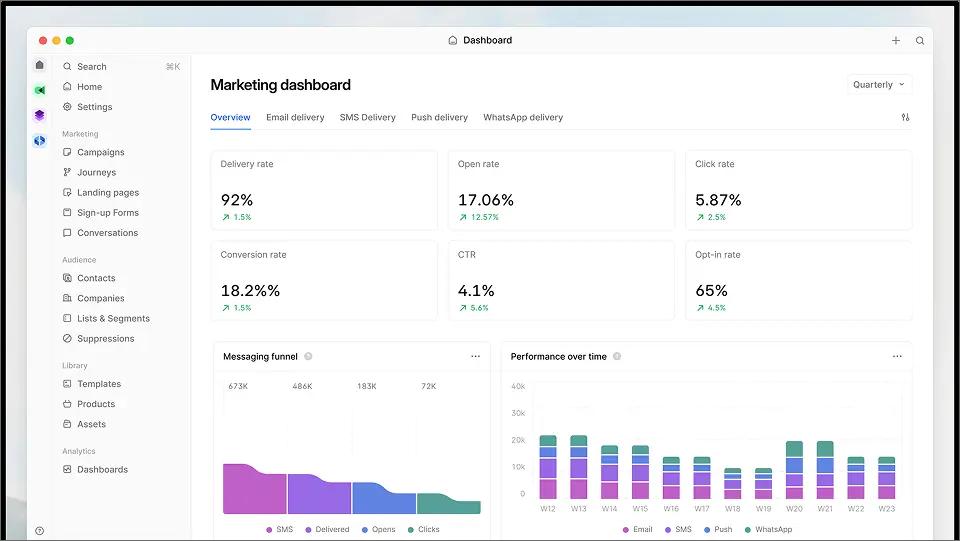
The differentiator for teams already running a marketing or customer service tool is that Bird tries to replace both the SMS vendor and the marketing-automation vendor at once. For teams that have separate Twilio and HubSpot contracts, the consolidation pitch is real. For teams that just need SMS delivery and already have a CRM they like, the bundled product surface area can be more than they want to buy.
Key Capabilities of Bird
- AI-powered routing for optimal delivery paths and load balancing at enterprise scale
- Vertically integrated delivery (no third-party carrier dependencies)
- Zero processing fees and no hidden carrier markup (Bird’s pricing positioning)
- Smart template creation with personalization tokens (name, company, job title, behavior triggers)
- AI-driven optimal timing intelligence based on per-recipient engagement patterns
- Automated sequence intelligence (welcome series, abandoned cart, promotional)
- Pre-built integrations with Shopify, Salesforce, HubSpot, and broader CRM stack
- SMS API with automatic failover; Email API with 99.95% SLA-backed uptime
- WhatsApp Business API and Voice API on the same platform
- Compliance: SOC 2 Type II, GDPR, CCPA, HIPAA, ISO/IEC 27001, OAuth
- Data residency controls and granular access for international deployments
Pros and Cons of Using Bird
| Pros | Cons |
| Owned global infrastructure across 150+ countries with AI-powered routing | Customer support reported as poor, with unresolved issues and bug complaints |
| Robust API quality enables seamless custom integrations | Buggy features reported across multiple recent reviews |
| Communication flows enhance customer connection | Complex / difficult setup with limited support and guides |
| Vertically integrated delivery (no third-party carrier dependencies) | Carrier fees added on top of base PAYG rates; total invoice math takes verification per route |
| 98% open rate and <2.5 second delivery target for 95% of messages | Marketing-platform shape; not the right fit if you only need a thin SMS gateway |
| SOC 2 Type II + GDPR + CCPA + HIPAA + ISO 27001 compliance | Best-fit customer is enterprise multi-channel, not a single-channel SMB |
| Specialized infrastructure tools (PowerMTA, Momentum MTA) for high-volume senders | Some product documentation still references prior MessageBird branding |
Bird Pricing
| Category | Pricing / Rate | Key Notes |
| Pay as You Go (PAYG) | Usage-based, no minimum | Full API + automation, multi-channel (no Apple Messages) |
| Monthly Bundle | Quote (from ~50K contacts) | Lower SMS rates, higher volume allowance, branding removal |
| Enterprise | Custom pricing | SSO, Apple Messages, TAM, SLA, dedicated support |
The plans above determine your access tier and feature set. The channel rates below apply on top of your plan and are charged per message sent or received.
| Channel | Pricing |
| SMS (US PAYG) | $0.0074 outbound / $0.0058 inbound (all number types) |
| $0–$1.50 per 1,000 emails (volume-tiered) | |
| $0.001–$0.0045 per message + Meta fees | |
| Virtual Numbers | $0.11 (local) / $0.26 (toll-free) per month |
| Automation (Flows) | Free–$0.05 per invocation (volume-based) |
| Other Channels | $0.005 (RCS/Messenger) + $0.0005 push notifications |
Note: Carrier fees added to every SMS/MMS message; For Verizon, the charge is $0.0045 per outbound message. For T-Mobile, the outbound rate is $0.0045 and inbound is $0.0025. AT&T applies $0.0035 for both outbound and inbound messages. US Cellular charges $0.0050 for outbound and $0.0025 for inbound messages. C Spire applies $0.0035 for both outbound and inbound. TextNow charges $0.0035 for outbound messages, while inbound messages are free.
Is Bird the Right SMSGlobal Alternative for You?
Bird is a strong fit for mid-market teams consolidating SMS, email, and CRM under one vendor, ecommerce businesses already running Shopify or Salesforce, and global teams that want WhatsApp and SMS in the same console.
Consider another option if you need the cheapest possible per-SMS rate on the public pricing page (Plivo or Telnyx publish lower), a finished marketing dashboard that is best-in-class rather than emerging, or a single-channel SMS-only tool without the broader CRM surface area.
6. SimpleTexting — For SMS Marketing Campaigns
If ClickSend covers multi-channel and Twilio covers global APIs, SimpleTexting covers the workload neither one targets: opt-in US SMS marketing on a clean dashboard. It is built for small to mid-sized businesses running scheduled promotional campaigns, with keyword opt-ins, autoresponder workflows, MMS support, and a two-way inbox.
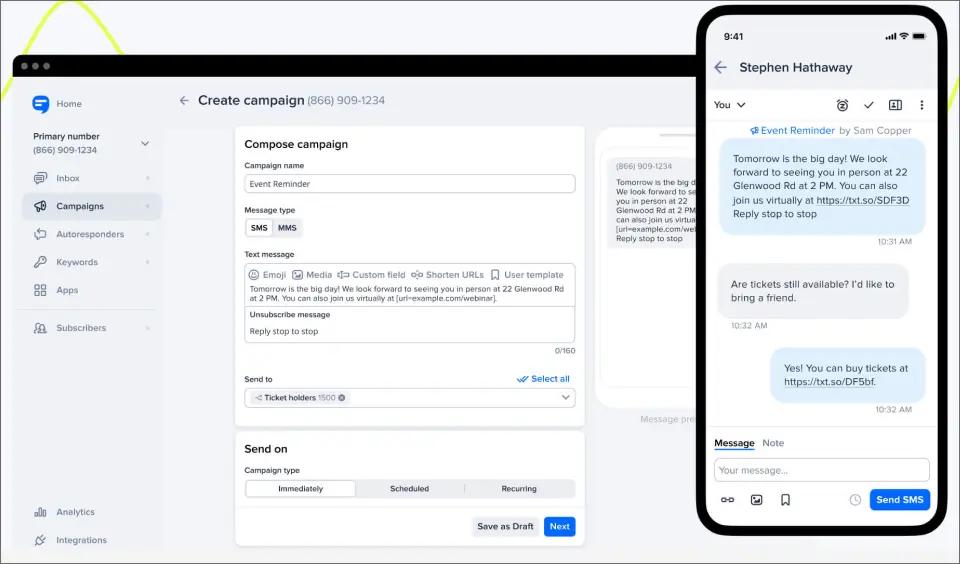
Unlike global gateways, SimpleTexting is shaped around the US TCPA and 10DLC compliance environment, with built-in opt-in tools, STOP handling, and 10DLC registration guidance baked into onboarding. Native integrations cover HubSpot, Mailchimp, Salesforce, and Zapier, making it easier to plug into an existing US-shaped marketing stack.
The platform serves US and Canada only international customers are directed to Sinch Engage, which is the same enterprise alternative discussed earlier.
The honest test: if you have ever opened the MXT dashboard to build a keyword auto-reply, segment a contact list, or schedule a broadcast for a specific US time window, SimpleTexting is a better-fitting tool for that job. If you have never used those features and your sends are all one-to-one operational messages, you are paying for a marketing platform you do not need.
Key Capabilities of SimpleTexting
- Bulk SMS sending with scheduled and recurring campaigns
- Two-way messaging with free inbound SMS replies (no credits used)
- MMS support for images, photos, and GIFs
- Drip campaigns, autoresponders, and automated away messages
- Web forms for subscriber acquisition
- Audience segmentation for targeted messaging
- Multi-inbox management with notes and conversation assignment
- AI-assisted message creation and response suggestions
- Support for 10DLC local numbers, toll-free numbers, text-to-landline, and short codes
- Integrations with Zapier, Mailchimp, and API access
Pros and Cons of Using SimpleTexting
| Pros | Cons |
| Rollover credits help avoid wasted monthly spend | First 3 users included; additional users $20/month each |
| Effective entry plan starts at $39/month (500 credits + local number) | Local numbers cost $10/month plus activation fees |
| Strong list-building tools (keywords, forms, contests) | Overage charges ($0.055 per credit) can get expensive at scale |
| Free inbound SMS reduces messaging costs | Limited native CRM integrations like HubSpot/Salesforce |
| Supports text-to-landline messaging | More marketing-focused than operational messaging platforms |
| 1,000+ integrations via Zapier and API support | Short codes start at $1,000/month, costly for small teams |
| Discounts available for annual and nonprofit plans | Costs increase quickly with add-ons and scaling |
For a deeper understanding of real user experiences, feature performance, and pricing insights, explore this complete breakdown of SimpleTexting reviews to see how it compares across key SMS marketing needs.
SimpleTexting Pricing
SimpleTexting uses a credit-based pricing model where monthly cost depends on message volume.
| Monthly Credits | Monthly Price |
| 500 Credits | $39/month |
| 1,000 Credits | $59/month |
| 2,000 Credits | $89/month |
| 3,000 Credits | $119/month |
| 7,500 Credits | $239/month |
| 15,000 Credits | $409/month |
| 25,000 Credits | $559/month |
| 50,000 Credits | $909/month |
| 50,000+ Credits | Contact Sales |
Additional Costs to Consider:
- Local number: $10/month per number
- Carrier registration: $4 one-time per local number
- Extra users: $20/month per user
- Additional numbers: $10/month each
- Overage credits: $0.055 per credit beyond plan limit
- Carrier fees: May apply based on destination and message type
- Dedicated short code: starting at $1,000/month
- MMS messages: 3 credits per message
- Incoming MMS: 1 credit per message
- Toll-free numbers: no monthly fee, but activation fees may apply
Note: Toll-free numbers do not carry an additional monthly fee, though activation and carrier-related fees may apply. Some wireless carriers, such as Verizon, AT&T, T-Mobile, and others, charge additional costs to send and receive messages. On average, these carrier fees amount to approximately $0.0025 per message in the United States and $0.0068 in Canada.
Credit consumption: SMS up to 160 characters uses 1 credit, extended SMS up to 306 characters uses 2 credits, MMS picture messages use 3 credits, and inbound SMS is free. For detailed cost breakdown, explore this guide on complete overview of Simple Texting pricing.
Is SimpleTexting the Right SMSGlobal Alternative for You?
SimpleTexting is a strong fit for small to mid-sized US businesses running opt-in promotional campaigns, retail and restaurants and local service providers, marketing teams managing segmented subscriber lists, event organizers and nonprofits running outreach, and teams using basic automation and scheduled messaging.
Consider Simple Texting if you need a flat-rate pricing model without per-segment overages, lower entry pricing for very small teams, email-native sending without a dashboard, or international SMS routes that a global gateway would handle.
7. EZ Texting — For SMB Marketing With AI Composer
EZ Texting overlaps with SimpleTexting and SlickText on use case but is the longest-running platform on the shortlist. It serves businesses across the US and Canada, with one of the longest compliance-edge-case track records of any US SMS marketing platform.

For first-time SMS marketers who want a guided dashboard, deep templates, and hands-on support without paying enterprise prices, EZ Texting is the conventional first pick.
The two differentiators worth naming are the AI Compose feature, which handles the 155-character SMS constraint well, and the native Shutterstock integration for licensed images in MMS campaigns.
No other major SMS marketing platform on this list bundles stock imagery directly into the message composer, which matters for SMBs without dedicated designers.
Key Capabilities of EZ Texting
- AI Compose feature that generates campaign copy with adjustable tone (casual, formal, playful, passionate) within SMS character limits
- Native Shutterstock integration for licensed images in MMS, with built-in editor for text overlays and cropping
- Two-way SMS with Team Inbox for multi-user reply management
- Text-to-Join keywords for opt-in collection
- Drip campaigns and scheduled broadcasts
- Industry-leading pre-built template library (Business.com rated “by far the best” on the comparison set)
- A2P 10DLC registration handled at no extra cost on every plan
- Integrations with Zapier, HubSpot, Mailchimp, and Constant Contact
- iOS mobile app (no Android app at present)
Pros and Cons of Using EZ Texting
| Pros | Cons |
| Easy-to-use interface; one of the lowest-learning-curve platforms on this list | Credits expire after 30 days (monthly plans) or 12 months (annual plans) |
| 22 years of operating history (since 2004); 230,000+ businesses served | $10/month per additional team member beyond the first |
| Proactive, compliance-focused support reported across G2 and Capterra reviews | Support hours limited to 8 AM-8 PM ET; no 24/7, no weekend, no phone on lower tiers |
| AI Compose and Shutterstock integration are genuinely differentiated for SMBs | Costs climb steeply: Launch ($25) → Boost ($75) is a 200% jump |
| A2P 10DLC registration included on every plan at no extra cost | Trustpilot rating 3.3/5 (219 reviews) flags billing, refund, and cancellation friction |
| Pre-built templates rated “by far the best” on competitive review sets | $5/month telecom fee on Launch plan (waived on higher tiers) |
| Free incoming SMS messages | Restrictions on political messaging and HIPAA-covered use cases; US and Canada only |
EZ Texting Pricing & Plan Structure
EZ Texting pricing plans include four core subscription plans with a credit-based system. Every plan includes 500 message credits per month (6,000 annually), while higher tiers mainly increase contact limits, keywords, textable numbers, and reduce overage costs rather than increasing bundled credits.
| Plan | Monthly Price | Contact Limit |
| Launch | $25/month | Up to 500 contacts |
| Boost | $75/month | 500–2,000 contacts |
| Scale | $125/month | 2,000–50,000 contacts |
| Enterprise | $3,000/month | 50,000+ contacts |
Add-On & Additional Costs:
- Telecom fee: $5/month on Launch plan (waived on higher tiers)
- Extra users: $10/month per additional team member (1 user included by default)
- Additional keywords: Charged beyond included allowance per plan
- Extra phone numbers: Paid add-on beyond included limit
- Overages: Billed at plan-specific per-message rate
Is EZ Texting the Right SMSGlobal Alternative for You?
EZ Texting is a strong fit for small and mid-sized US businesses running promotional campaigns, retail and restaurants and local service providers, marketing teams focused on list growth and engagement, nonprofits and event communications, and teams prioritizing ease of use and built-in compliance. Take a deep review on EZ Texting before making any decision.
Consider another option if you need real-time alerts or time-sensitive messaging, API-first or developer-heavy workflows, large teams focused on cost-efficient scaling, or high-volume international or AU-route SMS.
8. TextMagic — For Hybrid Bulk SMS Plus Email-to-SMS
TextMagic is the hybrid that sits between the email-native TextBolt approach and the dashboard-only SimpleTexting model. The differentiator is a built-in email-to-SMS gateway alongside the bulk-send dashboard, so the same vendor can handle one-to-one operational texts from Gmail and scheduled campaigns from the web app.
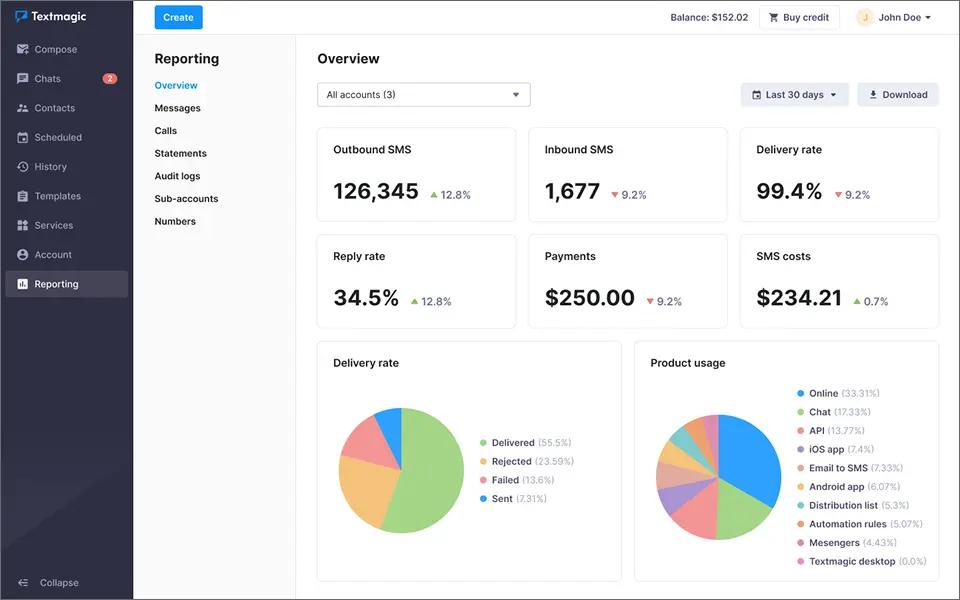
SMSGlobal customers usually shortlist TextMagic for three specific reasons: pay-as-you-go credits that do not expire (unlike SMSGlobal’s tier-discount reset after 6 months of inactivity), the email-to-SMS option for non-technical staff (which exists in SMSGlobal but is buried inside the MXT configuration), and broader international reach without the AU-first defaults.
Key Capabilities of TextMagic
- Pay-as-you-go SMS at $0.049/segment standard rate
- Bulk SMS campaigns with personalization
- Two-way messaging inbox for customer conversations
- WhatsApp messaging support
- Voice calling capabilities
- Shared team inbox for collaboration
- Contact management and segmentation
- SMS API for developers and custom integrations
- Unlimited users and contacts included
Pros and Cons of Using TextMagic
| Pros | Cons |
| Cost-effective for businesses with lower or variable messaging volumes | Message delivery can be inconsistent for time-sensitive comms |
| Simple, easy-to-use interface with minimal learning curve | Setup and compliance requirements can be restrictive |
| Strong bulk SMS capabilities for large contact lists | Some users report unexpected feature changes affecting workflows |
| Supports international messaging and PAYG flexibility | Advanced feature pricing is not always transparent upfront |
| SMS credits never expire, reducing wasted spend | Support response times can vary by issue complexity |
| Built-in email-to-SMS gateway included | Email-to-SMS is bolted onto a marketing-shaped dashboard |
If you want a deeper evaluation of real user feedback, limitations, and performance trade-offs, you can read our detailed TextMagic reviews here.
TextMagic Pricing
TextMagic uses a pure pay-as-you-go model with no tiered plans and no minimum monthly commitment. Total monthly cost depends on volume sent plus any number rentals and campaign registrations active that month. You can also check the detailed TextMagic pricing breakdown for deeper cost analysis.
| Monthly Messages | SMS Cost | Toll-Free Number Cost | Total Cost |
| 500 | $24.50 | $10 | $34.50 |
| 1,000 | $49.00 | $10 | $59.00 |
| 2,000 | $80.00 | $10 | $90.00 |
| 5,000 | $175.00 | $10 | $185.00 |
| 10,000 | $350.00 | $10 | $360.00 |
| 20,000 | $600.00 | $10 | $610.00 |
Is TextMagic the Right SMSGlobal Alternative for You?
TextMagic is a strong fit for small and mid-sized businesses managing customer communication across SMS and email, teams that prefer sending texts directly from email clients alongside dashboard sends, businesses using both SMS and email channels, organizations needing API access plus a no-code option in the same vendor, and teams looking for a mix of campaign messaging and one-to-one texting.
Consider another option if you need a flat monthly plan with predictable cost, a dedicated email-to-SMS workflow without a marketing dashboard layered on top, advanced SMS marketing automation, or the lowest possible per-message rate at high volumes. If you’re comparing platforms in more depth, you can also explore TextMagic alternatives to understand how it stacks up against other SMS tools.
9. Kudosity (formerly Burst SMS) — For Australian Domestic Routing
Kudosity is the rebrand of Burst SMS, repositioned in 2024 around revenue attribution for SMS marketing while keeping the core Australian carrier routing the original Burst product was known for. For SMSGlobal customers whose actual usage is heavily Australian domestic (rather than 186-country global), Kudosity is the closest like-for-like comparison: ACMA-aware compliance, direct AU carrier connections, AU data residency, and a marketing-shaped dashboard rather than a pure gateway interface.
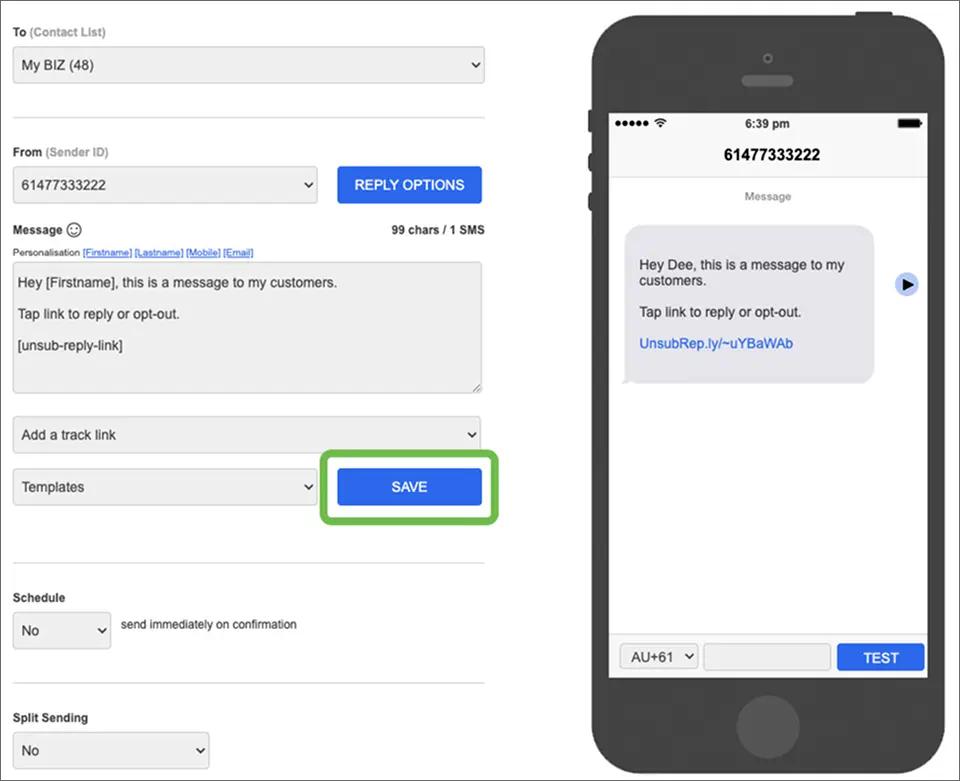
The platform is widely used by AU mid-market brands, retailers, and franchise networks, and it shows up on Australian comparison sites as the most-cited SMSGlobal alternative for domestic-focused workloads. Where SMSGlobal sells itself as global with AU origins, Kudosity sells itself as AU-first with international optionality on quote.
Key Capabilities of Kudosity
- Direct Australian carrier routing under ACMA compliance
- AU data residency for sensitive workloads
- Revenue attribution and conversion tracking for SMS campaigns
- Bulk SMS dashboard with personalization and scheduling
- SMS API for developers
- Two-way SMS with inbox management
- Email-to-SMS as a secondary send path
- Number provisioning in Australia
Pros and Cons of Using Kudosity
| Pros | Cons |
| Strong Australian carrier routing with ACMA compliance | Pricing in AUD only; USD/GBP rates not published publicly |
| AU data residency available | Best-fit volume is 50K+ SMS/month |
| Revenue attribution features for ecommerce SMS | International rates require sales quote |
| Volume tier discounts kick in at predictable thresholds | Revenue-attribution pitch may not match operational use cases |
| Marketing-shaped dashboard rather than pure gateway | Limited US 10DLC tooling compared to US-shaped marketing platforms |
No contract; volume commitments unlock better rates. US, UK, and Canada rates are quote-only and should be confirmed with sales before procurement.
Kudosity Pricing
| Plan | Price (per message) | Message Volume Limit |
| Starter | $0.019 | Up to 1,499 messages |
| Entry | $0.015 | Up to 24,999 messages |
| Advanced | $0.011 | Up to 49,999 messages |
| Business | $0.010 | Up to 99,999 messages |
| Enterprise | Custom | 100,000+ messages |
Pricing is in USD and excludes taxes where applicable. Messages are billed per segment. Pricing applies to 10 Digit Long Codes (DLC) and Toll-Free Numbers (TFN), including carrier pass-through fees.
Optional Add-ons: Virtual Mobile Numbers
Add-ons are flexible and can be added to any active plan. You only pay for what you use.
| Type | Setup Fee | Monthly Lease |
| Dedicated Short Code | From $1,000 | From $750 |
| 10 Digit Long Code (10DLC) | From $40 | From $25 |
| Toll Free Number (TFN) | None | From $5 |
All prices are in USD and exclude taxes where applicable.
Is Kudosity the Right SMSGlobal Alternative for You?
Kudosity is a strong fit for Australian mid-market and enterprise teams running SMS marketing at 50K+ SMS/month, ecommerce and retail brands wanting revenue attribution on SMS campaigns, franchise networks needing AU data residency, and teams that found SMSGlobal’s gateway shape too thin for their marketing needs.
Consider another option if your sends are primarily US or Canada (Textbolt, SimpleTexting, or EZ Texting fit better), your volume is below 50K/month (the tier discounts are not the differentiator), or your team needs a global gateway rather than AU-first routing.
10. SlickText — For SMS Marketing, Mass Texting, and Audience Engagement
SlickText is built specifically for SMS marketing, with a nine-tier pricing ladder that ranges from a $29/month Starter plan (500 credits) to a $939/month Elite plan (50,000 credits), plus a Custom tier for higher volumes.
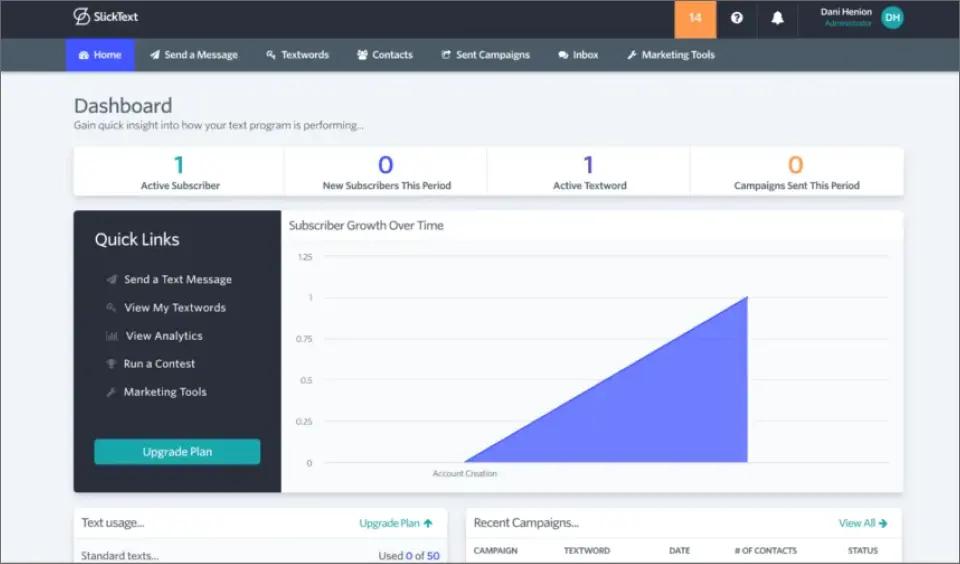
For SMSGlobal customers whose actual usage is focused on US bulk SMS, keyword opt-ins, mass texting campaigns, and audience engagement, SlickText stands out because it aligns pricing closely with usage increments rather than forcing large jumps between tiers.
The platform is centered around US marketing workflows such as text-to-join campaigns, autoresponders, segmented broadcasts, MMS messaging, and a shared two-way inbox.
Key Capabilities of SlickText
- Nine-tier pricing ladder from $29 Starter (500 credits) to $939 Elite (50,000 credits), plus Custom plans
- Unlimited contacts across all tiers
- Rollover credits (unused credits carry forward)
- One premium sending number included
- Text-to-join keyword campaigns for list building
- MMS messaging (3 credits per segment, up to 1,600 characters)
- Scheduled broadcasts and automated drip campaigns
- Two-way SMS inbox for conversations
- 1-on-1 onboarding from Growth tier and above
- Dedicated Customer Success Manager from Premium tier
Pros and Cons of Using SlickText
| Pros | Cons |
| Nine-tier pricing allows precise scaling with usage | US-focused only; not suitable for global SMS routing |
| Rollover credits reduce wasted spend | Not designed for operational or API-heavy SMS workflows |
| Free incoming messages and unlimited contacts | Pricing depends on plan tiers rather than per-message transparency |
| Strong onboarding and customer success at higher tiers | Premium support features only available at higher price levels |
| Live support across all paid plans | No voice, WhatsApp, or multi-channel support |
| 14-day free trial with no credit card | Not suitable for developer-first or CPaaS use cases |
SlickText Pricing
SlickText uses a tier-based subscription model, where each plan includes a fixed number of monthly SMS credits. Annual billing provides two months free across all tiers.
| Plan | Monthly Price | SMS Credits / Month |
| Free Trial | Free | N/A |
| Starter | $29 | 500 |
| Professional | $49 | 1,000 |
| Business | $79 | 2,000 |
| Growth | $129 | 3,500 |
| Scale | $169 | 5,000 |
| Enterprise | $319 | 10,000 |
| Premium | $579 | 25,000 |
| Elite | $939 | 50,000 |
| Custom | Custom | Custom |
Is SlickText the Right SMSGlobal Alternative for You?
SlickText is a strong fit for US-based businesses running opt-in marketing campaigns, including retailers, restaurants, schools, churches, nonprofits, and event organizers focused on list growth and engagement. It also suits teams that value structured onboarding, predictable tiered pricing, and rollover credits for better budget control.
Consider another option if you need:
- Operational or transactional SMS workflows (TextBolt fits better)
- International or AU-focused routing (Sinch or Kudosity)
- Developer-first APIs instead of a marketing dashboard
- Multi-channel communication (voice, WhatsApp, RCS, etc.)
The ten reviews above cover the full spread of SMSGlobal replacement patterns. The next section compresses all of that into a one-line decision filter so you can match your reason for leaving to the right shortlist alternative.
How to Choose the Right SMSGlobal Alternative
The table below maps each use case directly to the most suitable alternative so you can quickly identify the right fit.
| If your reason for leaving SMSGlobal is | The right shortlist alternative |
| Your sends are operational reminders or alerts to US/Canada numbers, and your team already works in email | TextBolt |
| You are embedding messaging into a product and need global reach across many countries | Twilio |
| Your volume fluctuates and you need SMS plus MMS, RCS, WhatsApp, or physical mail under one vendor | ClickSend |
| You need carrier-grade enterprise routing with tier-one carrier connections | Sinch |
| You’re enterprise-scale, want owned global infrastructure and value AI-routed deliverability with a published PAYG rate card plus bundle/enterprise tiers | Bird |
| You are running opt-in US marketing campaigns with keyword opt-ins and scheduled broadcasts | SimpleTexting |
| You are new to SMS marketing, want the lowest entry tier, AI Compose, and a deep pre-built template library | EZ Texting |
| You want a hybrid: bulk campaigns plus an email-to-SMS option, with global reach | TextMagic |
| You want published per-country tier pricing across multiple regions, with AU-based support | Kudosity |
| You are running US opt-in SMS marketing and want a tier ladder that scales finely with volume plus high-touch support | SlickText |
The pattern across these segments is consistent: most teams using SMSGlobal only utilize a fraction of its global routing capability. That means the real decision is not about finding a “better SMSGlobal,” but choosing a platform that matches your actual usage model.
Why TextBolt Is the Right SMSGlobal Alternative for Operational Texting
Side-by-side against SMSGlobal on the dimensions that directly impact cost, setup time, and day-to-day adoption:
| Feature | Textbolt | SMSGlobal |
| Pricing model | Flat monthly subscription | Subscription + prepaid wallet, tier-based |
| Starting cost | $29/mo (500 SMS, 1 seat) | $39/mo Build (1,300 SMS, US) |
| Subscription minimum | None | 3 months |
| 10DLC / compliance setup time | 24-48 hours | Multi-week for US prepaid tier negotiation |
| Initial setup time | ~30 minutes | 1-2 days for MXT, plus tier negotiation |
| Workflow style | Email-native workflow | MXT dashboard plus API |
| Message handling | Replies routed to email inbox | Managed inside dashboard plus webhook |
| Credit system | Never-expiring top-ups | Subscription credits + prepaid tier (resets after 6mo inactivity) |
| US pricing transparency | Published flat tiers | Subscription public; prepaid tier quote-only |
| Primary use case | Operational SMS via email workflows | Global SMS gateway with marketing layer |
Your Email Is Your SMS Platform
Send business texts from Gmail or Outlook. $29/month with 10DLC compliance and up to 98% delivery.
Choose the SMSGlobal Alternative That Fits How You Actually Send Messages
Not every SMS platform replaces SMSGlobal in the same way. Some tools are built for global carrier routing and API-first infrastructure, while others are designed for operational texting, US-focused messaging, or marketing campaigns at scale.
Before choosing an SMSGlobal alternative, it’s important to look at how your team actually uses SMS today. The best-fit platform is usually the one that matches your real workflow not the one with the most features on paper.
If your messaging is mostly reminders, alerts, scheduling updates, and day-to-day operational communication, a simpler workflow-first tool like TextBolt can significantly reduce complexity and setup time. Switch to a simpler way of sending SMS.
Book a demo call to set up email-to-send-text gateway in minutes and start sending messages from email with full US & Canada coverage.
Frequently Asked Questions
Does switching from SMSGlobal to another platform require new 10DLC registration?
Usually yes. Compliance registration ties to the sending platform, the principal entity, and the use case. Moving US SMS traffic between providers means re-registering 10DLC brand and campaign records under the new vendor, typically a 24-48 hour carrier approval window when the new provider handles filing. Moving to an AU-shaped platform like Kudosity means ACMA-aware setup but not 10DLC. TextBolt files 10DLC during onboarding with a 24-48 hour carrier approval window.
What are the best SMSGlobal alternatives for US-only messaging?
TextBolt is the strongest fit for US and Canadian teams that need operational SMS like appointment reminders, IT alerts, and customer notifications. It works directly from Gmail or Outlook with no three-month subscription minimum.
Which SMSGlobal alternative works without a dashboard?
TextBolt is the only platform on this list where email is the entire interface. Your team sends SMS by composing an email to +1[number]@sendemailtotext.com from Gmail, Outlook, Thunderbird, or Apple Mail. No MXT dashboard to learn, no login to manage, and replies return to the same email thread.
How long does it actually take to switch from SMSGlobal to Textbolt?
Plan for two phases. The first is provisioning: 30 minutes to spin up a TextBolt account, configure the inbound gateway address, and send the first test SMS from Gmail or Outlook. The second is 10DLC carrier registration on Textbolt’s side, which runs 24-48 business hours.
Does TextBolt require a three-month minimum like SMSGlobal subscriptions?
No. TextBolt has no minimum subscription commitment. You can start with a free 7-day trial, upgrade to any plan, and cancel anytime. SMSGlobal subscriptions require a three-month minimum and offer only an 8% annual discount versus TextBolt’s 20%.
Can I keep my existing SMSGlobal phone number when I switch SMS providers?
Sometimes. US toll-free numbers can usually be ported between providers under FCC rules, with a 7-14 business day port window. Long-code numbers are harder to port and often easier to provision new on the receiving platform. TextBolt supports inbound porting of toll-free numbers as part of new account setup. Confirm number portability with both the current and new provider before canceling the SMSGlobal contract. The cost of a failed port mid-migration usually exceeds the savings of rushing the switch.