
- What Is Verizon Enterprise Messaging Access Gateway (EMAG)?
- Why Most Small and Mid-Sized Businesses Cannot Use EMAG
- Why an SMS API Is Not a Like-for-Like EMAG Replacement
- What a True Verizon EMAG Alternative Should Provide
- Top 5 Verizon EMAG Alternatives for SMBs
- 1. TextBolt — Best for Email-to-SMS Replacement and IT Alerting
- 2. Twilio Programmable Messaging — Best for Engineering-Led Teams
- 3. ClickSend Email to SMS — Best for Pay-As-You-Go Transactional Sends
- 4. Notifyre — Best for SMS and Compliance Fax in One Platform
- 5. Sinch — Best for Global Carrier Reach and Multi-Channel Messaging
- Verizon EMAG vs SMB Alternatives: Side-by-Side Comparison
- How to Move From an EMAG Quote to a Working SMB Setup
- What Changes in the Email-to-SMS Workflow After Switching
- Who Benefits Most From a Verizon EMAG Alternative
- Choosing the Right Verizon EMAG Alternative for Your Business
- Frequently Asked Questions
Skip the EMAG Contract
Top 5 Verizon EMAG Alternatives: Email-to-SMS Replacements


Verizon’s Enterprise Messaging Access Gateway (EMAG) is the paid replacement the carrier steers business customers toward now that the free @vtext.com gateway is shutting down. EMAG works for large enterprises with the budget and IT resources to manage a Major Account Agreement. For small and mid-sized businesses, that price tag and the enterprise-scale corporate-subscriber minimum make it a non-starter. This guide explains what EMAG is, why most SMBs cannot use it, and the practical Verizon EMAG alternatives that send the same email-to-SMS messages at SMB pricing.
TextBolt is built for exactly that gap. It is an email-to-SMS service works for businesses of any size. You send an email to a gateway address, it goes out as an SMS from your registered 10DLC business number, and replies thread back into the sender’s inbox. No subscriber minimum, no Major Account Agreement, just published monthly pricing and self-serve signup.
What Is Verizon Enterprise Messaging Access Gateway (EMAG)?
Verizon Enterprise Messaging Access Gateway (EMAG) is Verizon Business’s paid email-to-SMS and SMS-to-email service for enterprise customers. It allows businesses to send text messages from email systems or applications using Verizon’s messaging infrastructure.
EMAG supports two messaging methods: an SMTP email-to-SMS gateway and an HTTP API for application-based messaging. Most businesses looking for an EMAG alternative used the SMTP option because it allowed them to send SMS alerts and notifications without building custom integrations.
Unlike free Verizon email to SMS gateways such as @vtext.com and @vzwpix.com, EMAG is an enterprise service that requires a Verizon Business agreement. It is not a self-service platform with online signup, making it less suitable for small businesses that simply need to forward emails to text messages or maintain existing SMS workflows.
Verizon EMAG Key Requirements
- An enterprise-scale corporate Verizon subscriber base on the account. Sole proprietors, small clinics, and small managed services teams do not qualify on this gate alone.
- A signed Major Account Agreement (MAA) with Verizon Business, which is a multi-page enterprise contract reviewed by legal teams on both sides.
- Account-managed setup through a Verizon Business representative, not self-serve.
- Verizon-network outbound: outbound SMS messages go to Verizon recipients by default. Other carriers route through additional agreements.
- Configurable address format typically of the form
phonenumber@vzwentp.comor a similar enterprise-only Verizon domain. - Two send interfaces, an SMTP email-to-SMS gateway and an HTTP API. The SMTP path is the one that mirrors the old @vtext.com workflow.
The structural mismatch is simple. EMAG was designed for the customer base that already buys Verizon Wireless fleet plans, not for the much larger pool of businesses that just want to send an email and have it arrive as a text message on a customer or staff phone.
Why Most Small and Mid-Sized Businesses Cannot Use EMAG
The corporate-subscriber minimum is the most-cited blocker, but it is not the only one. Each of the requirements below removes a wide swath of businesses that depend on email-to-text for daily operations.
1. The Enterprise Subscriber Minimum Excludes Most Businesses
A 50-person company does not run an enterprise-scale Verizon corporate mobile fleet. A 20-person managed services provider does not. A volunteer fire department, a five-clinician medical office, an independent insurance agency, none of them carry the corporate Verizon subscriber base EMAG is built around. Yet every one of these organizations sends email-to-SMS alerts for monitoring, dispatch, appointment reminders, or staff coordination today.
2. The Major Account Agreement Adds Months of Procurement
Even when a business is large enough on paper, the MAA is a contract review cycle. Legal review, procurement sign-off, IT approval, and Verizon’s own enterprise sales process typically run several weeks before the first message ships. For businesses that lost reliable @vtext.com delivery this quarter and need a working replacement this week, that timeline is not workable.
3. EMAG Optimizes for Verizon Subscribers
EMAG’s outbound delivery is strongest to Verizon Wireless numbers. Cross-carrier delivery (to AT&T, T-Mobile, US Cellular, and regional carriers) routes through interoperability agreements and is not the primary use case the service was built for. Most SMB email-to-text traffic is the opposite, recipients are on every carrier, not just Verizon.
4. Account-Managed Setup Is Slow by Design
Self-serve onboarding is missing from EMAG by design. Setup, address provisioning, and configuration changes route through a Verizon Business account manager. For an SMB IT lead who needs to test a setup at 9am and roll it to production by lunch, the model breaks.
5. The Pricing Floor Is Built for Enterprise Budgets
Verizon does not publish EMAG pricing publicly, but customers who have been quoted typically describe an annual contract minimum substantially higher than what an SMB pays for a full year of modern email-to-SMS service. The price is bundled with the corporate subscriber lines, which is exactly why EMAG works for enterprises and fails for SMBs.
Why an SMS API Is Not a Like-for-Like EMAG Replacement
Replacing Verizon EMAG with an SMS API means rebuilding your messaging workflow instead of simply migrating it.
SMS APIs are ideal for businesses creating custom messaging applications. However, most EMAG users relied on email-to-SMS workflows to send alerts and notifications from existing systems like CRMs, monitoring tools, ticketing platforms, and help desks. They needed a simple way to forward an email to text while using a reliable SMS gateway that keeps existing communication processes running.
Moving to an SMS API often requires:
- Rebuilding integrations
- Updating existing workflows
- Managing API keys and security settings
- Developing reply handling and delivery tracking
- Ongoing developer support for changes
An email-to-SMS gateway provides a simpler EMAG replacement by allowing businesses to keep their existing email workflows while continuing to send SMS messages through a reliable delivery platform.
Selecting the right replacement between email to SMS and SMS API is simple. Choose an SMS API when you need custom application development or advanced automation. Choose an email-to-text gateway when you need a Verizon EMAG replacement without rebuilding your current communication processes.
What a True Verizon EMAG Alternative Should Provide
The shortlist of capabilities below is what an SMB-friendly EMAG alternative needs to cover. Anything missing here is a gap you will hit within the first month of running real operational SMS through it.
- Email-to-SMS workflow preserved. Send from Gmail, Outlook, Apple Mail, Thunderbird, or any SMTP-capable system to a gateway address that delivers as SMS, the same mental model EMAG and the old @vtext.com gateway used.
- 10DLC business registration handled for you. Modern SMS routes require 10DLC sender registration with The Campaign Registry. The replacement should handle this on your behalf, not push the registration work back to your IT team. For the underlying carrier rules, costs, and timelines, see the 10DLC registration and compliance guide.
- All-carrier delivery. Messages reach Verizon, AT&T, T-Mobile, US Cellular, and regional carrier numbers reliably, not just one network.
- Self-serve onboarding. Sign up, verify the business, send the first test message the same day. No Major Account Agreement, no procurement cycle.
- Two-way SMS replies routed back to your inbox. When the recipient replies to the SMS, the reply lands in your email, threaded with the outgoing message.
- Multi-user shared access. Several team members send and receive from the same business number without sharing a personal cell.
- Complete audit trail. Per-message logs with timestamps, sender, recipient, delivery status, and reply history for compliance, dispute resolution, and operational review.
- Transparent monthly pricing. Published plan tiers, no enterprise minimum, no multi-year commit required to send the first text.
The five Verizon EMAG alternatives below are the providers SMBs most often land on after EMAG fails the fit check. Each entry calls out where the provider is strongest and where it differs from a like-for-like email-to-SMS replacement.
Top 5 Verizon EMAG Alternatives for SMBs
The table below summarizes how each alternative is positioned. The sections that follow go deeper on fit, pricing, and trade-offs.
| Provider | Best Fit | Pricing Model | Email-to-SMS Pattern |
|---|---|---|---|
| TextBolt | SMB email-to-SMS, IT and monitoring alerts, shared team access, managed 10DLC | $29 / $49 / $99 monthly plans | Native gateway address |
| Twilio | Engineering teams that want full programmable routing control | Pay-as-you-go per message, per-number monthly fees | Build a bridge (Lambda, webhook, Inbound Parse) |
| ClickSend | Lightweight transactional sends without team-inbox features | Pay-per-credit, no monthly minimum on entry tier | Native gateway address |
| Notifyre | Operations sending both SMS and compliance fax in one flow | Pay-per-message, mixed SMS + fax billing | Native gateway address |
| Sinch | Global enterprise CPaaS with WhatsApp, RCS, voice, and email alongside SMS | Account-managed enterprise quote | API-based |
1. TextBolt — Best for Email-to-SMS Replacement and IT Alerting

TextBolt email to sms gateway is the closest match to what EMAG would have been for an SMB if Verizon offered an SMB version. Send an email to a TextBolt gateway address, the message arrives as an SMS from your registered 10DLC business number, and replies thread back into the sender’s email inbox.
- No subscriber minimum. Single users and 10-person teams are first-class customers.
- 10DLC registration handled with The Campaign Registry on your behalf, carrier approval typically takes 1 to 2 business days.
- Gateway address format
+1[phone]@sendemailtotext.com, works out of the box with Gmail, Outlook, Thunderbird, Apple Mail, and any SMTP-compatible client no add-on or extension to install. - Up to 98% SMS delivery rate across all major U.S. carriers, not just Verizon.
- Standard plan ($49/month) and Professional plan ($99/month) include multi-user access for up to 10 team members on a shared business number.
- Two-way replies route back to the sender’s email inbox automatically.
- Complete audit trail per message: 4-step delivery timeline (Created, Queued, Sent, Delivered or Failed), carrier error codes on failures, segment and credit counts, sender attribution across coworkers, and CSV export from detail, daily-rollup, by-sender, and by-recipient views.
- 1-CLICK system-sender authorization for alarm panels, monitoring tools like Nagios, Zabbix, and PRTG, CRMs like HubSpot and Salesforce, voicemail-to-text bridges, and IoT automation that send from no-reply addresses and cannot complete a standard email-invite handshake.
- Optional dedicated toll-free business number, $45/year, billed only after carrier approval (typical 3 to 4 week review). New accounts start on a shared-pool number that activates as soon as 10DLC clears.
TextBolt fits the SMB email-to-SMS use case Verizon EMAG explicitly priced out. For more on the migration path away from the old Verizon gateway, see the dedicated Verizon vText migration walkthrough.
2. Twilio Programmable Messaging — Best for Engineering-Led Teams
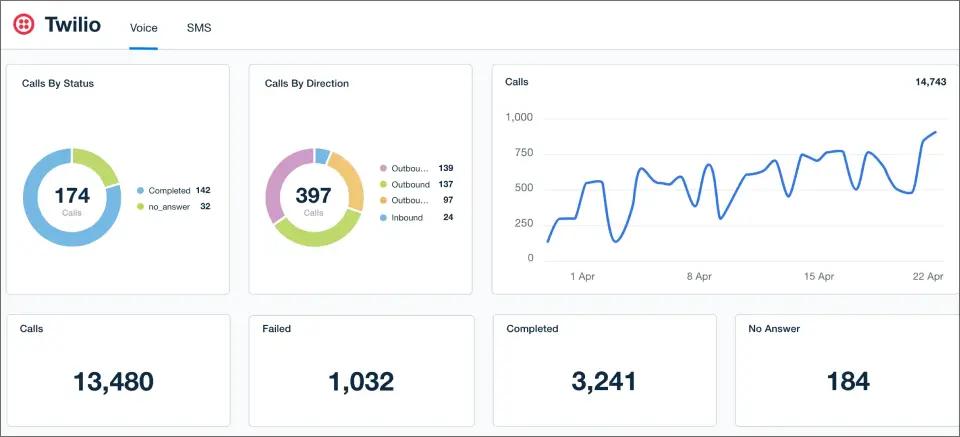
Twilio is the industry-standard SMS API. If your team has engineering capacity and wants programmable routing logic, branching workflows, and custom integrations, Twilio gives you the deepest control. The trade-off is that Twilio is an SMS API, not an email-to-SMS gateway, so a small integration layer (a Lambda function, a webhook, a server-side script, or a Twilio SendGrid Inbound Parse hook) is required to convert inbound email into a Twilio SMS send.
- Excellent documentation, broad SDK support, mature carrier relationships.
- 10DLC sender registration required, you handle the brand and campaign registration directly.
- Pay-as-you-go pricing per message, plus per-number monthly fees.
- Best when engineering owns the SMS routing logic and the email-to-SMS bridge is a feature you build, not buy.
3. ClickSend Email to SMS — Best for Pay-As-You-Go Transactional Sends

ClickSend offers a direct email-to-SMS feature with a similar gateway-address pattern. It works well for teams that want a minimal-setup transactional SMS option and do not need deep multi-user collaboration features.
- Email-to-SMS supported with a gateway address format.
- Pay-per-message credits with no monthly minimum on the entry tier.
- Good fit for one-off transactional sends; lighter feature set for shared-inbox team workflows.
4. Notifyre — Best for SMS and Compliance Fax in One Platform
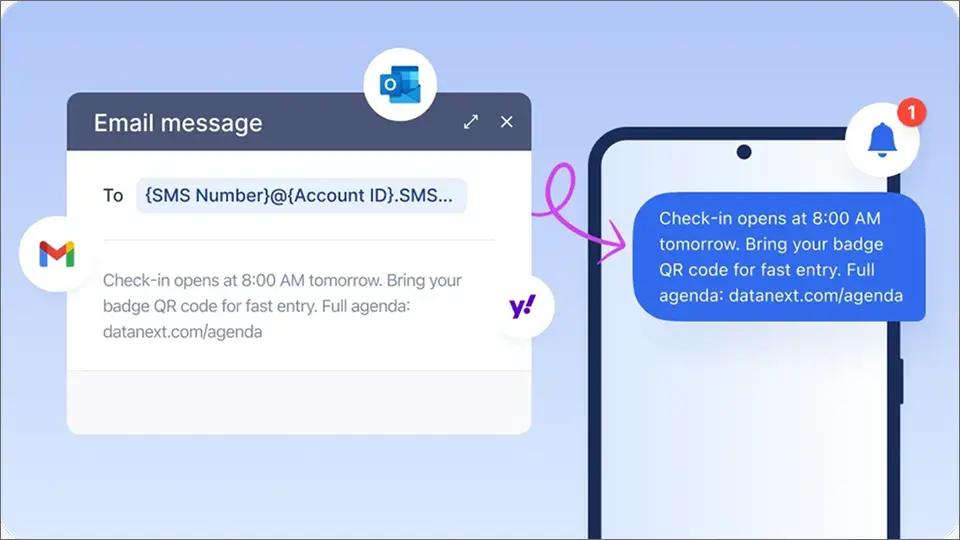
Notifyre combines SMS and fax notifications under one account. Useful when your operations send a mix of compliance fax, alert SMS, and customer-reminder messages from the same workflow.
- Email-to-SMS supported; web app and API access included.
- Mixed-channel pricing covers SMS plus fax in one platform.
- Strong fit when fax is still part of your compliance or document workflow.
5. Sinch — Best for Global Carrier Reach and Multi-Channel Messaging
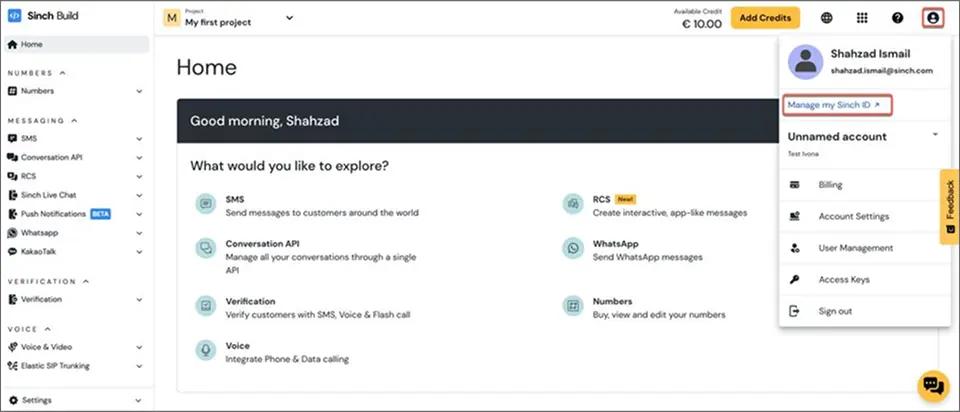
Sinch is an enterprise communications platform with direct carrier relationships globally and a multi-channel stack covering SMS, voice, email, WhatsApp Business, and RCS under one account. It is the option for businesses that need EMAG-equivalent enterprise-grade routing combined with channels beyond SMS, and that have the engineering capacity to integrate a full CPaaS.
- Direct-to-carrier SMS routing via Sinch’s own Tier-1 carrier infrastructure (Sinch acquired Inteliquent in 2021 for the US carrier side).
- 10DLC, toll-free, and short-code messaging supported, plus WhatsApp Business, RCS, voice, and email in the same platform.
- Best for global brands and omnichannel use cases where SMS is one channel among several, not the only delivery path.
Verizon EMAG vs SMB Alternatives: Side-by-Side Comparison
The fastest way to see why most SMBs pick a modern gateway over EMAG is a direct feature comparison. The table below maps the requirements EMAG imposes against what SMB-friendly providers offer out of the box.
| Capability | Verizon EMAG | TextBolt | Twilio + Email Bridge |
|---|---|---|---|
| Minimum corporate subscribers | Enterprise-scale Verizon fleet required | None, single user OK | None |
| Contract required | Major Account Agreement | Month-to-month or annual | Self-serve account |
| Time to first message | Weeks of procurement | About 30 minutes plus 1 to 2 business days for 10DLC approval | Days, depending on integration build |
| Carrier coverage | Strongest to Verizon, cross-carrier via interop | All major U.S. carriers | All major U.S. carriers |
| Email-to-SMS supported natively | Yes | Yes, gateway address | No, build a bridge |
| 10DLC registration | Bundled with enterprise contract | Handled on your behalf | You register directly |
| Multi-user shared access | Yes, enterprise tier | Up to 10 users included on Standard and Professional plans | Custom build |
| Authorize no-reply system senders (alarms, CRM, monitoring) | Bundled with enterprise contract setup | Yes, 1-CLICK on the team page | Custom allowlist or auth code |
| Two-way SMS replies in email | Yes | Yes, threaded to sender inbox | Custom build |
| Published monthly pricing | No, account-managed quote | $29 / $49 / $99 plus toll-free $45/year | Per-message + per-number, published |
| Best fit | Verizon enterprise with an established corporate mobile fleet | SMB and mid-market email-to-SMS | Engineering-led API integration |
| Send interfaces | SMTP email-to-SMS gateway and HTTP API | SMTP email-to-SMS gateway address, no code required | HTTP API only, email sending needs an added integration layer |
The key difference is how messages are sent. Verizon EMAG supports both SMTP gateway delivery and API-based messaging. TextBolt preserves the email-to-SMS workflow with an SMTP gateway address, so teams send SMS from existing email-enabled systems without building custom integrations. Twilio provides an API-first messaging platform, and businesses that want email-to-SMS behaviour typically need to build an additional connection layer.
The high-order observation is structural. EMAG charges enterprise rates because it sells into enterprise procurement processes. SMB-friendly providers built their entire pricing and onboarding around the businesses Verizon EMAG was never going to serve. Picking the right Verizon EMAG alternative is mostly a question of whether you want a like-for-like email-to-SMS workflow (TextBolt and ClickSend), a programmable API path (Twilio and Sinch), or a multi-channel notification platform (Notifyre).
Get the EMAG Workflow Without the EMAG Contract
TextBolt delivers the same email-to-SMS pattern Verizon EMAG was designed for, on every major U.S. carrier, with no subscriber minimum and no Major Account Agreement.
How to Move From an EMAG Quote to a Working SMB Setup
Most teams that arrive on this page have already been through a Verizon EMAG sales conversation, seen the number, and started looking for alternatives. For the address-format breakdown and the March 31, 2027 phaseout timeline that pushed business customers toward EMAG in the first place, see the Verizon SMS gateway address breakdown. The migration path below is what to do next, structured as a one-week sprint instead of a months-long procurement cycle.
- Document your current email-to-SMS use cases (Day 1). List every system that sends or needs to send SMS today: monitoring, dispatch, appointment reminders, internal alerts, customer notifications. Note volume per use case and which carriers your recipients are on.
- Map use cases to provider strengths (Day 1). Email-to-SMS with shared team access points to TextBolt. Heavy programmable routing points to Twilio. Mixed SMS + fax points to Notifyre. Multi-channel enterprise CPaaS with global carrier reach points to Sinch.
- Open a self-serve account (Day 2). Sign up for the chosen provider. Verify your business. For TextBolt, the credit card on file at signup screens out spam and unlocks 10DLC registration on your behalf.
- Submit 10DLC business registration (Day 2). Your provider handles the registration with The Campaign Registry. Carrier approval typically takes 1 to 2 business days for SMB campaigns.
- Run a parallel pilot (Days 3 to 5). Point one non-critical workflow at the new provider, keep your existing setup live, compare delivery rates. Most SMBs see the new route hit up to 98% delivery vs the patchy delivery the legacy carrier gateway had been producing.
- Switch over and decommission the old route (Day 6 or 7). Once the pilot proves out, update remaining workflows to the new gateway address, retire the @vtext.com or @vzwpix.com fallback, and archive the EMAG quote.
For organizations already running a parallel @vtext.com setup, the address migration is one search-and-replace. See the vText alternatives blog for the address swap pattern and the carrier shutdown timeline. Teams also migrating off the @txt.att.net gateway (which permanently ended on June 17, 2025 with no grace period) can run that cutover in parallel, see the AT&T email-to-text shutdown migration for the AT&T-specific timeline.
What Changes in the Email-to-SMS Workflow After Switching
The point of an EMAG alternative is to keep the workflow identical and just replace the destination address. Below is the literal swap.
Before (Verizon EMAG Quote or Dying @vtext.com)
- Recipient address:
5551234567@vzwentp.com(EMAG quote) or5551234567@vtext.com(legacy, failing). - Setup path: Major Account Agreement, enterprise corporate-subscriber minimum, weeks of procurement, or a free gateway being retired.
After (TextBolt)
- Recipient address:
+15551234567@sendemailtotext.com - Setup path: self-serve signup, 1 to 2 business days for 10DLC approval, no contract minimum, no subscriber gate.
The actual messages, the recipient experience, and the email composition workflow stay identical. Only the gateway domain changes.
Who Benefits Most From a Verizon EMAG Alternative
Every SMB and mid-market business that needs reliable email-to-SMS but cannot meet the EMAG bar falls into this group. The use cases below are the ones that come up most often during onboarding conversations.
1. IT Operations and Managed Services Providers
Small and mid-sized MSPs running Nagios, Zabbix, PRTG, or LibreNMS need on-call SMS alerts when a customer’s server, network, or backup job fails at 2am. The MSP itself is usually 5 to 50 people, far below the EMAG subscriber minimum, but their alert volume is real and the consequences of a missed page are large. Monitoring tools usually send from no-reply addresses that cannot click an invite link, so the 1-CLICK system-sender authorization is the standard path for adding those senders to the account without manual approval steps.
2. Healthcare Operations Teams
Small clinics, dental practices, physical therapy offices, and specialty providers send appointment reminders, prescription-ready notifications to opted-in patients, and internal staff alerts. They have the SMS need but do not carry the corporate Verizon subscriber base EMAG requires.
3. Field Services, Dispatch, and Logistics
HVAC, plumbing, electrical, locksmith, towing, and similar field-service teams dispatch jobs by SMS to opted-in technicians and update opted-in customers on ETAs. Multi-user access from one shared business number is essential, an EMAG-level contract is not.
4. Education and Schools
K-12 districts, charter schools, and tutoring centers send weather closures, attendance alerts, and parent notifications. Budgets do not support enterprise contracts, but the message volume during winter or emergency events is non-trivial.
5. Property Management and Community Operations
HOAs, gated communities, property managers, and storage facilities send resident notifications, gate codes, and maintenance updates to opted-in residents. Multi-property operators want one shared business number across their portfolio.
6. Internal Operations Teams at Mid-Market Companies
Operations, facilities, finance, and HR teams at 100 to 500-person companies send opted-in staff alerts and internal notifications. They might have a corporate Verizon contract, but EMAG procurement still runs through the same enterprise sales cycle, which is the wrong tool for a routine internal alert workflow.
Choosing the Right Verizon EMAG Alternative for Your Business
Verizon EMAG works for enterprises that already buy Verizon Wireless at scale. For every other business, the EMAG quote is the moment to step out of the Verizon enterprise contract cycle and pick a provider designed for SMB email-to-SMS reality. The decision is mostly about workflow shape, not vendor preference.
Which one fits depends on who owns the sending workflow:
- TextBolt is the closest match if your team already runs an email-to-SMS pattern and wants the same workflow on a modern compliant gateway. See TextBolt pricing for more details.
- Twilio is the right pick if engineering owns the delivery logic and wants full programmability.
- Notifyre fits if you send a mix of SMS and fax.
- Sinch is the path if you are scaling to a multi-channel global CPaaS with engineering and procurement support.
- ClickSend covers lightweight transactional sends.
Every one of these best Verizon EMAG alternatives sidesteps the enterprise corporate-subscriber minimum and the Major Account Agreement that disqualified you from EMAG.
Most SMBs that get an EMAG quote end up picking TextBolt, because it preserves the email-to-SMS workflow. EMAG was designed for, runs on a 10DLC compliant business number, supports multi-user team access, threads replies back into the sender’s email inbox, and ships in about 30 minutes plus 1 to 2 business days for 10DLC approval.
Skip Enterprise SMS Complexity
TextBolt keeps your email-to-SMS workflow, registers your 10DLC number, and delivers SMS replies right to your inbox.
Frequently Asked Questions
What does EMAG stand for?
EMAG stands for Enterprise Messaging Access Gateway. It is Verizon’s commercial email-to-SMS and SMS-to-email service for enterprise customers, the paid replacement Verizon points business users to after retiring the free @vtext.com gateway.
Is Verizon EMAG the same as vText?
No. vText was Verizon’s free carrier gateway at @vtext.com, designed for consumer use and effectively unsupported for business traffic. EMAG is a paid enterprise service with a Major Account Agreement, an enterprise corporate-subscriber minimum, and account-managed setup. Both target email-to-SMS, but they sit at opposite ends of the price and procurement spectrum.
How much does Verizon EMAG cost?
Verizon does not publish EMAG pricing publicly. Quotes are issued by Verizon Business account managers as part of an enterprise wireless contract bundle. SMBs who have been quoted typically describe an annual minimum substantially higher than what a comparable SMB email-to-SMS service costs for the same year.
What is the best Verizon EMAG alternative?
TextBolt is the closest like-for-like Verizon EMAG alternative for most small and mid-sized businesses. It preserves the email-to-gateway-address pattern EMAG was built around, registers 10DLC on your behalf, supports shared multi-user access on one business number, and threads replies back into the sender’s email inbox, with published monthly pricing and no subscriber minimum.
How long does it take to migrate from a Verizon EMAG quote to a working SMB setup?
For most SMBs, about one week. Hands-on setup is around 30 minutes, 10DLC carrier approval typically takes 1 to 2 business days. That is materially faster than EMAG’s procurement and contract cycle.
Will an EMAG alternative deliver to non-Verizon phone numbers?
Yes. Modern SMB-friendly providers such as TextBolt route through 10DLC business numbers and reach all major U.S. carriers (Verizon, AT&T, T-Mobile, US Cellular, and most regional carriers) reliably. That is a meaningful difference from EMAG, which is optimized for outbound to Verizon Wireless subscribers.
Do I need to install anything in my email client to use a Verizon EMAG alternative?
No. The email-to-SMS pattern works from any email client (Gmail, Outlook, Apple Mail, Thunderbird) and from any SMTP-capable system (monitoring tools, CI/CD pipelines, CRM workflows). You send to a gateway address such as +1[phone]@sendemailtotext.com, and the message is delivered as SMS from your registered business number. No add-on, extension, or API integration is required for the basic workflow.
When should I use something instead of vText?
You should use an alternative to vText if you need a reliable business messaging solution. Since Verizon has retired the free vtext.com email-to-SMS gateway, businesses now need a service that supports compliant SMS delivery. An email-to-SMS gateway like TextBolt is a good choice if you want to keep sending texts from your email. If you’re building an application, an SMS API like Twilio is a better fit, while businesses sending large marketing campaigns should use a dedicated bulk SMS platform.
What happens if I do nothing and stay on @vtext.com?
Delivery rates continue to drop until the full Verizon shutdown on March 31, 2027. Many business workflows already report 30 to 40 percent failure rates today, with no support channel and no path to restore reliability. The longer the migration is delayed, the more operational misses accumulate.
Can I integrate a Verizon EMAG alternative with my existing Thunderbird, Gmail, or Outlook setup?
Yes. Gateway-based providers work natively with any email client (Gmail, Outlook, Apple Mail, Thunderbird) and with any SMTP-capable monitoring or CRM system. Compose a normal email to the gateway address, the message arrives as SMS on the recipient’s phone. No add-on, extension, or API integration is required for the basic workflow.
Which SMS gateway is best?
The best SMS gateway depends on how you send messages. If your team sends texts from email-based tools like CRMs, help desks, or monitoring systems, an email-to-SMS gateway like TextBolt is the simplest option because it works with your existing workflow. If you’re building messaging into your own application, an SMS API like Twilio is a better choice.
Can TextBolt replace Verizon EMAG?
Yes. TextBolt replaces the email-to-SMS workflow EMAG provides, without the enterprise subscriber minimum or the Major Account Agreement.
You send an email to a gateway address in the format +1[phone]@sendemailtotext.com, the message is delivered as SMS from your registered 10DLC business number, and replies thread back into the sender’s email inbox. Setup is self-serve and takes about 30 minutes, plus 1 to 2 business days for 10DLC carrier approval. TextBolt does not replace EMAG’s HTTP API for teams that already built programmatic sends against it.
Can an EMAG alternative send alerts from a no-reply system address?
Yes. TextBolt authorizes no-reply senders through a 1-CLICK path that skips the email invitation, because alarm panels, monitoring tools, and CRMs cannot click an acceptance link. An admin adds the sender address on the team page, it is approved on the spot, and the address becomes active for the email-to-SMS gateway. A built-in sender lookup helps locate the no-reply address for around 40 common vendors. This covers monitoring systems such as Nagios, Zabbix, and PRTG, CRMs such as HubSpot and Salesforce, alarm panels, voicemail-to-text bridges, and IoT automation.